
Chapter 113 of 301 · Conceived in Liberty by Murray N. Rothbard
25. Georgia: The "Humanitarian" Colony
The South Carolinians, in agitating for a shift from proprietary rule, found it advantageous to scare the Crown about alleged French and Spanish pressures. This propaganda, as well as the Yamassee war, focused the attention of Great Britain on South Carolina and its borderland to the south.
The Spanish had settled north Florida and what is now the Georgia coast in the mid-1560s, with their center at the great port of St. Augustine. Settlement had extended as far north as Santa Elena (now Port Royal, South Carolina), where the Spanish destroyed a recently settled French Huguenot colony. The Spaniards, who concentrated on missionary activities among the Indians—particularly by the Franciscan order—named the Georgia coast the Gualé mission province and established missions and posts on the coast. Attacks by Gualé Indians forced abandonment of the mission posts at the turn of the seventeenth century, but the defeat of the Indians opened the way for renewed and expanded mission posts during the century. Attacks by the Westo Indians in the mid-1650s forced the Spaniards to retreat to below the Savannah River, thus paving the way for the English settlements in South Carolina. Hardly had settlement begun in the 1670s when the South Carolinians fomented trouble among the Indians. They soon became notorious in the colonies for their zeal in enslaving Indians, while the cattle of white settlers often destroyed Indian crops. Moreover, the colonists were eager for war against the Indians in order to gain a considerable supply of slaves, who commanded a ready market in West Indies plantations. The practice had begun as early as 1671, when the English colonists used a vague charge of conspiracy with the Spaniards as an excuse to make war upon the Kusso Indians and turn them into slaves. Eager to repeat this success, South Carolina launched a war upon the Westo Indians in 1680, thereby going against the proprietary policy of peaceful trade and friendship with the Westos. The proprietors, however, maintained a monopoly of the Westo trade, so that this furnished an incentive for the disgruntled colonists to make war upon the Westos rather than remain in peace. A bloody struggle ensued. After three years, South Carolina, with the help of the Savannah tribe, annihilated the Westo Indians. The Savannahs settled near the Savannah River, replacing the slaughtered Westos. There they and South Carolina made a mutually profitable deal: the whites supplied the Savannahs with arms and the Savannahs, in turn, made war upon and enslaved neighboring Indians, after which they sold the slaves to South Carolina.
The Spaniards had made one fatal mistake in occupying Gualé: they sent missionaries to their Indian allies instead of arms. Beginning in 1680, South Carolina incited a series of Indian attacks against the unarmed Spanish Indians and mission posts. By the end of the Westo War, the aggressive policy of South Carolina had driven the Spanish mission stations out of Gualé. The Spanish Indians also fled, and the powerful Yamassee Indians, attracted by a winner, moved from Florida to South Carolina.
With the crushing of the Yamassees and other Indians in the Yamassee war, the old Gualé region was now open for settlement and penetration. The Carolina proprietors agreed in 1717 to a fantastic scheme to establish a feudal Margravate of Azilia in the Gualé region. The proprietors were to grant the region to the promoters, in exchange for a quitrent of a penny per acre occupied. The main Azilia promoters were Sir Robert Montgomery, a Scottish baronet, and the poet Aaron Hill. Montgomery and Hill wrote promotional monographs, glowingly puffing the land as “our future Eden.” A myriad of elaborate townships were projected, to be spaced in concentric zones with the Margrave’s palace in the exact center. But, like many other wild schemes, the plan collapsed with the ending in 1720 of the inflationary and speculative South Sea Bubble on the London Stock Market.
One of the first acts of the new royal government in South Carolina was to build Fort King George at the mouth of the Altamaha River, the first English establishment in the Georgia region. The fort was to serve as a standing outpost against the French in the west and the Spanish in the south. The South Carolina Assembly resented paying for a new garrison, but the new governor, Francis Nicholson, was able to drive through the sizable appropriations.
Not only was the erection of the fort on former Spanish territory an insult and a threat to Spain, but soon the fort was being used to incite the Indians to raid Spanish settlements in Florida. The Spanish ambassador to London charged that the Floridians “could not stir out of their houses to cultivate their lands, or turn out their cattle without apparent danger from the said Indians.” The Crown sent two letters to Nicholson, ordering the end of the aggressive violence against the Spanish settlements. The great hope of Nicholson and South Carolina was to use Fort King George during the hoped-for next round of wars, as a base to seize St. Augustine. To the Spanish insistence that the fort be dismantled, South Carolina irrelevantly kept turning to demands that runaway Negro slaves be forcibly returned by Spain. No one was more unhappy about maintaining the fort than its own garrison. From 1725 to 1727 the soldiers, disgruntled with a malarial swamp and with poor food, mutinied several times. A dozen soldiers defected to St. Augustine and the garrison allowed a fire almost to destroy the fort.
During the 1720s the proprietors kept title to Carolina (including Georgia) lands and insisted on keeping all new lands closed to settlement—while demanding collection of quitrents or a restoration of their own rule before they would consent to open the lands for settlement. All plans to settle Georgia during this period therefore proved to be abortive.
In 1727, Spain launched a desultory siege of the British port of Gibraltar. During this short-lived war between England and Spain, the Carolinians withdrew from the exposed Fort King George. Indeed, Indian tribes allied to Spain now raided frontier Carolina settlements. The Yamassee remnants, though reduced to three villages near St. Augustine, eagerly sought revenge by leading these border raids, and they were joined by Creeks and by runaway Negroes anxious to exact some revenge for their years in slavery. The South Carolinians, for their part, took the occasion to launch an expedition and to annihilate the Yamassee remnant. Going by sea, the South Carolinians, led by Colonel John Palmer, a member of the Assembly, devastated and burned the Yamassee towns, including the Catholic chapel near St. Augustine, and killed a number of Indians. Some of the Yamassees found refuge in the great fort of St. Augustine, but the Yamassee prestige had been irreparably injured.
So long as the proprietors who had closed off the unsettled land still held title to Carolina and Georgia, the Crown could not open up the Georgia land to settlement. But with the end of the proprietary claims in 1729, the crushing of the Yamassees, and the end of the brief Anglo-Spanish war, the path to settlement was now wide open. Furthermore, the royal authorities were particularly anxious to encourage settlement in Georgia as a buffer against the French, Spanish, and Indians.
It was at this time that the Gualé region was organized and settled on a unique basis: here was neither a proprietary nor chartered company organized for profit or for religious unity, nor a typically royal province; here was a proprietary colony run, not for profit, but for humanitarian and altruistic reasons. Here was an unparalleled model of the logical consequences of philanthropic altruism run rampant.
The major founder of the new philanthropic colony was Colonel James E. Oglethorpe, a prominent member of Parliament and an aggressive Tory. The most widely trumpeted aim of the new colony was humanitarianism: Englishmen were called upon to contribute with no hope of personal reward to a new colony in Gualé (to be called “Georgia” in honor of King George II), which would colonize and help the poor and needy of England. Indeed, because of its humanitarian reputation, Georgia received tremendous publicity in the English press. Meetings of the trustees were reported in detail, and Oglethorpe was welcomed as a hero—replete with odes from leading poets such as Alexander Pope—upon his return from trips to the new colony.
Even on its face it is a wonder that no one called the humanitarianism of this scheme into question. If one is so eager to help the English poor, is it so humanitarian to ship them to a new and unsettled land bordered by potential enemies? But apart from this, the workings of the new experiment revealed the logical consequences of outright altruism. For if A is to act as “his brother’s keeper,” if he is to be in a position to do good to his fellow man, then he must be his brother’s keeper in more than one sense. For how can A be truly responsible for (that is, keep) B unless he be given power to tell B what to do and what not to do, that is, be his keeper in the unpleasant sense of jailer? On the simplest level, for example, how can A be responsible for B’s health unless he is in a position to dictate B’s food consumption and to force him to wear rubbers in the rain? To do good to another, the recipient must be made to sit still and accept the largesse. And to be responsible for another, the humanitarian must have power over him. This is why, in the stark but telling phrase of the brilliant but neglected twentieth-century political thinker Isabel Paterson, “the humanitarian sets up the guillotine.”*
If, then, one is to set up a “humanitarian” colony for the poor and unemployed, and as a corollary the colony is not to be run by the supposedly evil motives of profit-making, then what are the consequences? The supposedly cold and impersonal motives of profit furnish a potent checkrein on irresponsible actions. To make profits one’s production must be economic; specifically, to build up a profitable colony it is necessary to induce settlers to come to that colony and to be productive and economic. But the rejection of profit-making as a motive gave the proprietors almost unlimited rein to exercise irresponsible and arbitrary power over their charges. It also gave them a chance to indulge in general and vague motives, the outcome of which might be truly reprehensible, despite their superficial attraction for many people.
James Oglethorpe and his associates received a charter from King George II in 1732 for a colony of Georgia with jurisdiction between the Savannah and Altamaha rivers (now northern Georgia). By the charter, the proprietors were a group of twenty-one trustees—the Georgia Trust—none of whom was to be allowed to reap personal gain or profit from the colony. The Trust was to run the colony for twenty-one years, after which the land would revert to the Crown. All laws of Georgia were to be subject to the king’s approval. Religious freedom was to be enjoyed in the colony by all except Catholics, who apparently did not come under any sort of “humanitarian” jurisdiction.
The conjunction of altruism and absolute power could be discerned very early: the Common Council—a committee of trustees—was to have absolute power to decree laws and regulations for the inhabitants of Georgia. From its very inception, here was the only colony where the citizens had no representative assembly whatever and, indeed, little say over their own lives and actions.
Two myths soon surrounded the inception of the Georgia colony, myths that were convenient for Oglethorpe and the trustees to foster. One was that the humanitarianism was virtually permeated with religion, and second, that the philanthropy was directed specifically toward debtors who had been released from imprisonment. The first myth stems from the fact that the Georgia Trust grew out of a foundation called the Associates of Dr. Bray, which consisted of those who had been followers of the aggressive Anglican missionary and philanthropist, the Reverend Thomas Bray. Dr. Bray had been interested in a humanitarian colony in Georgia but died in 1730, and religious influence proved to be virtually nonexistent in the colony. In fact, Thomas Coram, a close friend of Bray’s, soon broke with the Georgia experiment because of the absence of any religious influence. The second myth arose because the bulk of Oglethorpe’s associates among the trustees had been connected with him in parliamentary jail committees on the state of debtors and others in prison. But the historian Albert B. Saye has shown that hardly any formerly imprisoned debtors were among the early settlers of Georgia.*
In fact, there were other motives than humanitarian ones in establishing Georgia. These may be summed up in the advancement of the interests of the British ruling classes (that is, the imperial bureaucracy and the merchants and manufacturers subsidized and privileged by the state). In short, it was a typically mercantilist venture, despite its unconventional trappings. Specifically, the trustees—and the Crown—decided to people the Georgia frontier to serve as a military buffer and striking point against the Indians and other European colonies. In addition, it was expected that the settlers would supply the manufacturers of the mother country with a plentiful and hence cheap source of hemp, flax, timber, and even silk.
Thus Oglethorpe, in the days of the inception of the Georgia scheme, told his chief ally, Viscount Percival, that the Georgia plan was that the colonists “should be settled all together... and be subject to subordinate rulers, who should inspect their behavior and labor under one chief head; that in time they, with their families, would increase so fast as to become a security and defense of our possessions against the French and Indians of those parts; that they should be employed in cultivating flax and hemp, which being allowed to make into yarn, will be returned to England, Ireland, and greatly promote our manufactures.” The promotional literature of the trustees also pointed out how the Roman Empire had sent settlers to their frontiers: “It was by this policy that they elbowed all the nations around them.” In short, the recipients of “humanitarian” largesse, the very needy who needed “to be done good to,” were to be shipped to Georgia to live and work under the absolute power of their masters, in order to serve as docile fodder for military campaigns and as exploited labor in the interests of their rulers! Dependents upon charity, of course, are far more passive and susceptible to the orders of their masters and keepers than are independent and self-reliant workers and other citizens. The lineaments of power were becoming clearly discernible under the attractive trappings of altruism.
One interesting revelation of the trustees’ intent was their policy in selecting colonists to emigrate to the new land. An inescapable fact of nature is that largesse cannot be unlimited; hence, anyone who proposes such gifts must needs select and choose their recipients. What were the trustees’ criteria of selection? First, they were careful to select only the needy; clearly, those already earning their living at home would hardly prove docile or grateful workers or soldiers. Another frankly expressed reason for this criterion was to get some of the growing number of unsightly and annoying poor off the streets of London (to “carry off the numbers of... poor that pester the streets of London”). However, far from concentrating on distressed debtors, the trustees made sure that the applicants were “virtuous and industrious,” and detailed investigations were made of their moral character. It would not do, obviously, to have an unruly and unproductive group settle in the colony. Moreover, the trustees insisted that the populace be generally sturdy and able-bodied—here were not alms to the truly needy but a careful insistence that the Georgians be fit for the tasks to which the trustees meant to assign them.
One of the loudly proclaimed purposes of the new colony was to provide a haven for German and other Protestant refugees. A commendable humanitarian aim, to be sure. But we find that the trustees distrusted intensely religious refugees, and agreed to accept only applicants checked for their industry and sobriety.
The first colonists, numbering over one hundred, arrived in Georgia in early 1733, led by Oglethorpe himself, and founded the city of Savannah at the mouth of the Savannah River. More colonists soon arrived, including Lutheran refugees from Salzburg in Austria who founded the town of Ebenezer.
The absolute dictatorship of humanitarians in power over their charges soon became manifest. The trustees laid down a genuinely totalitarian system of planning—of rules and regulations for the colonists. The crucial regulations were imposed over land, and ensured that no one had even a semblance of private property in land. The size of individual holdings was strictly and arbitrarily limited to a maximum of five hundred acres, depending on the number of servants the settler brought over. Each family was given fifty acres, which it was not allowed to sell, rent, or divide. The larger acreage allowed for servants, and brought a rather wealthier element to the colony. All settlers, however, including servants, were carefully selected and regulated by the trustees. Servitude proved impracticable in Georgia, since the servants persisted in rebelling against their masters, committing passive and active sabotage, and running away to South Carolina.
Each family only owned land in “tail male”; the land could be inherited only by a son, and then only if the son continued to work the land himself. If both of these conditions did not obtain, the land then automatically reverted to the trustees. But fifty acres could hardly support a family on Georgia land. Furthermore, since the land could not be sold or exchanged, each settler was frozen on a particular parcel of land no matter how uneconomic or infertile it proved to be. And why should a settler without a son willing to keep working on the particular assigned acres have any incentive to improve or even maintain land that would inevitably revert to the trustee government?
Typical of the destructive nature of the trustees’ absolute dictation over land was the situation in the town of Hampstead. The citizens of the town, in 1738, complained that their assigned land was infertile pine land, and petitioned the trustees (who had complete charge of such matters) for better land in exchange. But Oglethorpe replied that if the people were allowed to move to better land, this would put dark desires in the hearts of all their fellow Georgians to move to better land themselves.
The compulsory egalitarianism of placing a maximum limit on everyone’s acreage was even more destructive than the practice of monopolizing land grants in other colonies. The settlers soon saw and complained that there was no incentive to try to better their condition. As one of the trustees’ agents reported: “There being many lazy fellows in the number, and others not able to work, those who work stoutly think it unreasonable the others should enjoy the fruits of their labor, and when the land is cleared, have an equal share and chance when lots are cast for determining each person’s division.”
Another important grievance was the high quitrent charged by the trustees. Yet, Oglethorpe stubbornly claimed that the complaints only came from the selfish and shiftless and from those stirred up by subversive land speculators from South Carolina.
Since the funds all came philanthropically to Georgia from abroad, the citizens paid no taxes and had no right to protest. The trustees employed storekeepers in the colony, and the storekeepers were instructed to dole out precisely fixed and detailed rations to each of the settlers; the precisely detailed doles, as Professor Boorstin comments, “have more the ring of a well-run jail... than of a colony of free men seeking their fortune in a new world.”*
Totalitarian regulation, of course, encompassed the sphere of alleged morality as well. To preserve their charges against the evils of luxury and indolence, the trustees prohibited the importation of any whiskey into Georgia. All liquor found in the colony would be publicly destroyed and the sale of alcoholic beverages condemned as a crime. The prohibition on rum imports, however, crippled trade with the West Indies, an important market for Georgia timber.
Slavery was also prohibited in the colony, but not at all from any humanitarian considerations toward the Negro. On the contrary, free Negroes as well as slaves were barred from the colony, and the main reason was the fear that Negroes would be the natural allies of possible Spanish or French invaders. Indeed, the humanitarian Oglethorpe himself owned a slave plantation in South Carolina and invested heavily in the African slave trade.
If the trustees could not profit personally from their absolute power over the people of Georgia, their agents could—and did. For their agents were empowered with the crucial right to distribute all the subsidized stores in the colony. Whenever there is monopoly privilege to distribute, it is almost an historical or sociological law that the distributor will take steps to sell that privilege. Thomas Causton, for example, the official storekeeper of the colony, had absolute power over all supplies and hence virtually of life and death in the colony. In this capacity, he naturally became the most hated man in Georgia. Once he trumpeted publicly that the Georgian “had neither lands, rights, or possessions; that the trustees gave and that the trustees could freely take away”—and, of course, everyone knew that Causton himself was the trustees’ surrogate in the colony. And Causton sold the privileges at his disposal, engaging in profiteering, bribery, short and spoiled rations, etc. As agent of the trustees, Causton was the government and thus immune to legal prosecution.
Wildest and most cherished of the trustees’ plans was the promotion of the expensive growth of silk in the Georgia colony. The projectors had high hopes, totally ungrounded in economic reality, of Georgia becoming a center of silk culture. (For one thing, the trustees had not yet realized that the mulberry trees of Georgia were completely unsuited for silk culture.) The trustees proceeded blithely to force and cajole silk production. On the one hand, they established a guaranteed inflated buying price for all silk grown, as well as subsidies and prizes for silk exported to England; on the other, they required each hapless settler, as a necessary condition of his claim, to plant at least fifty mulberry trees on every fifty acres. The silk scheme proved to be a fiasco in economic planning, despite large-scale propaganda campaigns in behalf of Georgia’s silk. Silkworms could not flourish there and it was uneconomic for labor to be applied to this commodity.
The humanitarian trustees had absolute confidence in the merits of their dictatorial power. “The Board (itself) will always do what is right,” it had the gall to resolve unanimously in 1735, “and the people should have confidence in us.” But somehow the settlers proved to be ingrates and continually complained of their food, land, and equipment. Since they were placed in a position of forced dependence upon the trustees, they could only better themselves by begging or demanding from the trustees, rather than each running his life independently as he saw fit. Furthermore, the prohibition against liquor was proving unenforceable. One contemporary writer explained that “as it is the nature of mankind in general, and of the common sort in particular, more eagerly to desire and more immoderately to use those things which are most restrained from them, such was the case with respect to rum in Georgia.”
As early as 1738, the trustees were beginning to realize that the whole experiment was proving to be an abject failure. Their plans were going awry. The colony was stagnant rather than expanding, and only rising complaints and protests were greeting their unselfish benevolence. Their humanitarianism strained to the breaking point, the trustees soon concluded that the poor “who had been useless in England, were inclined to be useless in Georgia likewise.”
Slowly, grudgingly, the trustees began to relax their power and their fixed dictatorial plans for the colonists. In 1738, they commenced lessening their absurd land regulations: females were now permitted to inherit land. In the succeeding years, childless farmers were permitted to bequeath their lands, leases were allowed, and the maximum size of holdings was increased to two thousand acres. Furthermore, quitrents were reduced and soon abolished, and free exchange of land began to be allowed. But complete private property in land, including complete freedom to exchange or bequeath, was not permitted until 1750, when the trustees were preparing to abandon the colony. To the last, Oglethorpe insisted on the wisdom of the land regulations.
Similarly, in 1742, the trustees, recognizing reality, managed to repeal the prohibition of liquor, but only over Oglethorpe’s violent objections. In 1750, the trustees submitted to popular pressure, in turn stimulated by South Carolina slave traders, and permitted Negro slavery in the colony.
But the trustees persisted in their silk folly virtually to the end. In 1751, the trustees at last allowed a representative assembly—but only to make suggestions to the trustees—and promptly required that no one could serve on the Assembly who did not have at least one hundred mulberry trees on every fifty acres of his land, and at least one female member of his family instructing others in silk reeling, or who did not produce at least fifteen pounds of silk on each of his fifty acres. Also, every slave owner was required to own at least one Negress skilled in silk raising to every four male Negroes.
The trustees’ mounting concessions to the peoples’ rights did not, however, still the tide of petitions and protests in Georgia. Furthermore, many Georgians were deserting the colony for the far freer atmosphere and opportunities of the Carolinas and the other American colonies. Over against the rising and unquenchable tide of popular protest, English philanthropic support was dwindling steadily. At first, the English public contributed handsome sums for the supposed Georgia charity: in the first eight years, voluntary subscriptions totalled 18,000 pounds. But the great bulk of contributions came from Parliament, the government contributing over 130,000 pounds in the years of the Georgia proprietary. But by the end of the 1740s, English interest was dwindling rapidly. And Oglethorpe, the soul of the proprietary, was in disgrace.
Finally, in 1751, the trustees announced their intention to relinquish Georgia a bit ahead of time, and the transfer of Georgia to the Crown was effected the following year. But the trustees did not, as one might have hoped, learn the lesson of the disastrous failure of the humanitarian in power. On the contrary, they remained smugly self-righteous to the last, Lord Percival complaining that “it is a melancholy thing to see how zeal for a good thing abates when the novelty is over....” And they drew from the silk fiasco only the lament that they did not have more money to pour into silk culture in Georgia.
At the end of two decades of humanitarianism and central planning, Georgia, the settlers charged, saw her original settlers “scattered over the face of the earth; her plantations a wild; her towns a desert; her villages in rubbish; her improvements a by-word, and her liberties a jest....”
If the trustees failed dismally in their plans for the Georgia colony, they did manage to pursue energetically the policy of using Georgia as a military and border weapon against foreign colonies. As soon as Oglethorpe arrived, he began to sink funds in a series of military posts. In Parliament, Oglethorpe had persistently called for a more aggressive, warlike policy toward Spain. Now he exulted in daring to build a chain of forts south of the Altamaha boundary. This brazen encroachment on Spanish territory centered on the fort of Frederica, just south of the Altamaha, and extended as far south as Fort Saint George on the St. John’s River in Florida. Naturally, the Spanish government bitterly protested these military incursions, and also demanded the recall of Oglethorpe, but to no avail. Instead, the English prepared for war and Oglethorpe in 1737 was named commander-in-chief of all the royal forces in Georgia and South Carolina. Oglethorpe also acted to bolster alliances among the Indians; he had already constructed Fort Augusta upriver on the Savannah, to promote trade and alliance with the natives.
In the fall of 1739, England launched an aggressive war against Spain, and this was all the signal needed by Georgia or the Spaniards, eager to repulse the Oglethorpe thrusts. Characteristically, the first mass attack was launched in 1740 by General Oglethorpe, in an attempt to conquer the chief Spanish fort of St. Augustine. Commanding South Carolinian and Indian forces and bolstered by the huge cash subsidy of 120,000 pounds granted by South Carolina, Oglethorpe besieged St. Augustine by land and sea. The siege, however, failed completely and Oglethorpe ungratefully and characteristically sought to use South Carolina as a scapegoat for his own failure. Oglethorpe’s bitter charges naturally provoked retaliation in South Carolina, and Carolinian charges of incompetence hit far closer to the mark.
Two years later, the Spaniards retaliated and landed an expedition of several thousand men against Frederica, but were repulsed in a cleverly executed ambush by the heavily outnumbered Oglethorpe. But the result of this Battle of Bloody Marsh was owing far more to Spanish incompetence than to the excellence of Oglethorpe’s defense. For his part, after failing to gain English aid by arousing hysteria in England about the supposedly imminent attack from Florida, Oglethorpe struck out on his own in the spring of 1743 to try once again to capture St. Augustine. But the Spanish repulsed the attack. The new result of the various military clashes between Georgia and Florida was a stalemate and a maintenance of the status quo. With the aggressive Oglethorpe having returned to England, the war with Spanish Florida was now at an end.
The humanitarian Oglethorpe had been most anxious to use his charges for military fodder; stringent military training and discipline had, from the beginning, been imposed upon the colonists. Among the hundreds of German immigrants to Georgia was a group of Protestant Moravians. This pacifist sect resisted military training and nonexemption from such conscription. When the war with Spain began, Georgia renewed its demand upon the Moravians, who courageously replied that “they could not in conscience fight and if expected to do so, they must leave the country.” This they promptly proceeded to do, and migrated to the far more hospitable valley of Pennsylvania.
Another religious group that arrived during the trustee period was several score of Jews, who landed in July 1733. Three of the wealthiest Sephardic Jews (of Spanish-Portuguese descent) in London were hired as fund-raisers to collect charitable sums for the Georgia project. The three agents were, of course, supposed to turn over the funds to the trustees. Instead, they blithely used the money to finance the emigration of two groups of Jews to Georgia. The more notable group consisted of forty Sephardic Jews, while the other party was made up of much poorer folk from Germany. The trustees were understandably embittered at this chicanery, and ordered Oglethorpe to eject the Jews from the colony. Particularly bitter and alarmed was the religiously oriented Thomas Coram, who warned the trustees that Georgia “would soon become a Jewish colony,” with only Christian laborers—those whom the Jews “find most necessary and useful”—allowed to remain in the country. Oglethorpe, however, was greatly impressed with the way that a Jewish physician, Dr. Samuel Nuñez Ribiero, was able to stop a severe epidemic, and allowed them to stay. The Jews settled in Savannah, but in a few years the bulk of them had migrated to Charleston.*
After a royal government replaced the hated proprietary in 1752, Georgia swiftly became very much like the other royal colonies in America. The end of proprietary planning led to rapid growth of the colony, with rice and indigo culture spreading in the lowlands in lieu of such unfortunate projects as silk. With slavery now permitted and the land free of encumbrance, large plantations for rice and indigo could be profitably established. “South Carolina,” in fact, moved to the coast of northern Georgia. In addition, timber and naval stores were now widely grown in the new royal province. Also arriving in Georgia was a group of several hundred Puritans, originally from Massachusetts, who now settled the Midway district on the coast, around the port of Sunbury. All in all, Georgia began to resemble an undeveloped microcosm of her neighbor to the north, including the typical royal-colony scheme of appointed governor and Council in conflict with an elective representative Assembly. In 1758, Georgia joined the other Southern colonies in establishing the Anglican church. Dissenters continued to flourish in the colony, but soon attendance at public religious services was made compulsory.
After Oglethorpe’s departure, the forts south of the Altamaha were allowed to fall into decay, and the Crown refused to spend money to rebuild what could only serve as a standing challenge to Spain. Unoccupied and free of the burdens of imposed sovereignty, the region south of the Altamaha became a truly free land. Like Rhode Island and North Carolina in the mid-seventeenth century, it became in the 1750s an individualistic haven for those discontented with existing governments.
The most prominent dissident was Edmund Gray, a Quaker from Virginia. Gray had already become influential in Augusta for openly daring to parcel out land in the public domain to himself and to his fellow settlers without bothering to worry about governmental sanction. Running for the first royal Assembly, meeting in early 1755, Gray stirred up the people with eloquent pleas for liberty and economic opportunity as well as criticism of emerging royal rule. In the election, Gray won the Assembly seat from Augusta, and the head of the Gray forces in Savannah, the lawyer Charles Watson, was elected from that city. Gray claimed that the defeat of two of his other allies in the Savannah election was due to fraud. Not only did the Assembly reject this claim, but it went on to expel two other followers of Gray. This arbitrary act precipitated a boycott of the lower house by Gray, Watson, and six other representatives, constituting almost half of the total membership of the Assembly. The Assembly replied by expelling two more of the absentees, who now issued a circular letter on January 15 to the freeholders of Georgia, calling upon all “who regard the liberties of your country” to flock to Savannah.
John Reynolds, the first royal governor, reacted to this crisis with an hysterical and coercive crackdown on his opposition. He denounced the “sedition,” decreed the prohibition of “all tumultuous assemblies and nightly meetings,” urged his subjects to defend the imperiled government, and formed a counterrevolutionary armed association, headed by the Council and the rump Assembly. Upon this demonstration of force majeure, Gray and Watson fled Savannah, and the Assembly peremptorily expelled all of its “seditious” members. Disgusted with Georgia’s arbitrary actions, Gray and several hundred followers left Georgia to settle south of the Altamaha, where no long arm of government could reach them.
This settlement of Gray and his followers centered on Cumberland Island and the new settlement of New Hanover, some miles up the Satilla River. There Gray and his followers lived free lives, unburdened by the domination of government. As such, their very existence was a standing reproach to the people of Georgia, and especially to its government, who concluded that these “dangerous” people must be stamped out lest their example be followed by others. Furthermore, governments always abhor a “vacuum,” and Spain was trying to force Gray and his followers to come under its jurisdiction. Consequently, the Crown itself, in 1758, ordered these free settlements crushed. Officials from South Carolina and Georgia traveled there and successfully ordered them to disburse and leave the territory of no-government. The haven from government was at an end. Gray, however, proved indomitable and reestablished New Hanover, with over seventy families, on Cumberland Island in 1761.
During the Seven Years’ War, from 1756 to 1763, Spain entered the war just long enough to be the loser on France’s side. Consequently, at the peace treaty of 1763, the Spanish were forced to cede all of Florida to England. Florida was made a royal colony, and the Florida-Georgia border fixed at the St. Mary’s River—to the chagrin of Georgia, which demanded the line of the St. John’s. But, in any case, Georgia had now seized jurisdiction over the trans-Altamaha region and the land of no-government was finally no more.
In the meanwhile, the ruling South Carolina oligarchy had executed a brazen maneuver; claiming sovereignty over the trans-Altamaha, Governor Thomas Boone airily granted almost 350,000 acres of its land to the two hundred leading planters of his colony, including Henry Laurens and Henry Middleton. Governor James Wright of Georgia promptly protested to the Crown over this arbitrary land grab; the engrossment by land speculators would shut off an expected flow of settlers, the “sinews, wealth, and strength of an infant colony.” Moreover, the grants were unfair to the people of Georgia, to the settlers who bore the “brunt and fatigue of settling a new colony.” The Crown, however, proved reluctant to dispossess the grantees and this despite the fact that the peace treaty had granted the trans-Altamaha region to Georgia.
In 1765, Georgia decided in eminently fair fashion to confer land grants only to the extent that the land was cleared and settled, and the Crown finally approved a similar provision. As it turned out, the meager demand for this land during the remainder of the colonial era made the entire problem academic.
Despite its recent rapid growth, Georgia still remained the smallest and weakest English colony; its crippling heritage under trusteeship had not been fully overcome. But now it was set for further rapid expansion, especially as the Creek Indians were rewarded for their faithful alliance with the English against the dangerous Cherokees—by being forced to leave their lands in eastern Georgia.
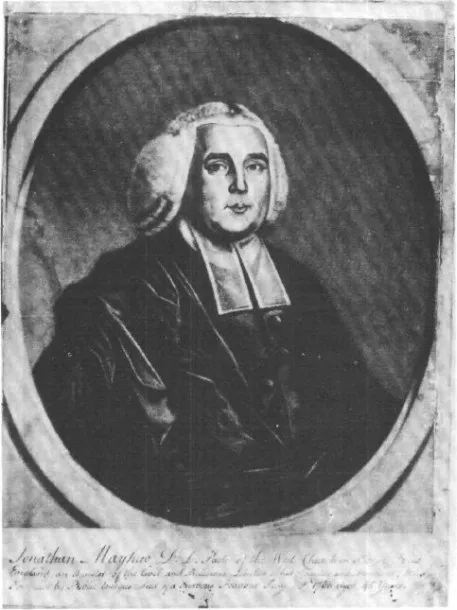
The Metropolitan Museum of Art, Bequest of Charles Allen Munn, 1924
Rev. Jonathan Mayhew
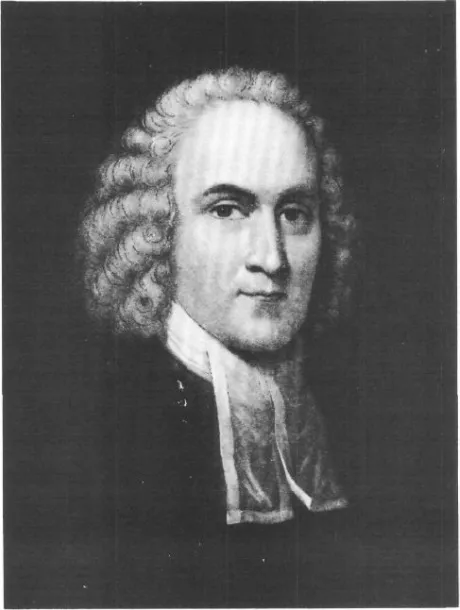
Courtesy of The New-York Historical Society
Jonathan Edwards
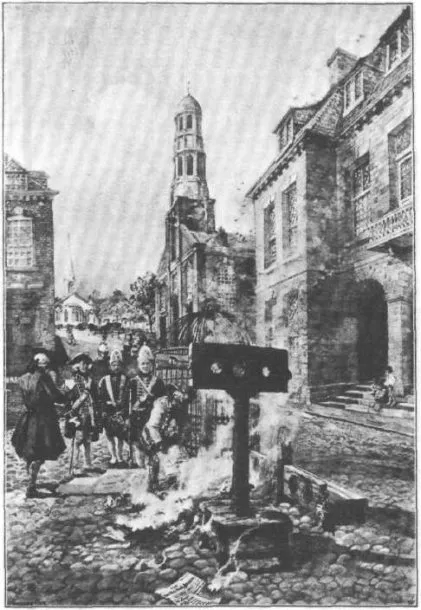
Courtesy of The New-York Historical Society
Burning Peter Zenger’s Weekly Journal on Wall Street
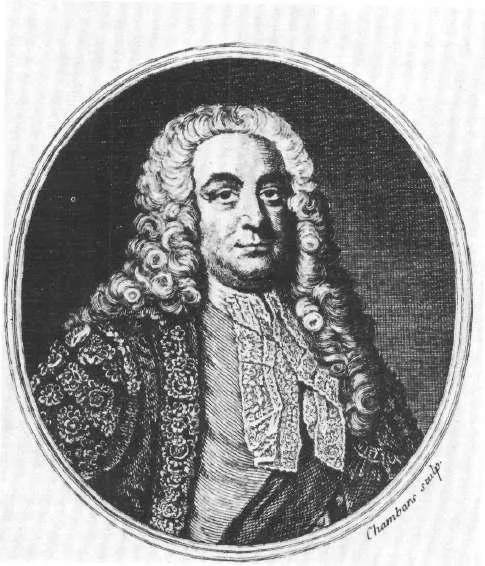
New York Public Library
Robert Walpole
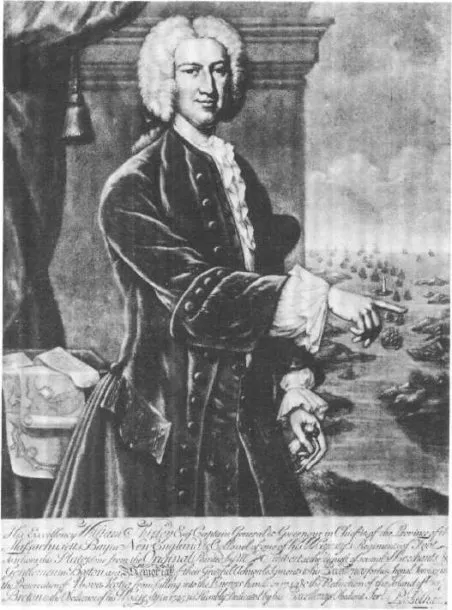
The Metropolitan Museum of Art, Bequest of Charles Allen Munn, 1924
Governor Shirley of Massachusetts
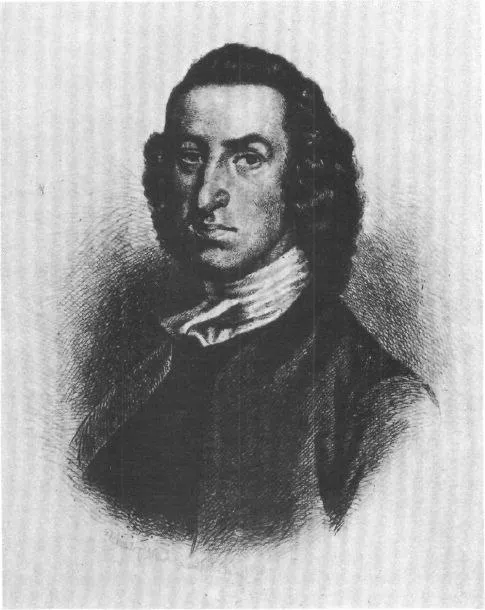
Courtesy of The New-York Historical Society
William Livingston
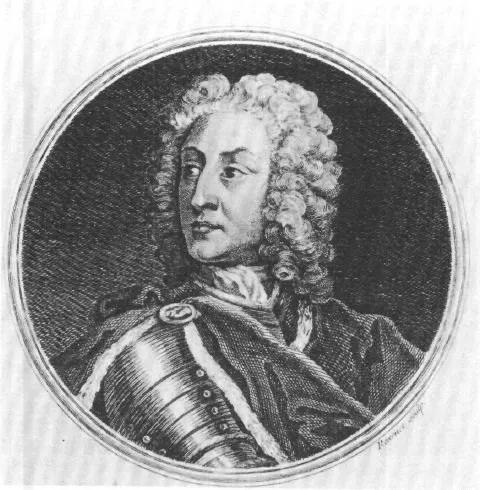
Courtesy of The New-York Historical Society
General Oglethorpe
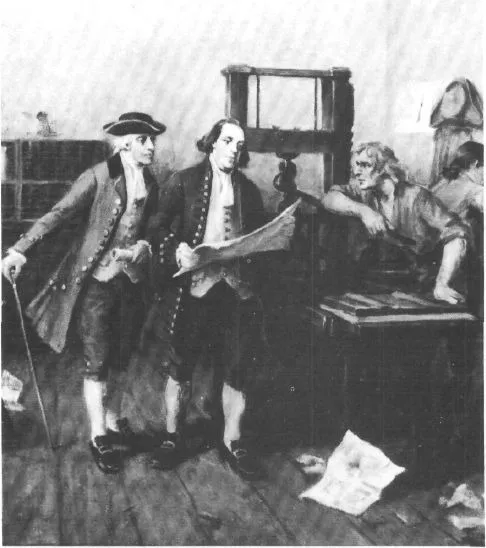
Courtesy of The New-York Historical Society
Benjamin Franklin in His Print Shop
New York Public Library
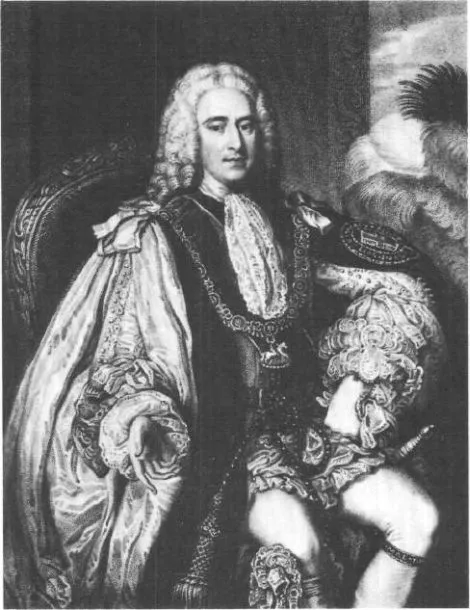
Thomas Pelham, Duke of Newcastle
Courtesy of The New-York Historical Society
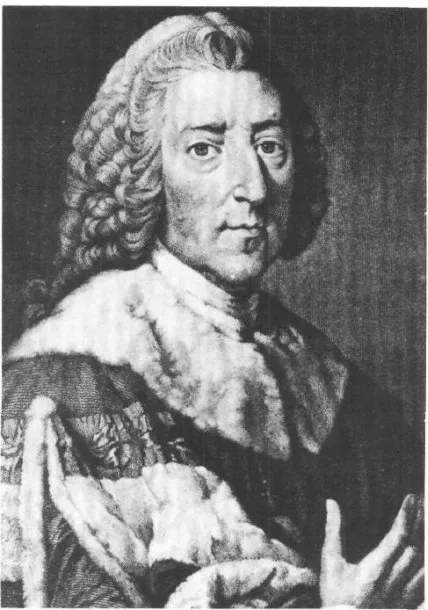
William Pitt the Elder
*Isabel Paterson, “The Humanitarian with the Guillotine,” in The God of the Machine (New York: G. P. Putnam Sons, 1943), p. 241. More fully, Paterson points out that “the humanitarian wishes to be a prime mover in the lives of others. He cannot admit either the divine or the natural order by which men have the power to keep themselves. The humanitarian puts himself in the place of God.
“But he is confronted by two awkward facts: first, that the competent do not need his assistance; and second, that the majority of people, if unperverted, positively do not want to be ‘done good’ by the humanitarians.... Shall A do what he thinks is good for B and B do what he thinks is good for A? Or shall A accept only what he thinks is good for B and vice versa? But that is absurd. Of course, what the humanitarian actually proposes is that he shall do what he thinks is good for everybody. It is at this point that the humanitarian sets up the guillotine” (ibid.).
*Albert B. Saye, New Viewpoints in Georgia History (Athens, Ga.: University of Georgia Press, 1943).
*Daniel J. Boorstin, The Americans: The Colonial Experience (New York: Random House, 1958), p. 57.
*The handful of Jews in the colonies, largely Sephardim and merchants, were concentrated in the cities of Newport, New York, Philadelphia, and Charleston.
Conceived in Liberty
Read the whole book online · Book details
Free to read online and to download from this archive.