
Chapter 12 of 28 · Gold, Peace, and Prosperity by Ron Paul
Motives of the Inflationists
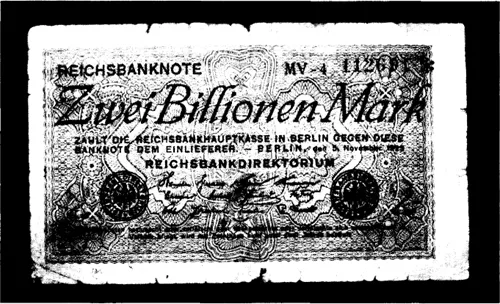
A two-trillion mark note of the great German inflation of the 1920s.
If we expect to reverse the destruction of our economy, we must try to understand the motives of those who promote inflation.
Many big business people, bankers, union leaders, politicians, and professors all grew to love inflation, as they saw in it a chance to pursue their goals. Sometimes these were purely materialistic; at other times they embodied the lust for power. In both cases they were immoral.
The political pressure to inflate is the main reason for continued expansion of the money supply. Monetization of Federal debt, with the Federal Reserve turning government bonds into money, is a convenient and politically easy way to pay the bills run up by Congress, without resorting to a tax rate that would literally provoke revolt.
Everyone in Congress talks about a balanced budget, but few consistently vote for one. Each Member always hopes that it will be the other man’s projects that will be cut, not his own. Recently, I watched one conservative Congressman vote for a gigantic pork-barrel spending bill. Knowing that the money would either have to be taxed from the people or printed up, I asked him how he could do it. “Oh, I know it’s a terrible thing,” he answered. “But I might need a project for my district someday.” Liberals we expect to be big spenders, but it’s disheartening to see people who should know better voting for business and farm subsidies, while expressing horror—rightly— at CETA. Without a far-reaching change of attitude, the budget won’t be balanced, the printing presses will continue to run, the dollar will be further debased, and prices—as a consequence— will continue to rise relentlessly.
Gold, Peace, and Prosperity
Read the whole book online · Book details
This work is published under a Creative Commons licence. You may copy, share, and re-host it with attribution.