
Chapter 14 of 20 · Men of Wealth: The Story of Twelve Significant Fortunes from the Renaissance to the Present Day by John T. Flynn
VIII. Cecil Rhodes: Empire Builder
CHAPTER VIII
Cecil Rhodes
EMPIRE BUILDER
CECIL RHODES, empire builder and diamond monopolist, dreamer and money-maker, who made a million dollars while taking his bachelor’s and master’s degrees at Oxford, is unique among the great fortune builders of history.
Of him Spengler said: “He is the first man of the new age. He stands for the political style of a far-ranging, western, Teutonic and especially German future, and his phrase ‘expansion is everything’ is a Napoleonic reassertion of the indwelling tendency of every civilization that has fully ripened. . . . Rhodes is to be regarded as the first of a Western type of Caesar whose day is to come, though yet distant.”
With some modifications, this is a just estimate. The Caesar ingredient in this powerful figure was large. He himself was pleased to be told that he looked like the Emperor Hadrian. He was an organizing and money-making genius of the first order with an overmastering hunger for that kind of power that can be had only with money. He conceived a design no less grandiose than the theft of a continent and, for a while at least, toyed with the idea of the theft of the whole world for the British crown. He amassed millions and spent them prodigally in pursuit of his passion of delivering the whole of Africa into the hands of the British Empire, as a prelude to making Britain mistress of the world.
Today, on a lofty peak that he named “World’s View” in the Matopo Hills of Rhodesia, the immense colony he stole from Lobengula and the Matabele people, the body of this mystic Caesar rests under a granite slab, brooding over the rich empire he coveted and took. He had conceived the dream of an African empire while preparing for his degree at Oxford. Later in Cape Town, when England controlled merely the Cape Colony and Natal, the young diamond digger put his hand on a map of Africa near the Cape of Good Hope and, sweeping his broad palm upward to the Mediterranean, said: “All this to be red—that is my dream.” For this he plotted, intrigued, wrought throughout his life until he saw his own career close amid the flames of a cruel war that must forever remain a blot on England’s name, but that marked an inevitable step in the march of the empire toward the goal of Rhodes.
Cecil John Rhodes was born July 5, 1853. His forebears for several generations had been successful farmers. They had the money gift—that flair for getting along that flowered in the true British pattern when his grandfather was able to set up in the manner of a squire on an estate in Essex. This gentleman’s son, Francis William Rhodes, attended Harrow and Trinity College, took holy orders, became the vicar of Bishop Stortford in Hertfordshire, married, and produced eleven children. Seven of these were sons. Cecil was the seventh child and the fifth son.
The Reverend Francis Rhodes was not an impecunious parson. He enjoyed, in addition to the honorarium of his sacred office, a decent patrimony. Cecil was sent to the grammar school at Bishop Stortford, which his father refurbished with his own funds. There he remained until thirteen, when his father became his tutor. At sixteen he was ready for Oxford where he was registered. But his health was far from robust. What was probably tuberculosis induced the family physician to order a long sea voyage. Fate perhaps took a hand with the physician in this, for the voyage took young Rhodes to South Africa, where he was destined to remain throughout his life and play out a great role in the swelling drama of England’s imperial theme.
Cecil’s oldest brother, Herbert, had settled some years before in Natal as a planter of cotton. Cecil made his home with Herbert. His health improved so rapidly in the healing air of Natal that he decided to remain indefinitely in South Africa. Very soon after, the two brothers went to the Komanzi Valley, south of Pietermaritzburg, to try their hand at cotton raising. As things fell out, the chief labor of doing this rested with Cecil. Herbert left early in 1871 for the diamond fields. In spite of many hostile elements and general predictions of failure, Cecil produced two excellent cotton crops. And in after years, whenever admonished that he could not accomplish some difficult task, he was fond of saying: “Remember I made cotton grow in Komanzi.”
When in 1870 Cecil Rhodes first set foot upon the soil of South Africa it had been but lightly touched by the European colony hunter. Think of a mere black-line outline of Africa. The holdings of European empires made but a few thin smudges at a few points along that outline. Great Britain held two small colonies at the very southern tip of the continent—the Cape and Natal. The Dutch farmers held the Transvaal and Orange Free State, independent republics, next to Cape Colony. North of them, through all the far reaches of mountain and jungle and desert, the land was inhabited by Negro, Semitic, and Arabian peoples in varying stages of savagery and civilization.
The Dutch settled at the Cape in 1652—a far outpost of the Dutch East India Company. The French seized the colony after conquering the Netherlands. The British took it from the French in 1795 and returned it to the Dutch farmers in 1803 under the Treaty of Amiens. But three years later a British squadron appeared off the coast, drove the Dutch away, and reseized the Cape. Eight years later the British paid the Dutch six million sterling for their loot.
The Dutch farmers settled in Natal in 1828 and fourteen years later the English seized Natal.
Six years later—in 1848—the British forcibly took possession of another Dutch settlement, Orange Free State. This last outrage excited so much indignation in the Cape and Natal and the Transvaal that the English, to allay feeling, recognized the independence of the Transvaal and the Orange Free State. These Boer farmers had suffered cruelly at the hands of the English and hatred of Britain became almost a part of the religion of these stern African evangelical Dutch.
Thus when Rhodes arrived in South Africa, the Transvaal and Orange Free State were independent republics, while the Cape and Natal were British colonies. Immediately north was a magnificent domain that had already begun to arouse the hunger of every sovereign in Europe. What riches slumbered in its mountains and jungles they could only surmise from an event that had just occurred near Natal, just a few hundred miles from the cotton plantation of Herbert Rhodes.
One day in 1867 Farmer Chaik van Niekerk, visiting a friend in Orange Free State, observed his host’s son playing marbles with an unusually brilliant stone. Niekerk’s host presented him with the marble. The host, like Othello, was to learn he had thrown away a pearl richer than all his tribe, save that it was not a pearl. Van Niekerk showed it to a mineralogist at Cape Town who pronounced it a diamond. The Governor bought it for £500. What van Niekerk gave the boy who owned it is not recorded.
Two years later a witch doctor brought to this lucky van Niekerk another brilliant. The farmer gave the man of magic five hundred sheep, ten oxen, and a horse—all he possessed—for the stone. In turn he sold it to a Hope Town dealer for £11,000, who sold it to Lord Dudley for £25,000. His lordship called the diamond the Star of South Africa. It weighed eighty-three carats. These two stones, one discovered by a child and the other by a witch doctor, changed the whole course of history in South Africa.
The Star of South Africa spread its beam over the wide veldts and presently Dutch and English farmers and tradesmen swarmed along the Vaal River. Ten thousand diggers spread out along eighty miles of stream. They found diamonds—enough to keep alive interest in the new industry. Then, in 1870, diamonds were found in the yellow sands on the Dutoitspan farm—larger stones and in greater abundance. Some fifty-carat gems were found. The word “diamond” ran over South Africa, and even the world, as the words “oil” and “gold” had in California and Pennsylvania. The diggers poured in from all over the world by every ship. And it was in the midst of this excitement that a young student with a weak chest and seeking only health, with no suspicion of the acquisitive fire that burned in his bosom, set his foot upon the soil of South Africa. This young Cecil Rhodes was scarcely established on the new Komanzi farm to which he and his brother had moved before the restless Herbert left for Dutoitspan, leaving Cecil to tend the cotton. But, in 1871, Cecil, just eighteen, abandoned the cotton farm and, with some digging tools, some Greek classics, and a Greek lexicon, set off in an ox cart to travel four hundred miles to join his brother in the diamond fields.
There we may see the youthful prospector—half money-maker, half student—sitting, according to his own description, on an upturned bucket, sorting gravel on a small table, fishing in the gravel for gems, and at other times deep in his textbooks. All about him, over a field five miles in radius, spread the new settlement. White tents were all mixed up with the lime heaps where 10,000 men, whites and blacks, labored like beavers in pursuit of diamonds. Herbert Rhodes did not remain long. He went off to hunt wild game. But Cecil did well. He wrote home in 1872 that he was making £100 a week. And after a little while he took a partner—C. D. Rudd—who was to remain with him through life—a young man like himself who had a bad chest, a feverish appetite for profit, and a great talent for administration.
There were all manner of men on that dust heap. But these two boys were the most extraordinary of the lot. The prospector was limited to one claim. Soon one man was allowed ten claims. Rhodes bought up nine more. Later all limitation was abolished. Rhodes and Rudd went ahead getting possession of additional claims.
By 1873 the town of tents on the Dutoitspan farm had grown to a city named Kimberley that spread out over the Dutoitspan, Bultfontein, and De Beers farms. Rhodes, though yet in his teens, was among its richest citizens. He had grown in health and in physique.
He had never ceased to lament the loss of his course at Oxford. In 1872, for recreation, he made a trek by ox team through the wide veldt, among the mountains and streams of the Cape. He permitted himself the luxury of long hours lying on his back, camped at night looking up at the stars, drinking in the soft aseptic air of Africa and dreaming of the future—a time killer he indulged in all his life. He made up his mind to return to Oxford to take his degree. In 1873, leaving his partner Rudd to look after the business, he returned to England, and, having passed the entrance examinations, entered himself at Oriel College, Oxford. He studied at Oriel half the year and looked after his mining interests in Africa the other half, fleeing to the friendly airs of Kimberley in the English bad seasons. It took him eight years to finish the job at Oxford. But he left with his bachelor’s and master’s degrees taken together. He was twenty-eight years old. And he was worth a million dollars.
Rhodes, with his sheepskins, went back to Kimberley in a moment of destiny. The prestige of England in South Africa was at its lowest. But during those years, while he studied at Oxford and wrought at Kimberley, great events were taking place in the world. England’s poets, professors, and preachers were inoculating her with the virus of world empire and Germany’s Junkers were taking her people along new flights of militaristic preparation. Writers, statesmen, warriors, and promoters were industriously sowing the seeds of the Great War and the Age of Hitler in the far future.
So far as the masses of England and her public men were concerned, they had lost their appetite for imperialism. Gladstone was in power. When Disraeli conferred upon Victoria the title of Empress of India, Englishmen muttered, even protested, audibly. They did not want an empress. They had had too many and too bloody battles to put their sovereigns in their place. Having gone to long lengths to make the kingship less substantial they drew away from transforming their queen into an empress. Disraeli knew this and tried to put Victoria off. But she was eager for the title and never quite forgave her people for their resistance to her royal whim. It was necessary for Disraeli to assure the English that Victoria would be empress in India but only queen in England.
As for Africa, the English were sick of the game there. As early as 1854 the government had set its face against further expansion in South Africa. English forces were in Egypt but the occupation was looked upon as temporary. Gladstone had said that the whole South African problem with its racial divisions superimposed on the grave native problems was practically insoluble. But events and certain drifts in the mind stream of Britons as well as all Europe were running in another direction. More than one apostle of empire was putting the heady draught to the lips of Englishmen. As the young prospector-student, Rhodes, took up his seat at Oriel, John Ruskin was preaching the doctrine of power and national vigor. “This,” he told Oxonians, and through them the youth of England, “is what England must do or perish. She must found colonies as fast and as far as she is able; seizing every rod of waste ground she can set her foot upon and then teaching these her colonies that their chief virtue is fidelity to their country and that their first aim is to advance the power of England by land and sea.”
There was, of course, the dire implication of violence and war in these grandiose counsels. But war had its apologists. Carlyle had told his countrymen that “war was the supreme expression of the state as such.” It was neither antireligious nor antisocial but “an evidence of the life of the state concentrated on an ideal end,” that “manifestation of the world spirit,” as Professor Cramb later interpreted the Scottish philosopher, “hazarding all upon the fortunes of the stricken field.”
It was this same Dr. J. A. Cramb, of Queens College, London, who gave the most robust expression to this dream of “imperial Britain,” in frequent bursts of exhortatory rhetoric. “Imperialism is patriotism transfigured by a light from the aspirations of universal humanity.” War, the handmaiden of imperialism, he glorified “as a phase of the life effort of the state towards complete self-realization; a phase of the eternal nisus, the perpetual omnipresent Strife of all beings toward self-fulfillment.”
And while the warlike professor talked about England’s mission to “updo the world, to establish there her peace, governing all in justice,” as in Rome, nevertheless these academic Caesars had a supreme contempt for that peace that was to be the supreme flowering of their world conquest. “Universal peace,” said the predatory doctor, “in the light of history, is less a dream than a nightmare.”
At the root of such a philosophy, of course, could be but one logical basis and that the glorification of the race. And so we find Dr. Cramb informing us that in “a race dowered with the genius for empire as Rome was, as Britain is, imperialism is the supreme, the crowning form which, in the process of evolution, it attains.” Exalted by his own rhetoric, the world-hungry doctor cried out: “If ever there came to any city, race or nation, clear through the twilight spaces across the abysses where the stars wander the call of Fate, it is now”
Dr. John A. Hobson, writing critically of his countrymen, said: “The Englishman believes he is a more excellent type than any other man; he believes he is better able to assimilate any virtues they may have; he believes his character gives him a right to rule which no other can possess.”
One by one, under the exhortations of teachers, philosophers, poets, and statesmen, one leader after another and soon the people slowly succumbed to the intoxicating draught until, by the time Cecil Rhodes’ race was run, all England, from the romanticists who played with the knight-errant motif to the prospectors who hunted gold and diamonds, was aflame with the delirium. Before she was done with this arrogant pursuit of the visions of Ruskin and Cramb, she had seized dominion over four and a half million square miles and a hundred million people in Africa and another empire of 700,000 square miles and twenty million people in Asia and she had isolated herself from the affection and esteem of the world.
It would be strange indeed if this evangel did not sink deeply into the soul of Rhodes. We find him saying in 1877, when he was twenty-four, after four years at Oxford: “We are the first race in the world and the more of the world we inhabit the better it is for the human race.” Here is that mortal doctrine that Roman, Spaniard, Frenchman, Briton, and now Fascist and Nazi in their turn have proclaimed upon the European continent and that has drenched that continent in blood. The cultural promoters of Hitler boast that the German Aryan is not only superior to the African and the Slav but to the Englishman, just as one of Cecil Rhodes’ most distinguished subalterns in the South Africa Company, Hubert Hervey, proclaimed through his literary ghost, Earl Grey, that “insofar as an Englishman differs from a Swede or a Belgian he believes he represents a more perfectly developed standard of general excellence. Yes—and even those nations like ourselves in mind and sentiment—German and Scandinavian—we regard as not so excellent as ourselves.” And it is not sufficient that they should nourish their pride with the contemplation of this excellence, but “it is essential that each claimant to the first place should put forward his whole energy to prove his right. This is the moral justification of international strife and war.” To strut and boast is not enough; they must “updo” the world.
Just before Rhodes had first gone to Cape Colony, as we have seen, diamonds were discovered in the Orange Free State, a Boer republic. At a later day Lord Salisbury had said that Britain “had been called to exercise an influence upon the character and progress of the world such as has been exercised by no other empire” and this call had “come from what he preferred to call the acts of Providence.” The clarion call of the almighty God was trumpeted to what the Archbishop of Canterbury called Britain’s “Imperial Christianity” from the yellow clay of the Griqualand diamond mines. Those mines were found north of the Orange River and it was that river beyond which England said she would have no further “territorial ambitions,” using almost the same phrase Adolf Hitler used to Chamberlain at Munich.
The new treasure was found in what was known as Griqualand. This territory had always been considered as part of the Orange Free State. President Brand of the Free State promptly undertook to police the mines. Presently Waterboer, the Griqua chief, set up a claim to the diamond fields. The British government compelled the parties to submit to arbitration. President Brand and Waterboer agreed on Lieutenant Governor Keate of Natal. Keate, a British civil servant, awarded the fields to Waterboer. And immediately thereafter Waterboer appealed to the British to take over his country, which the British obligingly did, diamonds and all, annexing it to the empire as a lieutenant governorship and later incorporating it in Cape Colony. The Boers saw in this a scheme of deep perfidy that they never forgot. Their suspicions were confirmed when in 1876 Lord Carnarvon, Conservative Secretary for Foreign Affairs, tacitly admitted the wrong done the Free State when, as a solatium, he paid to it £96,000.
This was in 1876. In the following year England, despite her recognition of the Transvaal Boer republic in 1854, violated this agreement and seized that small nation without warning. The pretext was a Zulu uprising. The benevolent empire feared the Boers would not be able to cope with the warlike Zulus. Paul Kruger and General Joubert hurried to London to plead for their independence. They were told by a smiling Secretary of State that their people—the Dutch farmers—wanted the annexation. Kruger and Joubert hurried back to the Transvaal and readily produced a petition bearing the signatures of practically every voter in the Transvaal, protesting annexation. To mitigate the crime the British promised the Boers the fullest measure of local self-government. Instead the government set up was a military dictatorship. Gladstone denounced the whole proceeding. “If Cyprus and the Transvaal,” he said, “were as valuable as they are valueless, I would repudiate them because they are obtained by means dishonorable to the character of the country.” But when the great liberal premier came into power in 1880 he refused to restore Boer independence. Gold had appeared in the Transvaal—not a great store but enough to give the land a pleasant smell. The voice of the Lord calling the great imperial Christian empire to service was rumbling in the bowels of the Rand. In the end the Boers, under Kruger and Joubert, revolted and in four pitched battles beat the British, the last at Majuba Hill where General Sir G. Colby, in command, was killed. Thus the pretense that England must grab the Transvaal to save it from the Zulus was utterly exposed by the swiftness and decisiveness of the defeat which the Boers administered to their “saviors.” Sir Garnet Wolseley warned that there was gold in the ground, that the time to finish the conquest was now. But Gladstone feared—with reason—that the revolt would spread to the Free State and the Cape Dutch and he again recognized the independence of the Transvaal.
This was in 1881. It was on the heels of Britain’s disastrous raid upon the Transvaal that Rhodes ended his studies in Oxford and returned to Kimberley, twenty-eight years old and one of the richest men in the Cape.
He brought with him a compendium of ethical and political concepts which, if he did not invent, he assembled and edited and made into a philosophy of action. Rhodes was a thinking animal, but thinking was not a mere exercise in speculation. It was a practical instrument set for practical ends. Thus at Oxford he had read a small volume by Winwood Reade that had profoundly shaken his belief in God. The speculations of the Darwinians had added to his heresy. He kept Reade’s book near him throughout his life and dipped into it again and again. But one of his biographers observes that Rhodes was not the sort of man to leave so important a question as the deity hanging in the air. He decided that it was a problem beyond his own powers or leisure to settle, but that, as matters stood, it was a fifty-fifty proposition that there was a God. He had to adopt some theory as a working proposition. And so he took God on a fifty-fifty chance.
It was part of his mental system that he had to have a basic charter of dogmas, if not intellectual principles, upon which to act. Many years later he told a gathering at Oxford that in his student years he came across Aristotle’s definition of ethics as “the highest activity of the soul living for the highest object in a perfect life.” And he chose there at Oxford that “highest object.” It did not matter that he had misunderstood Aristotle who had spoken of “the highest principle of right” rather than the “highest object in a perfect life.” The object he chose was the extension of the rule of the Anglo-Saxon race over the world. And this design he continued to follow through his life with a singleness of purpose and a disregard of the vulgar virtues in a manner to satisfy completely the specifications of Spengler, who adopted the dictum of Goethe that “the doer is always conscienceless.”
In 1877, at the age of twenty-four, about the time that Disraeli seized the Transvaal, Rhodes, who saw in this a good beginning, made his first will. In it he planned a secret society, Jesuitical in its techniques, that would have as its mission the extension of British rule throughout the world; the occupation by Britain of the entire continent of Africa, the Holy Land, the valley of the Euphrates, Cyprus, Candia, all of South America, the islands of the Pacific, all of the Malay Archipelago, the seaboard of China and Japan, and the ultimate recovery of the United States of America.
Here was indeed a plan to updo the world; a dream of imperial expansion beside which the fire of Hitler is a pale and ineffectual flicker. But Rhodes throughout his life never lost sight of this goal.
Since Rhodes was an acquisitive dreamer, this is a proper point at which to clear up the details of his acquisitive program.
That hive of tents and lime hills that peppered the veldt and that was Kimberley gradually turned to a town of streets and buildings. Money flowed into its roistering population. And there Rhodes spent his time between semesters at Oxford.
The diamond industry, too, was taking form after the usual pattern of the pioneer mining rush. The promise of gold, diamonds, oil draws thousands of men with no other talent for growing rich save the urge of the wildcatter and the taste for wandering to far places. The diggers had but to lease claims and dig and if luck was with them the diamonds came quickly enough. But once the shovel had done its work a new talent was needed—the talent of the entrepreneur. From that point on the inevitable winnowing process began. When it became possible for one man to have as many claims as he could acquire Kimberley became the scene of the same comedy as the Pennsylvania oil regions. It became a battle for claims—for expansion—in which the weapons were money and business acumen.
At first the diamonds were found in the shallow yellow clay. Later it was necessary to excavate the deeper blue clay. The treasure was richer but the cost was greater. At this point the impractical, the extravagant, the impecunious diggers began to disappear. Men like Rhodes and his partner, Rudd, began to buy them out. Rhodes had an eye open for every source of profit. He and Rudd brought hydraulic pumping machinery from England to pump out flooded mines. They built an ice plant to supply the eager and profitable market on that blazing veldt. They made much money at both ventures. By the time Rhodes was done with his Oxford studies, he had almost complete mastery of one of the diamond fields.
There were two such fields—the De Beers and the Kimberley. And just as Rhodes rose to the dominance of the De Beers digging, another equally colorful and extraordinary figure was widening his sway over the Kimberley mines.
In 1873, about the time that Rhodes was beginning his career as a student at Oxford, a very different person, named Barney Isaacs, was making his way to Kimberley. Isaacs, the grandson of a rabbi and the son of a Whitechapel shopkeeper, was a product of the London ghetto. He had some superficial schooling in the Jewish Free School until fourteen. After that he and his older brother, Harry, with a flair for the theater and the music hall, tried their hand at clowning, juggling, and acrobatics in some cheap music halls. Stories of diamonds in South Africa and quick riches interrupted this career. Harry Isaacs went to the Cape in 1871 and Barney in 1873. They had adopted the name of Barnato in their clowning acts and took that name to South Africa with them. Barney took forty boxes of cigars which he peddled to the miners at fancy prices, but his whole capital was swiftly exhausted. He tried his hand at boxing and clowning in Payne’s circus. He worked in stores, began buying and selling any sort of merchandise, bartered old clothes and other trinkets with miners for the privilege of giving their dust a second sifting. When he had made enough money this way he appeared around the sorting tables of the mines with the little black satchel of a kopje-walloper—the buyers who moved around daily buying for ready cash the gems of the less thrifty diggers. Before long he had acquired a claim and in time he had extended this to four.
Unlike Rhodes, who was concerned with his education and played with grandiose visions of empire, Barnato devoted his energies with wholehearted singleness to making money and amusing himself. He diverted himself amidst the gay life of Kimberley and Cape Town, patronized the race tracks, frequented the bars, the restaurants, the gambling rooms, the theater, sponsored amateur performances of the drama and became himself one of the leading amateur actors. But all this merely gave him relaxation from the promotion of his fortune. He grew rich. He established a banking house in London—Barnato Brothers. He bought up Kimberley claims until, like Rhodes on De Beers, he became the chief influence in the Kimberley field.
By 1881 these two men—Rhodes and Barnato—dominated the diamond industry of South Africa. The acquisitive talent, like that of the artist and musician, is precocious. Rockefeller was a prosperous merchant at eighteen, Morgan was wealthy in his own right at twenty-one, Hetty Green could call off the stock quotations as a child, Fugger revealed his special genius in the twenties. Here, in South Africa, two precocious money getters were the leading figures in that art—Rhodes at twenty-eight, Barnato at twenty-four. It was inevitable that they would wage war. Neither would be content in his own province. Rhodes, indeed, had returned from England not only with a dream of imperial aggression for Britain but with a dream and a plan for industrial aggression for himself.
At twenty-eight Cecil Rhodes was thinking the same thoughts as the thirty-two-year-old Rockefeller twelve thousand miles away. Rhodes concluded that the rich rewards of the diamond industry could be drawn off only by a monopoly. Competition, production, prices must be controlled in the interest of “stabilization.” There are enough swains in the world to spend on their brides and wives and mistresses four million pounds for diamonds a year. No matter how many stones were offered, that, he had calculated, was the fund available to buy them. The course of wisdom was to offer the smallest number of stones, get the largest prices for them, make the largest profit, and conserve the supply. This could be done only by monopoly control. He therefore decided, in the intervals of meditation upon the ethics of imperialism, the functions of the deity, and the perusal of the classics at Oriel, that he would capture the monopoly of South Africa’s diamonds. He would proceed quite as the elder monopolist, Rockefeller—of whom perhaps he had never heard—had proceeded, covering himself with riches and odium.
He began his preparations before he was through with Oxford. In 1880 he formed the De Beers Mining Company, £200,000 capital. He induced many diggers who would not sell outright to him to go in for shares in De Beers. Barnato did the same. He formed the Barnato Mining Company with £115,000 capital. Barnato was no slight adversary. He was richer personally than Rhodes. Through his London house he had access to large capital resources. He was shrewd, quick-witted, audacious, with unlimited confidence in himself. He loved to gamble and boasted that he had never had an unsuccessful operation. He was lively, buoyant in spirits, pugnacious, and money hungry.
But he had one weak spot in his armor. His company owned most of the Kimberley mine fields. However, an important section was still held by a French concern—the Compagnie Française des Mines de Diamond du Cap—whereas Rhodes had all of the De Beers field. By 1885 Rhodes felt himself strong enough to begin his offensive against Barnato. And he began with the French company. He arranged a loan with the Rothschilds in London for £750,000 and through a Hamburg syndicate issued £750,000 in shares. With these funds he made an offer to buy the French company’s holdings for £1,400,000. This deal was on the point of going through—had indeed been approved—when Barnato, getting wind of it, made an offer of £300,000 more. Rhodes went to Barnato. He told him with convincing frankness that De Beers would raise his bid no matter how much he offered. Then he offered to sell the French company to Barnato for £1,400,000, precisely what he proposed to pay for it. This looked like complete capitulation. But Rhodes insisted that Barnato pay him for the French company with shares in the Kimberley company. Rhodes reasoned that even though he got possession of the French company’s shares, he would have to begin an aggressive fight to get into Kimberley. Furthermore, he saw that if Barnato got the French company, the complete control would be in Kimberley and if, at the same time, he got a foothold in Kimberley he would be on his way to getting possession of that whole diamond field. Barnato, apparently, did not bother about this. The French company holdings would complete his possession of Kimberley and he did not believe that Rhodes could stretch his minority interest in Kimberley thus acquired to a controlling interest. He agreed.
Immediately Rhodes set about grasping Kimberley company control. He began buying shares in Kimberley. Barnato, on his part, set out to cripple De Beers by a diamond price war. Also Barnato began to compete with Rhodes in buying Kimberley shares as they came on the market. Thus two wars—a diamond price war and a stock war—ensued. The price of diamonds went steadily down. Barnato thought he could either break De Beers or force it to surrender. But he was playing a desperate game against a master general.
Once again Barnato played his hand wrong. He made the mistake of underrating Rhodes’ financial resources. Rhodes had at his side one of the most remarkable financial figures of South African history—Alfred Beit, a Hamburg Jew who had started life as a diamond merchant in Amsterdam and graduated into banking, a shrewd, prudent, yet bold financier of great wealth, who had his own banking house and rich connections in Amsterdam and Hamburg. He idolized Rhodes.
Moreover, in the stock war, Rhodes’ buying was done by himself, Beit, and his colleagues acting as a unit and aiming at control. When they bought Kimberley shares they kept them. Barnato, however, was supported in his buying by friends who were not so much interested in control as in speculation. They bought Kimberley shares. But when the market rose swiftly, they sold to take the profit and, as they sold, Rhodes’ agents were on hand to buy. As the game got warm and Barnato perceived what was happening he appealed to his friends to buy and hold. But now his price-war stratagem smote him. He was asking men to hold on to shares from the sale of which they could make a rich profit—shares in a company which, as the share prices rose, was losing money as the price of diamonds declined. He awoke finally to see that Rhodes had got a clear majority of Kimberley shares. There was nothing to do but sue for terms.
Rhodes organized a new company—the De Beers Consolidated Mines, Ltd., which took over the holdings of both the old De Beers and the Kimberley company. Barnato became one of the board of life governors with control completely in Rhodes’ hands. Rhodes was to be general manager. The diamond industry was a complete monopoly under Rhodes’ thumb and he had traversed the first stage in his ambitious plan. But he had another at the same moment.
In the course of negotiations, Rhodes had made upon Barnato the extraordinary demand that the resources of the De Beers company should be available for use in extending the dominions of Britain in South Africa. This ruffled the hackles of Barnato’s business sense. He wanted no mixture of politics with the business of making money from diamonds. But Rhodes was obdurate. For eighteen hours the two men argued the settlement with this strange item in it. Rhodes threatened, reasoned, cajoled. In the end Barnato capitulated. He said later he always avoided Rhodes when he differed with him. “When you have been with him half an hour you not only agree with him but come to the belief that you have always held his opinion,” Barnato said.
Nevertheless, it took eighteen hours of wrangling to bring Barnato around to Rhodes’ imperial ingredient in the diamond corporation. Rhodes had to flatter him. Barnato, rich though he was, had never been able to crack the crust of the social shell that excluded him from polite Cape society. He had never got his foot inside the Kimberley Club. Rhodes took him there to luncheon, promised him membership. The once humble Whitechapel juggler softened in that solvent atmosphere. When the deal was concluded Rhodes said to Barnato: “You have had your whim. Now for mine. I have always wanted to see a bucketful of diamonds.” Barnato produced them. Four hundred and thirty truckloads of blue clay in a year had to be washed to produce a bucket of diamonds. Rhodes ran his fingers through the precious brilliants, letting them sift through his fingers. At thirty-six he had fought an epic battle against his thirty-two-year-old adversary for one of the greatest prizes in the world. He was master of the diamond world. The sparkling fruit of that tree dripped through his fingers now like sand. It must have seemed easy. Beyond lay still other and more difficult worlds to which he looked. He lost no time in making the start.
Rhodes, the businessman, with his dream of British empire, was drawn inevitably into politics. Griqualand West, the diamond country, was incorporated into the Cape in 1881. And Rhodes was named one of its first members in the Cape House from Barkeley West.
He was already a figure in the Cape. Millionaire, diamond digger, Oxford man—in that small world with the population, as he described it, of a third-rate English city such a one was not to be discounted. Tall, broad-shouldered, auburn-haired, a “fine, ruddy Englishman of the country squire type,” as a contemporary described him, blunt of speech but friendly, giving himself no airs because of his success or education, he took his seat in 1881. Some older members made faces at his refusal to wear the conventional claw-hammer coat and high hat of the Cape statesman. “I am still in Oxford tweeds,” he said, “and I think I can legislate in them as well as in sable clothing.” He loved to mingle with politicians, men of affairs, and newsmen who gathered at the Civil Service Club and Poole’s for lunch and reveled in the talk.
He took his seat as the Boer war fiasco approached its end in 1881. Rhodes was hot with anger at Gladstone’s surrender. He opposed Boer independence. He would not be trampled upon by these Dutchmen. But the war was over; he was done with it. He spoke of it little. The man who had swept his hand over the map of Africa and said it must be all red now set about achieving that dream.
At the tip of Africa nestled the small Cape. Above it was Bechuanaland, a broad province of grass and desert. On one side of it—the west—lay German West Africa. On the other were the Orange Free State and Transvaal. It was a broad corridor, a “Suez Canal” as Rhodes said, leading northward from the Cape to the interior of Africa. If England did not seize that, her pathway north as Rhodes planned it would be closed.
He proceeded at once to urge upon the Cape parliament the acquisition of Bechuanaland. There was no time to be lost, he said. Bismarck had only recently hoisted the German flag over German West Africa and was looking about for more. On the other side, the Transvaal Boers were ceaselessly seeking to push the dominion of their pastoral republic northward into the rich grazing lands of Bechuanaland. If the Boers took that country the Kaiser, Rhodes said, would find some pretext to attack and grab the Transvaal, thus commanding a stretch of territory running completely across South Africa above the Cape and locking Britain in.
By 1883 Rhodes succeeded in having a commission named to investigate certain Griqualand claims. Named on this commission, he expanded its functions to suit his ends. He went to Bechuanaland. He visited the native chief, Makorane, and induced him to appeal to the Cape to take over his land to protect him from other chiefs. The Boers had entered. Two small Boer republics were organized there—Stellaland and Land of Goshen. He induced the Stellaland president, van Niekerk, to accept a British protectorate. He did not have the same success at Goshen where van Pettius, a stubborn and resolute Boer, held out.
However, Rhodes, in February, 1884, induced Lord Derby to proclaim a protectorate over Bechuanaland. A commission was sent headed by a narrow and race-proud clergyman, John Mac-Kenzie, to organize the territory. He got into trouble with native chiefs and Boer leaders. He refused to recognize the pledges Rhodes had made to the Boers to respect their land titles and permit full measure of self-government.
At this point, Paul Kruger, President of the Transvaal republic, acted. He proclaimed Land of Goshen Transvaal territory and sent in some Boer troops to make it good.
Rhodes counseled swift action by the imperial government. An expeditionary force commanded by Sir Charles Warren with 4000 men marched into Goshen on Christmas, 1884. Kruger saw he had gone too far. He asked for a conference. The conference was held at Fourteen Streams in the Cape. There the two men who would impersonate the hostile forces in the rising crisis of South Africa—Paul Kruger and Cecil Rhodes—met for the first time.
Stephanus Johannes Paulus Kruger—later to be known as Oom Paul—President of the Transvaal, was then fifty-nine. Born in the Cape he had shared with his family and people the great northward trek out of the Cape beyond the Vaal River and the founding of the Transvaal republic. A magistrate at seventeen, military officer of his ward, he had engaged in the wars against the Matabeles, the Zulus, and the Basutos. He had risen through the grades of commandant general and vice-president to the presidency the preceding year. Patriarchal in appearance, iron-willed, nourishing a profound hatred of the British out of his memory of all the wrongs his people had suffered, deeply religious, preaching every Sunday in the church opposite the presidency the primitive evangelism of the Dopper branch of the Dutch Reformers, he looked upon himself as the chosen instrument of almighty God to lead his people.
These two men—Kruger and Rhodes—were driven along by the same design of expansion. Kruger dreamed of an independent Boer republic from the Orange River to the Zambezi. Rhodes dreamed of an imperial dominion of the British empire in that same land. For the next fifteen years the plans of these two men in their respective directions would shape the development of South Africa and lead in the end to a bloody and disastrous war. It is possible that if diamonds had not been discovered in the Free State and gold later in the Transvaal, Kruger would have had his dream. In later years Rhodes spoke of him as “that extraordinary man” and “one of the most remarkable in South Africa.” But now as Kruger faced Rhodes for the first time at Fourteen Streams, the accumulating energies that flowed from the diamond mines, the still-small gold mines, and the growing half-braggart, half-commercial imperialism of Britain were too much for him. He agreed to withdraw from Land of Goshen. General Sir Charles Warren and his 4000 regulars assumed the rule of Bechuanaland, with Rhodes as a civil adviser.
Warren, inflexible militarist imperialist, proceeded to act the role of Roman proconsul. He overran the country, quarreled with everyone, repudiated all of England’s pledges, and even arrested van Niekerk on a preposterous charge of murder. He finally quarreled with Rhodes, who wanted a moderate, ingratiating policy with the Boer settlers, while Warren thought in terms of force, obedience, authority, hierarchy. He was the perfect fruit of that principle of racial coxcombery that lies at the root of imperialism. Rhodes quit his post in disgust, returned to Cape Town, resumed his seat, and denounced Warren’s methods. Warren had to be recalled. Bechuanaland was then erected into a protectorate. But Rhodes had completed the first step in that series of aggressions by which England would become the overlord of most of Africa.
After the Bechuanaland affair the prestige of Rhodes stood high in the Cape. He had by his criticism of Warren conciliated the Dutch. And he had practically doubled the land area of British possessions in South Africa. His wealth had grown royal. His influence in parliament was vast. His expansive dream of empire had become infectious. By 1889 he was acting treasurer general and in 1890 he was elevated to the premiership of Cape Colony.
But before he became Prime Minister he set in motion that project which was to be his chef-d’oeuvre. The conquest of Bechuanaland was merely the prelude to his ultimate aim which was, as some began to phrase it, to make Africa “British from the Cape to Cairo.” His next step was to move northward yet again, this time into the vast country of Lobengula—a province twice as large as Texas, one day to be known as Rhodesia.
In 1887 Rhodes heard that Boers were meditating a northward trek into Lobengula’s country—the land of the Matabeles and the Mashonas. Though Rhodes held no office he made the Boers understand that if they went into Matabeleland they must go as British subjects. “There will be no more Boer republics permitted in South Africa,” he said. Then he moved himself. And now we may see clearly the clever surgery of imperialism.
He had a mission sent to Lobengula which negotiated a treaty with him. It was agreed (i) that peace should continue forever between the British and the Matabeles; (2) that Lobengula would refrain from entering into any agreement or correspondence with any foreign state to alienate any part of his country without previous knowledge or sanction of the British High Commissioner of South Africa (February 11, 1888).
A second mission followed, managed by Rhodes’ partner, Rudd. Lobengula was a huge, intelligent, but not very warlike chieftain. He had developed a keen talent for negotiation with white men. Rudd and his two companions, representing Rhodes and not the government, remained nine months amid the strong odors of the Matabele chief’s kraal at Bulawayo fishing for an agreement. They wanted a concession. They sought an arrangement to permit them to hunt for and work metal mines in Matabeleland. Some gold had been found there by a German in 1864 and a promising gold belt by an Englishman in 1869, though little had been done about these discoveries.
Lobengula was wary of his visitors. He listened ceaselessly to the arguments of his suppliants. He wanted to be sure no infringement of his sovereignty was intended. He wanted no white settlers. Rhodes’ agents told him: “All the white men want is for you to let them dig in the country of the Mashonas for gold.”
Then one day Lobengula sent for the interpreter who accompanied the Rhodes party. “You are sure you are not coming for grass and ground?” he asked.
“King, no. It is minerals we want.”
Thus assured, he put his mark to an agreement. This document gave Rhodes “complete and exclusive charge over all metals and minerals in my kingdom” and to “do all things that they may deem necessary to procure the same.” Rhodes agreed to pay Lobengula 100 pounds a month, 1000 Martini-Henry breech-loading rifles, 100,000 rounds of ammunition, and a steamboat with guns to patrol the Zambezi.
Lobengula always insisted that he had been duped. He wrote a protest to the Queen later in which he declared: “Men asked for peace to dig gold and said they would give me certain things. A document was presented to me which they said contained my words. I signed. Three months later I was told that I had given away all minerals in my country.”
The account of one member of Rhodes’ own mission serves to bear this out. But, even accepting the document on which Rhodes relied, all he had was an instrument giving him an exclusive concession to work mineral deposits in Matabeleland. Yet the next Lobengula knew of this transaction was when his warriors informed him that Rhodes’ agents had entered Mashonaland with a military force of 320 troops, escorting 180 settlers under command of Sir John Willoughby, armed with a charter from the British government that gave Rhodes the right to administer and govern the country, to set up courts and administer justice even among the natives.
If Rhodes had proceeded with consideration for the natives in Bechuanaland, he unloaded those virtues now in Matabeleland. Had he merely invaded the country he might have appealed to the higher law of the superman and the superstate. But he first made a solemn agreement with Lobengula, obtained upon palpably false promises, and then violated the agreement the moment he had obtained it.
As soon as he had his metal concession he hastened to London, where he induced the government to give him a charter for a corporation called the British South Africa Company, after the model of those old imperialistic trading companies under cover of which Dutch and French and English trader-adventurers had seized great portions of the world’s surface. It conferred powers of government upon the British South Africa Company with a reservation that the British government might take over administration of the company on compensating Rhodes. These trading companies were the precursors, organizers, and missionaries of imperialism in the early capitalist era, often without any design on the part of the government. They spread their administrative authority over great areas as part of their commercial activities and gradually created colonial dominions that governments had to step in and administer. It was the Dutch East India Company that had first colonized South Africa, as the British East India Company had exploited India. And it was such a company that Rhodes now formed to seize and masticate Matabeleland as a prelude to its digestion by the crown. It had a special advantage for promoter and crown. Salisbury was now Prime Minister. Rhodes’ dream of empire in Africa enjoyed high favor in London. The soil of South Africa was revealing rich reasons for the spread of Christian civilization on that continent. Diamonds in Griqualand were succeeded by gold in Witwatersrand. The good earth there looked good indeed to Downing Street. But the scramble for territory in Africa bristled with difficulties. The government could well leave the next stage of conquest to a trading corporation. It could disown the blunders of such a company. The company could withdraw from positions without compromising the prestige of the empress. As for Rhodes—to him the record of direct imperial government in Africa was a chronicle of blunders. He wanted no more Bechuanaland mistakes. If the penetration, confiscation, and organization of Matabeleland could be carried on by him, he could proceed without the hampering red tape of the Foreign Office.
He pulled strings to get his charter. He lured several noble gentlemen into the enterprise. He made the Duke of Abercorn president and the Duke of Fife vice-president of the chartered company. He issued a million shares at a pound a piece. The promoters took 90,000 founders’ shares (founders’ shares which American promoters were to discover with delight twenty years later). And these took fifty per cent of the profits. The ordinary shares were sold to small investors. The meticulousry old London Times plugged them valiantly. The country of Lobengula was “fabulously rich,” a veritable “Land of Ophir,” it repeated. The shares were eagerly snapped up.
Having got his charter, Rhodes returned to South Africa and organized that expedition of settlers and soldiers that had alarmed the disillusioned Lobengula as it marched into Mashonaland in July, 1890. The chieftain demanded that the column come to Bulawayo in order to reveal its intentions. It ignored this summons, pushed into Mashonaland, built Fort Salisbury, hoisted the British flag, and took possession of the country formally under the protection of the British crown.
By this time Rhodes had become Prime Minister of the Cape. Entrenched in political power there and in absolute power at the head of the chartered company, he was prepared to work his will freely.
But the enterprise did not prosper. In two years it was in trouble. Few settlers arrived. The company exacted fifty per cent of all minerals recovered. Food had to be brought through a difficult jungle. A police force of seven hundred was organized. The chartered company paid out £250,000 a year and got little return. The settlers grumbled. Lobengula bided his time to smite the invaders. The white settlers stole the natives’ cattle, which was their chief wealth. Finally Lobengula sent an army to Mashonaland on pretext of chastising his serfs, the Mashonas. By this time Dr. Jameson was administrator of the chartered company. He opened fire on Lobengula’s warriors and the first Matabele war was on. Jameson with nine hundred men pursued Lobengula and in two pitched battles defeated him. The king abandoned Bulawayo, his capital. He was pursued but died of smallpox. The Matabeles surrendered. Rhodes won a costly victory, but in England the whole episode was roundly denounced as a recrudescence of medieval imperialism.
The trouble did not end here. Some years later, after the famous Jameson Raid had impaired Rhodes’ power, there came a second Matabele war. The natives revolted again. A British force was sent under General Sir Frederick Carrington to subdue them, but without success. They were finally subdued by Rhodes himself. And the manner in which he did it is the subject of one of those apocryphal fables that are built up around famous men—like the hatchet and Washington—which have more to do with forming popular judgment about them than the facts of history.
The legend represents Rhodes in the heroic mold. Carrington, in winter quarters, planned a spring offensive to cost £20,000,000. This meant bankruptcy for the chartered company. Rhodes decided upon a daring strike. Taking five companions he went to the Matopo Hills. The chiefs agreed to see Rhodes. They assembled in a natural amphitheater walled by the granite hills. Rhodes went to them alone where he found the surrounding cliffs and rocks swarming with the warriors in war paint. They advanced, forming a menacing circle around him. He addressed them; admitted some grievances, and then, his eyes blazing, he denounced them for their cruelties. He ended by crying: “Is it to be war or peace?” Overcome by this display of courage one old chief threw down his weapons at Rhodes’ feet. “There is my rifle. There is my spear,” he cried. And the war was over.
It is a pretty story, but untrue. Rhodes did go to the Matopo Hills. But Colonel Plumer was camped there with eight hundred men. He set up his own tent at a little distance, since he hated camps. He had several companions, among them a woman, Mrs. Colebrenner, and her husband. Instead of his going to the Matabele camp alone, one of the elder statesmen of the tribe, Babiaan, visited Rhodes’ camp alone and remained as a guest for two weeks. He feasted on Rhodes’ hospitality, returned to the Matabele settlement, and persuaded the chiefs to visit Rhodes, which they did and agreed to end the war. They then arranged a great peace meeting to which Rhodes went and partook of the great feast spread for him. At two or three meetings Rhodes concluded a treaty with them ending a war that was costing the British South Africa Company £4000 a day. It was a triumph of skillful negotiation but in no sense the heroic adventure narrated by some biographers. The account given here is that written by Rhodes’ secretary who accompanied him on the trip.
It ended with Rhodes adding another magnificent domain of over 400,000 square miles to the British land loot of South Africa—a territory more than four times the extent of the United Kingdom itself. By 1890 this pragmatic dreamer of empire for Britain and riches for himself had, in nine years, acquired for himself undisputed control of the diamond monopoly of South Africa, a powerful claim upon the vast gold holdings of the Transvaal discovered in that time, and for Britain he had brought the territorial holdings up to nearly a million square miles, or one third the land surface of the United States.
By this time Rhodes had matured his political philosophy about South Africa and the British Empire. He held steadfastly to the view that there must be a union of the white states—the Cape, Natal, Transvaal, and Orange Free State. The Dutch statesmen nursed the same ambition. But as the Transvaal and Free State were all Dutch and the Cape and Natal heavily populated with Dutch, their objective was a unified Dutch republic. And Dutoit, of the Afrikander Bund, insisted that “the one hindrance to this was the British flag.”
Rhodes, however, did not want a union run from London. He believed, as he put it himself, in a “government of South Africa, by the people of South Africa, with the imperial flag for defense.”
Rhodes had been dwelling much upon this theme since he wrote that first will some fifteen years before in which he had planned a great Jesuitical society to bring the world under the domination of the British Empire. The Matopo Hills, which he had conquered, had become a sort of wild natural cloister for him to which he went alone to wander and to meditate. And there, his friend W. T. Stead said, Rhodes spent long hours in solitude weaving the details of his dream—working out his plans. He had begun to feel the urge of the Caesar in him. Stead speaks of the strange compound of hostile elements in this man, son of an old Roman emperor crossed with one of Oliver Cromwell’s Ironsides and educated by Ignatius Loyola. He was an agnostic, but he said to Stead: “If there is a God I think he would like me to paint as much of the map of South Africa red as possible.” Thus with a religious zeal he threw himself into the grandiose plan of carrying out the hypothetical design of an imaginary god in whom he did not believe, save to give some sort of spiritual authenticity and sanctity to his personal ambition. And in pursuance of this scheme he played with three ideas. One was the immediate object of bringing Africa as swiftly as possible under British rule. The other was the reduction of the whole world—or as much as possible—to this rule and as part of this the recovery of the United States for the British crown. The third was the creation of an empire which would resemble the Holy Roman Empire, a federation of self-governing nations or dominions united under an emperor. The United States was to be one of these dominions.
This recapture of America fascinated Rhodes’ mind. And he believed it wholly feasible. “Fancy,” he wrote to Stead, “the charm to young America, just coming on and dissatisfied, taking a share in a scheme to take the government of the world. Their President is dimly seeing it.” World mastery as the basis of stable rule seemed essential to him. “It would have been better for Europe if Napoleon had carried out his idea of universal monarchy.”
So essential did he look upon the inclusion of the United States in this scheme of things that he told Stead that if the young republic refused to come into the empire, England should apply for incorporation in the union of states. And so bent was he on establishing the principle of autonomous dominions within the empire that he contributed £10,000 to Charles Stuart Parnell’s movement for a separate Irish parliament. He made as a condition of the gift that the Home Rulers, while demanding self-government for Ireland within Ireland, would also insist on representation in the British Parliament. This he felt would be a beginning. For he believed the ultimate form of government would include local parliaments in each free nation, including England, and an imperial parliament that would control imperial affairs in which each dominion would be represented.
In 1886 gold was found on a farm in the Witwatersrand in the Transvaal. Rhodes, Beit, and Rudd were among the first on the scene. They bought up farms. They struck rich veins. In a year they put their properties under the direction of a corporation formed by Rhodes called Gold Fields of South Africa. It began with £125,000 capital. In five years the capital grew to £1,250,000. The corporation, reorganized as Gold Fields Consolidated, Ltd., in 1892 paid ten per cent dividend, fifteen per cent in 1893 and fifty per cent in 1894.
The irrepressible Barney Barnato also, somewhat tardily, spread his operations to the Rand. He became the largest single property owner there. And as the new city of gold, Johannesburg, rose amid the mines, Barnato became the same sort of colorful figure there he was in Kimberley and the Cape.
By the middle ’nineties Rhodes’ interests were vast and consuming. He was at once Prime Minister of the Cape, head of the Chartered Company of Rhodesia—a sort of proconsular despot—managing director of De Beers Diamond Mines, and master of Gold Fields Consolidated. To all these operations he gave the most exacting attention.
In addition to this he owned hundreds of thousands of shares in all sorts of enterprises. He looked upon himself, by reason of his position in government and business, as having a claim to a part in any enterprise in South Africa. There seemed no bounds to his acquisitiveness. He did not hesitate to express his disgust and annoyance at any promoter who floated an issue without cutting him in on the preferred list. In founding Gold Fields he, Beit, and Rudd had taken for themselves founders’ shares—a sort of superpreferential security that gave them a first claim upon a large section of the company’s profits before the ordinary shares. He was in continual quarrels with the shareholders about this. He bickered incessantly with the stockholders of De Beers and the Chartered Company about his share of profits. In the end he was forced to relinquish for ordinary shares his founders’ shares in Gold Fields. As for his numerous stock investments, his secretary Jourdan, a by no means idolatrous apologist, says he did not go in for market speculations to make quick profits on the changes in stock prices. But he certainly kept a running account with Wernher, Beit & Company and bought and sold upon a large scale. During these years his income was frequently as high as a million pounds a year. But he spent it lavishly. It is a singular fact that a man with such large revenues should be overdrawn at his bank most of the time.
His mind dwelt incessantly on his vast schemes. He toyed with such projects as a railroad from the Cape to the Isthmus, with telegraph and telephone systems. His ceaseless pursuit of money was inextricably mixed up with his imperial ambitions for power for himself and for the empire. He was fond of attributing his acquisitiveness to his need for money for these designs. “No use,” he would say, “having big ideas unless you have the money to carry them through.”
He worked like a man who felt the shortness of life and the length and immensity of his purposes. He was an inveterate letter writer. He would dictate often as many as fifty or more a day. At table with his guests he would keep his secretary near to dictate a letter or notes as his mind jumped to the idea. He would go sometimes at any hour of the night in his pajamas to his secretary’s room to dictate a telegram.
Rhodes lived for many years in small bachelor chambers with his friend Dr. Leander Starr Jameson in Kimberley and at his club in Cape Town. But in time he built a magnificent estate called Groote Schur at the foot of Table Mountain outside of Cape Town. The house, a spacious castle, was in the Dutch style. The furnishings were the same. The rooms were filled with Dutch and Flemish antiques, tapestries, china, furniture. The walls were covered with trophies of the chase, native spears, guns, shields—relics of the Matabele wars. He was fond of collecting old oaken chests. The grounds were extensively landscaped. There was a menagerie in them of well-known African animals. He himself gave much attention to a large collection of roses he collected. He spent little on art treasures. There were paintings, but only one of importance—a canvas by Sir Joshua Reynolds.
Rhodes never married. At Groote Schur his sister, Edith Rhodes, ministered as his hostess. He was fond of guests. Groote Schur was a sort of open house where there were often throngs for dinner. Rhodes was a lusty Englishman who was fond of good food and drink and could account for large quantities of both. He took a mug of champagne and stout—what we now call black velvet—in the morning. At dinner he drank champagne. At night he permitted himself more potent libations. Some said he drank to excess. He did indeed consume quantities of liquor that would have been excessive in other men. His capacity was large. But he did not get drunk. He danced little but occasionally took part in the lancers. He was a good billiard player and was fond of cards. His favorite diversion was reading. Rhodes was too much the man of affairs and his mind was too generally occupied with large projects to have the time for attention to books that he would have liked. He had a large library and he spent as much time as he could with the volumes he preferred. He retained his early interest in the Greek and Roman classics. Many of these he had specially translated for him, carefully typed and handsomely bound. It was not surprising that he should be attracted by Gibbon and Carlyle, who supplied him with some choice philosophical supports for war and empire. He thought Rudyard Kipling the greatest living man. Indeed, he invited him to Groote Schur, built a bungalow for him at the base of Table Mountain, where Kipling regularly spent a part of each year.
Rhodes was a pleasant and thoughtful neighbor. But in the pursuit of his designs he was ruthless. He had an insatiable appetite for power, to which he brooked no challenge. There was a time when the imperialists in London began to fear that Rhodes was nourishing a plan to detach South Africa from the empire and make himself its master. It is hardly probable that he ever seriously toyed with the idea. He was known as the friend of the Dutch. He did indeed cultivate their good will and ultimately won it. But it was a part of his whole plan to unite South Africa, and the friendly support of the most numerous element there was essential to that design. He could be cruel to them as to the natives for whom, also, he sometimes stood up. He was one of those men who are more interested in omelets than in eggs. The omelet he was preparing was a great African empire. The eggs were nothing more than African Zulus and Kaffirs, Dutch burghers and English soldiers. He could not be too much concerned about cracking some of them.
Rhodes was in no sense a religious man. He was a Darwinian. Science, he thought, had pulverized the Bible. He was an agnostic. William T. Stead insisted he had a broad strain of religious feeling. He certainly was not a Christian. And his acceptance of God was largely for political and working purposes. He did have in him, however, an attraction for the external and dramatic elements of mysticism—some sort of spirit, some form of pagan divinity—which comprehended the glorification of power and the infusion of mystic forces into the trees, the rocks, the mountains. This perhaps is why Spengler classed him as a type of Teutonic Caesar. He loved to wander alone on the sides of Table Mountain or, better still, in the wide solitudes of the Matopos. There he could draw from the majestic bulk of its boulders and its peaks the spiritual support of his dreams. He chose a spot amid the rugged rocks on a lofty height in these Matopos which he called World’s View. There he could see as in a vision the world he had set out to conquer in the name of his British blood. For above everything else he was a worshiper of race and the ruling urge of his life was that primitive and semibarbarous dream of blood dominion that moved the earliest kings and tribes upon the banks of the Nile, the Euphrates, and the Tiber.
Was it in the wild loneliness of the Matopos that Rhodes came at last to that fatal decision that would unhorse him in South Africa, drive him from the premiership to disgrace, force him out of the directorate of the Chartered Company of his beloved Rhodesia, bring his chief lieutenant and friend, Dr. Jameson, to a London cell for fifteen months and himself to the very gates of that same jail?
By 1895 his conquests seemed to have covered every immediate objective save one—the Dutch republic of the Transvaal. He was Prime Minister of Cape Colony. He dominated the diamond fields of the Cape and the gold mines of the Transvaal. He had added Bechuanaland and Matabeleland to the British Empire and pushed the Union Jack north as far as the Zambezi. The time had come to deal with his old enemy, Paul Kruger. And this he proceeded to do in the best traditions of empire building with the ancient weapons of conspiracy, theft, stealth, deceit, and violence. Not Clive hatching the destruction of Suraj-ud-Dowlah in Bengal nor Warren Hastings ousting Chait Singh drew more heavily upon the resources of perfidy than Rhodes in the ill-starred Jameson Raid. Clive and Hastings at least could claim that their crimes had been sanctified by success. Rhodes committed the crowning crime of failure that darkened the hue of all the other deeds preceding the disaster.
One of the most extraordinary characters in Cape history was Dr. Leander Starr Jameson. Born in Edinburgh, he studied medicine, but ill health forced him to the Cape to practice his profession. He became Rhodes’ physician, friend, and fellow lodger and was induced later by Rhodes to give up his practice and take over the administration of the Chartered Company of Rhodesia. He commanded in the operations which destroyed Lobengula. He worshiped Rhodes and shared with him the passion for British world supremacy. In 1895 he was filling the post of head of the Chartered Company with much success. It was with Jameson that Rhodes entered upon the conspiracy to steal the Transvaal.
Just as Griqualand West excited the appetite of the imperial government when diamonds were discovered, so the discovery of gold in the Rand signaled the doom of the Boer republic. Prospectors had swarmed into the Transvaal. These adventurers had established Johannesburg. It was not long before they outnumbered the Boer farmers, owned half the property and most of the wealth of the country.
In time these newcomers—known as Uitlanders (Outlanders)—developed certain grievances against the Dutch republic. Some of them were not without foundation. They were heavily taxed. A tariff of thirty per cent was imposed on supplies, including food, coming in to them. Kruger established a government monopoly of dynamite, an essential commodity to the miners. He charged exorbitant prices. The miners said it imposed a tax of $3,000,000 a year in excess cost of blasting materials. It was the republic’s method of drawing from the wealth found in its hills a share for the people, and it did not take from them nearly as much as, a little later, England took by an income tax from her own citizens. Despite these exactions the Uitlanders were practically excluded from citizenship by a provision that required fifteen years’ residence as a condition precedent.
The other side of the story is that Kruger knew the English settlers in Johannesburg were not interested in citizenship in the Dutch republic merely to become part of it. He knew that across his boundary was a master organizer who was biding the day when he could swallow the Transvaal. He knew also that the English dwellers in the mine fields, many merely adventurers and camp followers, wanted citizenship in order to shape policy without any intention of transferring their allegiance and that to admit them would be, in the parlance of today, to admit a great Fifth Columnist and a prelude to the end of the republic.
In any case Kruger claimed for his country nothing more than every nation asserts—the right to determine the conditions of citizenship. And many nations, including the United States, have exercised that right to exclude altogether not merely from citizenship but actual entry other nationals not wanted for one reason or another.
The grievances of the Uitlanders were being industriously employed by the imperialists to foment irritations that might become the prologue to a seizure of the Boer republic.
A Reform Committee was organized in Johannesburg to demand a redress of grievances. Rhodes was invited to join. He named first his brother Ernest and later his brother Frank Rhodes to represent him. While this committee was engaged in agitation to force concessions from Kruger, Rhodes saw in it the opportunity for an act of outright aggression against the Boers. He prepared his plans for seizure of the Transvaal for the British crown. In all that followed he kept far behind the scenes; so far, in fact, that few suspected that he had a hand in the tragedy.
The plan proceeded as follows. The Uitlanders were to be whipped into a state of hysterical wrath over Kruger’s inevitable refusal of their demands. The citizens of Johannesburg would revolt. The ensuing disorder would be used by Rhodes, as Prime Minister of the neighboring Cape, to send troops into the Transvaal to protect British subjects and to restore order. In the end the republic would be extinguished and the Transvaal follow the fate of Griqualand, Bechuanaland, and Matabeleland.
Preparations in Johannesburg for the internal uprising were entrusted to Colonel Frank Rhodes. Arrangements for the external military force to invade the republic were put in the hands of Dr. Leander Starr Jameson, then head of the Chartered Company in Rhodesia.
Sometime in November the Johannesburg Railroad was to be seized by the rebels. Jameson, camped near the border with troops, was, upon an appeal for help, to march into the Transvaal. Arms were sent from the Chartered Company offices in London both to Jameson and Colonel Frank Rhodes in Johannesburg. Drafts for the expenses were honored by that company and by Rhodes and Beit. Rhodes honored drafts for £60,000; Beit for £200,000.
Jameson assembled a large force and stationed it within striking distance of the republic. He added 350 men to the Rhodesian police. A military force was also organized, made up of cavalry, engineers, and artillery commanded by Sir John Willoughby. The real purpose of this was concealed behind rumors given out that native uprisings were feared. The whole force was marched by Jameson outside of Rhodesia into Bechuanaland to a village—Pitsani—three and a half miles from the Transvaal border. So secretly was all this managed that Sir Hercules Robinson, British High Commissioner, did not know of it. Rhodes’ own secretary suspected nothing.
Rhodes made all this possible. To do so he had to abuse a series of trusts. As head of the Chartered Company he had to use its funds and staff for an act of war without knowledge of its directors. He mobilized the police of Rhodesia for an invasion of a neighboring state. As Prime Minister he permitted the use of the territory of Bechuanaland by the Rhodesian troops to march on the Transvaal. And all this he had plotted in spite of the pledges of friendship and confidence with which he had won the support and good will of the Dutch citizens of the Cape, whose allegiance made it possible for him to be premier. He had, in fact, upon his own authority, without the knowledge of his parliament, the British High Commissioner, or the English government, prepared a war upon a friendly state. And to add to the perfidy of the plan a touch of Machiavellian ethics, Jameson was provided with a telegram written in advance of action, signed by five members of the Reform Association, which read: “Women and children at mercy of aroused Boers.” The date was left blank to be filled in.
But when all was ready difficulties began to hamper the adventure. There being no open strong leadership, the conspirators in Johannesburg quarreled over details. Rhodes’ agents insisted that the rebels should hoist the Union Jack. Others insisted the Boer flag should be used. The Uitlanders could not agree. Rhodes’ whole design was not in all their minds. Thus the time wore on. Then December 2 7 was fixed for the uprising. When the time arrived it seemed impossible because the English were busy with the races and the Boers with nachtmaal, their Christmas communion. The blow was put off to January 6.
But Jameson and Willoughby were growing restless at Pitsani. Jameson decided to wait no longer. He wired Rhodes for authority to move. “Unless I hear definitely to the contrary shall leave tomorrow and carry into effect my second telegram to you,” he said. Rhodes saw with terrifying clarity the difference between marching into Johannesburg to quell an uprising and going in without any provocation. He felt the revolt in Johannesburg had petered out “like a damp squib.” He tried to stop Jameson with two wires. Neither reached him.
The impetuous doctor crossed the Transvaal border. He was met almost immediately by a force under Generals Piet Joubert and Louis Botha. By this time his rash act was known at the Cape. At Elan’s River an order reached him from Sir Hercules Robinson, High Commissioner, to turn back. He disobeyed. He attacked and a running battle was fought to within ten miles of Johannesburg. Next day a wire reached Jameson from Robinson proclaiming him an outlaw. Another dispatch told him the Reform Committee would send no help. The kopjes all around him bristled with Boer bayonets. He was trapped. He hoisted the white flag, surrendered to General P. A. Kronje, and was marched off to jail.
Up to the very last minute Rhodes denied all knowledge of the adventure. The news of Jameson’s mad dash came to him as he sat at table with guests. He immediately left them. A Dutch leader, Schreiner, called next day and found him like a caged lion, his eyes fevered, dark circles framing them, his hair grayer. He knew all was up with him. Without further ado he resigned as premier.
Jameson and his fellow officers were tried by a Boer court. Jameson, Lionel Phillips, Frank Rhodes, and the American John Hays Hammond were sentenced to death; others to prison or fines. Kruger commuted the death sentence, but forced the prisoners to pay £25,000 each in fines. Jameson and certain colleagues in the fiasco were taken to England and tried for violating the Enlistments Act. The doctor was sentenced to fifteen months in prison; others to lesser terms. Frank Rhodes was forced to resign his commission in the army.
Rhodes paid all the expenses of the prisoners, including the £100,000 in fines assessed against Jameson, Rhodes, and others. He and Beit together assumed all the other expenses of that fatal expedition—thus relieving the Chartered Company. The whole amount exceeded a million dollars.
Two parliamentary investigations of the raid were made—one by the Cape parliament in 1896 and the other by the British South Africa Committee of the British Commons in 1897. The Cape committee held Rhodes guiltless of giving the final order to Jameson to march, but also found that he had been concerned in the previous arrangements for the raid. When this investigation was made Rhodes was in the Matopo Hills settling the second Matabele war. His part in that event made a powerful appeal to the English in South Africa. That part was embroidered in the telling with several heroic details that did not conform to history but that made good publicity. This much overshadowed the findings of the Cape committee as Rhodes prepared to go to London in 1897 to “face the music” before the House committee. As he made his way to Cape Town to sail he was met at every station by crowds which acclaimed him.
Rhodes himself was troubled by one feature of the Raid. He realized that as Prime Minister he had been guilty of a breach of trust in plotting secretly an attack on a friendly neighbor. He said so privately. And in that kind of exultant repentance that welled up in his heart under the stimulus of the friendly demonstrations, he made up his mind to make his apology publicly in an address at Cape Town before sailing. He intended to say that he made a grave error in not resigning the premiership before he engaged in the arrangements for the Raid. But as he began, applause interrupted him and rose to a roar. He stopped midway in his purpose and never uttered that apology.
In London he faced a committee with some notable enemies on it. They wanted to brand Rhodes but they were after bigger game, too. They wanted to show that Joseph Chamberlain had been in the conspiracy “up to his neck.” The committee never succeeded in doing that. In the end it censured Rhodes for being implicated in the arrangements but acquitted him of having given the signal to Jameson to make his dash. Generally the committee’s report was taken as a whitewash. And Chamberlain himself applied a second coat immedately afterward by saying that Rhodes had done nothing inconsistent with his personal honor. The most that can be said for Rhodes was that Jameson marched before he had given him the cue. It must, of course, be said for him that he himself assumed full responsibility for what happened and, to his latest breath, never blamed Jameson.
Jameson’s health broke in prison. He had been released and moved to a nursing home when Rhodes got to London to testify. Later Rhodes induced him to return to South Africa. And it is a singular commentary upon the attitude of the Cape population toward the Raid that this man, who had committed so grievous a folly, was eight years after the date of that folly premier of Cape Colony.
The judgment of the English public was merciful. Rhodes indeed had done nothing that most Englishmen would not have been happy to see a success. The interest of England in South Africa was high at the time. Gladstone had given way to Rosebery and then Salisbury. The imperialist philosophers and poets were singing lustily. And the cry of “Buy Kaffirs!” on the London Exchange was mingled with the jingles of Kipling and the clamor of God himself to England through his agents in the Church of England to press forward the cause of “imperialist Christianity.” The irrepressible Barney Barnato was in London through 1895 launching stock issue after stock issue. His Consolidated Mines, Ltd., rose five hundred per cent in the City in a few months. The fever of speculation ran high. It blew up in September, a few months before the raid, and poor Barney lost three million pounds. But the market collapse did not extinguish the fires of empire. Incidentally, the disaster did not bankrupt Barnato by any means. But shortly after this his mind began to give way. He fell into fits of gloom. And while going with the South Africa contingent to the Queen’s jubilee, he leaped overboard and was drowned.
Rhodes went back to South Africa. He gave most of his attention to Rhodesia and in this period settled the second Matabele war already described. Lord Milner was made High Commissioner. Lawyer, politician, bureaucrat, he devoted himself assiduously to promoting the final crisis that ended in the Boer War. England was spiritually ready for the crime. In 1899 Rhodes, returning to South Africa from England, was received with acclaim everywhere. Crowds gathered at railroad stations to greet him. “The people of England,” he said, “have found out that trade follows the flag and they have all become expansionists. . . . Bygone ideas of nebulous republics are past.”
Gladstone, shrewdly peering into the future at the inevitable consequences of England’s first steps in South Africa, had said in the ’seventies: “Our first site, acquired in Egypt, will be the almost certain egg of a North African empire that will grow and grow till we finally join hands across the equator with Natal and Cape Colony, to say nothing of the Transvaal and South Africa Free State in the South or Abyssinia in the North to be swallowed by way of viaticum on our journey.”
Now in 1899 Rhodes said: “When I began this business of annexation both sides were timid. They would ask one to stop at Kimberley. Then they asked one to stop at Khama’s country. . . . Now they won’t stop anywhere. They have found out that the world is not quite big enough for British trade and the British flag.”
He had stood for his old seat of Barkeley West in the elections of 1898 and been returned. He was in parliament when the preliminary scenes of the Boer War were being enacted. That dark chapter in British imperial history opened in October, 1899. Rhodes was right. Britain would not stop anywhere—not until she was stopped. The end of that disastrous victory was to give to Britain almost all of South Africa.
Rhodes had no part in the active direction of the Boer War. It was Milner’s war, he felt. Moreover, early in the war he had gone to Kimberley and been trapped there in the siege. He bore his share in supporting the rigors and problems of that long ordeal. He raised and equipped at his expense the Kimberley Light Horse, three hundred strong.
When the siege of Kimberley was ended, he went to London, made a visit to the Nile, and returned to London during the latter part of 1901, while the Boer War dragged on to its end. Here one last episode rose to plague him. For a number of years a lady charmer, the Princess Catherine Radziwill, had been a source of incessant irritation to him. She was an adventuress who edited a small journal in Cape Town. She thrust herself upon him, dined with him often, until she wore out her welcome as a visitor to Groote Schur. Finally she succeeded in creating the impression that Rhodes was a frequent clandestine visitor to her apartment and even that they were secretly engaged. There is literally no evidence to support either of these stories and very much to refute them. While Rhodes was in England he was informed that the Princess had been hawking about several promissory notes purporting to be given to her by him and amounting to around £20,000. Rhodes authorized his bankers to repudiate them. The Princess was arrested and Rhodes urged to return to the Cape to testify against her.
He was a sick man. His heart was gravely impaired. He had been enjoying an occasional hunt and rides in Hyde Park. He went often to the offices of the Chartered Company, to whose directorate he had been restored. Dr. Jameson, who was with him, protested against his return to Cape Town because of his health. But Rhodes felt he should go. He feared what might be inferred from his absence at the trial. No one, he said, could predict what such a woman might say if he were not there to deny it. The trip to South Africa was a difficult one. He contracted a severe cold. A violent storm made the passage difficult. He was twice thrown from his berth. He arrived in a greatly weakened condition. But he testified against the Princess at the hearing before the committing magistrate. She was bound over to the higher court where she was convicted of forgery and sentenced to eighteen months in prison, nine of which she served. She was released because of ill health and lived to write a bitter memoir of Rhodes fifteen years later.
However, before her final trial Rhodes was taken ill at Muizenberg, near Cape Town. There he died on March 26, 1902. The Boer War, which was to seal the claim of England on South Africa, ended two months later—May 31, 1902. That end was in sight as Rhodes died. But his vision was on the later and wider details of his immense ambitions. As he died, according to his friend W. T. Stead, his last words were: “So much to do! So little done!” The final stages in his dream of a British imperial domain in Africa from the Cape to Cairo would not come until sixteen years later. The Boer War, fought frankly as an imperialist war, universally condemned in America, gave Britain a complete dominion in South Africa. The Great War, fought to make the world safe for democracy, gave her the balance. And this time America fought at her side.
In his will Rhodes had written:
I admire the grandeur and loneliness of the Matopos in Rhodesia. And therefore I desire to be buried in the Matopos on the hill which I used to visit and which I called the “View of the World,” in a square to be cut in the rock on the top of the hill covered with a plain brass plate with these words thereon—“Here lie the remains of Cecil John Rhodes.”
Like the imperial Jacob Fugger who built a royal tomb for himself, Rhodes designed this mortuary chapel to acquire a grandeur from nature beyond the power of any architect and, unlike the boastful Fugger, he left an epitaph which derived its eloquence not from a collection of vain words, but from the panegyric implied in the noble surroundings and the implications in the masterful understatement of the legend itself. This majestic spot Rhodes designed as the Westminster Abbey of South Africa. And there, as he planned, his body was placed as the first of its immortals.
Rhodes did not propose that his lifelong effort to bring the English-speaking people together as closely as possible to advance the designs of a world-encircling British empire should die with his death. He left a will establishing the Rhodes Scholarships, which was the final form which that early dream of a world fellowship on the model of Loyola assumed. He bequeathed an estate valued at around thirty million pounds, which he made over to his trustees, to be used in perpetuity to support scholarships at his old alma mater, Oxford. Young men were to be chosen from all the British colonies and dominions, plus thirty-eight from our American states, who would spend three years in graduate work at Oxford. Students were to be chosen according to their abilities and with an eye open for young men interested in literary and public affairs—the sort who might reasonably be expected to become leaders, at least vocal leaders of thought. Exposed to the genial British atmosphere of Oxford for three years, while associating with their fellow Rhodes beneficiaries from every British state and colony, they might be expected to develop an empire consciousness. In time a great society of Rhodes scholars, with its members all over the world, including America, might well be counted on as a powerful nucleus of pro-British and empire feeling, particularly in moments of crisis. In the United States in 1938 there were 755 scholars, a number which now approaches 1000. One third of them were teachers, 155 authors of books, 167 authors of articles and pamphlets, while many are college presidents and editors and preachers and radio announcers and commentators in this country. It is out of these inheritors of the great imperialist tradition of the master that so many of those plans for the union of the American republic and the British empire are born. The spirit of the great imperialist planner is not dead.
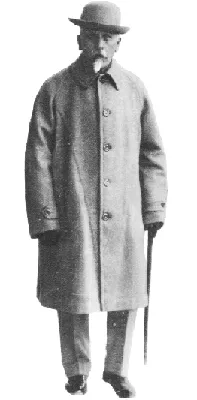
F.P.G.
BASIL ZAHAROFF
Men of Wealth: The Story of Twelve Significant Fortunes from the Renaissance to the Present Day
Read the whole book online · Book details
Free to read online and to download from this archive.