
Chapter 24 of 178 · Mises: The Last Knight of Liberalism by Jörg Guido Hülsmann
Eugen von Böhm-Bawerk
At the time of Menger's petition for early retirement, Eugen von Böhm-Bawerk was his most prominent disciple, serving a fourth term as the head of the Austrian (k.k.) Ministry of Finance.
Böhm-Bawerk had risen to the highest positions in the Austrian state bureaucracy. He would not have done so under normal circumstances. He was a brilliant scholar and an excellent and efficient technocrat, but he was no politician. He abhorred demagogic trickery and despised socialism. He only became a government minister because ethnic conflicts within Austria (especially between Germans and Czechs) made political leadership of the whole country increasingly impossible. During such crises, Austria was ruled by technocratic caretaker governments, and in all of them Böhm-Bawerk served as finance minister. His impeccable scientific credentials commanded respect from all parties and made him the ideal candidate for these emergency situations.72
Born in Moravia on February 12, 1851 into a family of high state bureaucrats, Eugen Böhm Ritter von Bawerk was raised in Vienna where he received a thorough education at the Schottengymnasium. His father had been entrusted with various delicate negotiations in the revolutionary period leading up to 1848, a term he discharged to the great satisfaction of the emperor. He was knighted in 1854, but died an early death shortly after. His wife then moved to Vienna to assure an adequate upbringing of Eugen, the youngest of her three sons.
In the Schottengymnasium, Böhm-Bawerk met his alter ego in Friedrich von Wieser. The two of them would study law and government science at the University of Vienna, discover a common interest in economics, and become followers of Carl Menger. Both of them entered the financial administration of Lower Austria in 1872, passed their doctoral exams—with Menger as one of the examiners—in 1875, and then chose a scholarly career, benefiting from a prestigious government scholarship program that enabled them to study for two years with the greatest German political economists of the time. In 1875 they spent a year in Heidelberg to study in the seminar of Carl Knies, and then spent another year together in the seminars of Wilhelm Roscher in Leipzig and of Bruno Hildebrand in Jena. Later they would both become professors of political economy and accede to international fame as representatives of the new Austrian School of economics. Both would also become cabinet members in emergency situations: Böhm-Bawerk for the Ministry of Finance in 1889–1890, 1895, 1896–1897, and 1900–1904; Wieser in 1917–1918 as trade minister of the last imperial government. Böhm-Bawerk became Wieser's brother-in-law when he married Friedrich's sister Paula.
During their year together in Heidelberg, they presented papers that foreshadowed their later achievements. Both used Menger's Principles as their starting point and took his project in new directions—Wieser's paper pioneering the analysis of opportunity costs, and Böhm-Bawerk presenting the first version of his theory of interest.73
Thanks to Menger's unwavering support, Böhm-Bawerk obtained his Habilitation degree before he was thirty. Menger was aware of an opening for a professor of political economy at the University of Innsbruck—one of the few chairs of its kind in all of Austria-Hungary—and seized the opportunity to place his most gifted follower.
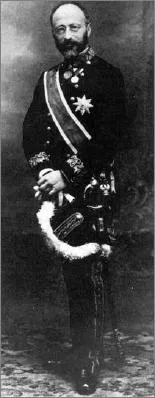
Eugen von Böhm-Bawerk, Austrian Finance Minister
The 1880s were the most productive phase of Böhm-Bawerk's life: he published two massive volumes on the history and positive theory of capital, a work that earned him an international reputation and made him the best-known Austrian economist. He was in fact the first economist of the Austrian School to enjoy immediate English translations of his work.
From 1889 to 1904, however, his government activities as finance minister and in other high functions of the civil service absorbed virtually all of his energies, and his scholarly output shrank considerably.74 An exception was his activity as an honorary professor at the University of Vienna and his involvement in the Zeitschrift für Volkswirtschaft, Socialpolitik und Verwaltung, which he co-founded and managed starting in the early 1890s and which would become a major outlet for theoretical research in Germany and Austria. After Böhm-Bawerk completed his last term as a Finance Minister, he had more time for scholarly pursuits and was granted a new chair of political economy at the University of Vienna.75 Wieser had by then succeeded Menger, and thus the University of Vienna enjoyed for a decade an all-star team of Austrian economists.
From 1905 until his death in 1914, Böhm-Bawerk led the life of an elder statesman. His scholarly endeavors were constantly interrupted by his obligations as a lifetime member of the Herrenhaus (the upper chamber of the Austrian parliament, which he joined in 1899) and after 1911 as president of the Austrian Academy of the Sciences, which was “the highest scientific honor that Austria had to offer.”76 His main academic activity was a course on advanced economic theory, which he gave in the winter semesters, and the direction of a weekly graduate seminar in the summer semesters.77 This seminar took most of his energy, leaving him completely exhausted at the end of the sessions.
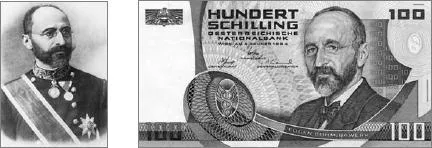
Left, Eugen von Böhm-Bawerk as Austrian finance minister, right, the last Austrian 100 schilling note
But this was not just any seminar. The group that flocked around Böhm-Bawerk might well have been among the most brilliant crowd of young intellectuals ever gathered in a regular university function. Their names could be taken from any twentieth-century Who's Who of social scientists: Ludwig von Mises, Joseph Schumpeter, Richard von Strigl, Franz Weiss, Felix Somary, Emil Lederer, Rudolf Hilferding, Nicolai Bukharin, Otto Neurath, and Otto Bauer. The members of the seminar would come to be known as either great economists or great Marxists. For better or worse, they would leave their mark on the decades to come. The young disciples of the Austrian School considered Böhm-Bawerk to be their undisputed master and under his auspices set out to develop and revolutionize economic science. The young Austro-Marxists, as they were later called, had joined the seminar to confront the man in person who had authored the most devastating attack against Marx's Das Kapital. But they came to admire their teacher for his comprehensive knowledge, for his fairness and relentless quest for objectivity, and especially for his willingness and ability to debate them—which he did with great success. Mises attended the seminar until 1913. Böhm-Bawerk left a deep impression on him as a scholar and teacher, setting life-long standards of scholarship. He only admonished that Böhm-Bawerk was too soft on Otto Neurath. Mises considered Neurath a fanatic and found him insufferable because he criticized economics without knowing what he was talking about.78
On occasion, the seminar focused intensely on the scientific contributions of individual members. For example, Böhm-Bawerk spent two entire semesters discussing Mises's 1912 book on the theory of money. Many of the seminar members already had a scholarly reputation when they entered the seminar—or soon earned one. The main themes of the sessions, however, developed from Böhm-Bawerk's own work: price theory, the raison d'etre of economic theory vis-à-vis the claims of materialistic Marxism and of the German Historical School, the Austrian versus the Marxist theories of value, and the meaning and importance of economic laws.
Böhm-Bawerk had made important contributions in all these fields. In his Habilitation manuscript, he had developed a Mengerian economic theory of rights and of legal and commercial relationships. The manuscript was published as a book the following year (1881) in a substantially abridged form.79 During the decade or so that he spent in Innsbruck, he concentrated on the development of Austrian price theory. Carl Menger had explained the price of consumers' goods, but had not gone in depth into the pricing of producers' goods. He claimed the latter would not differ fundamentally from the former, except that the price of a producers' good was derivative: it was “imputed from” the value of the consumers' good it produced. Menger's critics had seized on this as a weakness in his system and argued that imputation was impossible because any consumers' good results from the joint cooperation of several producers' goods. How would imputation distribute the value of the final product among the many factors of production? Moreover, was it not obvious that costs of production did have a major impact on the prices of products?
Böhm-Bawerk tackled these problems in a book-length article on the theory of value (1886).80 He developed in particular what he called the “Law of Costs.” Böhm-Bawerk explained that, in the case of consumer goods that could be reproduced ad libitum in any quantity, costs of production were in fact the immediate cause of the price of the final product. But he showed that even in this special case the costs of production were themselves ultimately determined by the value of the other consumer goods for the production of which they could also be used. His demonstration was so successful that it brought many economists in Austria and Germany into the Austrian School. Three years later, Böhm-Bawerk incorporated the essence of this article into his magnum opus: a two-volume treatise on economic theory and the history of economic thought, with special emphasis on the theory of capital and interest. The first volume had been published in 1884 and gave a systematic exposition and critique of past theories of interest. The second volume of his treatise, entitled Positive Theorie des Kapitals, presented his own views on the subject and made him the best-known Austrian economist outside the German-speaking countries. Here he gave a presentation of the theory of value, prices, and interest that Schumpeter later praised in these terms:
The Positive Theory of Capital gives... a theory of the entire socio-economic process, even though the title indicates a more narrow content.... It is certain that here the highest goal is aimed at that can be desired within theoretical economics and that this goal is achieved to an extent that few can equal.
Hence, wages, rents, capital, length of the period of production, and the [physical] productivity of the methods of production are variables that mutually determine one another, and thus the entire economic process suddenly appears in an unheard-of simplicity, clarity, and completeness.81
In particular, Böhm-Bawerk presented his time preference theory of interest that revolutionized economic thinking in this field. Where his predecessors usually considered interest to be the remuneration of a specific factor of production, Böhm-Bawerk defended the thesis that interest has nothing to do with production per se, but springs from an entirely different source: the unequal valuation of present goods and future goods of the same kind.82 Production and capital are only indirectly related to interest—related only insofar as capital goods are essentially “future goods” that through the time-consuming production process mature into consumers' goods.
These seemingly subtle distinctions had a momentous political significance at the time Böhm-Bawerk was writing, a time that was characterized by the rise of various socialist movements, most notably the movement led by Karl Marx and Friedrich Engels. The socialists contested mainstream economic theory, the theory of Jean-Baptiste Say, according to which interest was the specific income of capital. They asserted that labor alone creates value and income and therefore labor alone creates interest. The fact that interest payments went to the capitalists could only mean that capitalists exploited laborers. The working classes did not receive the full value they had produced. But according to Böhm-Bawerk's theory, interest was not produced by anybody; it was a value-spread, existing independent of production per se, that manifested itself only incidentally in the relationship between factors of production and products. As a consequence (and here we come to the far-reaching political implications) interest is not peculiar to capitalism—it would exist under any conceivable system of social organization. No redistribution scheme or any other social policy could abolish interest—not even a fully communist society.
Böhm-Bawerk addressed highly politicized questions on two other famous occasions. After the posthumous publication of the third volume of Marx's Das Kapital, which had been edited by Engels, Böhm-Bawerk wrote a 120-page review titled “Zum Abschluss des Marxschen Systems”83 that was published in an 1895 festschrift for Karl Knies. Here Böhm-Bawerk presented a devastating critique of Marx's economics, arguing that while Marx's thought was internally consistent, it was based on assumptions without foundation in observed facts and led to conclusions that were at odds with the real world.
Nineteen years later, shortly before his death, Böhm-Bawerk once again addressed the theoretical foundation of social policies when he published a sixty-five-page essay dealing with the question of whether labor union pressure can improve living conditions for all members of the working classes. More fundamentally, “Macht oder ökonomisches Gesetz?” (Power or Economic Law?) concerned the question of whether there is such a thing as economic law independent of human will. If such laws exist, then they cannot be “broken” or circumvented by labor union leadership or determined policy makers. In a painstaking case-by-case analysis, Böhm-Bawerk showed that the illusions of labor union leaders and politicians were just that—illusions.84
A distinctive feature of Böhm-Bawerk's legacy is his readiness to focus pioneering theoretical research on highly contested questions. This was, in a way, the legacy of the entire “second generation” of Austrian economists. Whereas Carl Menger had concentrated virtually all of his energies on questions of pure theory and could afford the luxury of ignoring Marx and his disciples, Menger's colleagues and followers— men like Sax, Zuckerkandl, Wieser, and Böhm-Bawerk—sought to apply the new theory to the new social movements surrounding them. In this endeavor, Böhm-Bawerk stood out in originality and intellectual vigor, and this was his greatest impact on Mises. Böhm-Bawerk was the very model of a political economist: a man who combined comprehensive historical and theoretical knowledge to take a clear stance on important policy issues. And in at least this one respect, Mises would prove to be a worthy disciple of the master.
Mises: The Last Knight of Liberalism
Read the whole book online · Book details
Free to read online and to download from this archive.