
Chapter 158 of 178 · Mises: The Last Knight of Liberalism by Jörg Guido Hülsmann
Sennholz at Grove City College
While Rothbard was still busy writing and polishing the manuscript of his magnum opus, Hans Sennholz was already a quality product of Mises's NYU seminar. He had written a very thorough doctoral dissertation and published it in 1955 with Jasper Crane's Van Nostrand Company. And in distinct contrast to Rothbard, who spent nights working or discussing with friends, slept through much of the day, missed deadline after deadline, and tended to be messy and disorderly, Sennholz featured the Teutonic personal virtues of punctuality, orderliness, and reliability. By the mid-1950s, he was visibly Mises's most important student.
Sennholz was not only an intellectual heir to the Austrian tradition, but also had the vision, the drive, and the enthusiasm to lead the Austrian School and the burgeoning libertarian intellectual movement into the second half of the twentieth century. Not only did he realize that the decisive battle in politics was the battle of ideas—and that for the time being this battle was mainly fought in institutions of higher learning—but he also saw quite clearly that there was no hope whatsoever in “turning around” mainstream academia from within. The success of the libertarian movement depended on its ability to set up parallel academic institutions to compete with the socialist academic establishment from the outside.
The tragedy for Sennholz, and for the libertarian movement at large, was that most of his initiatives to establish parallel libertarian institutions did not find the necessary support. For example, starting in August 1955, he tried for some years without success to establish a libertarian journal.125And at the end of the 1950s, he tried to establish an American School of Economics with the mission of producing future university professors, equally without success. These failures might have been due to the timidity of potential donors, or to Sennholz's youth and assertiveness. He was a born leader who could not suffer subservience; he needed to be his own man in all of his endeavors. For some time, he threw himself into working for FEE and took up residence in Irvington-on-Hudson. But the presence of another great ego—Leonard Read's—made it impossible for Sennholz to turn FEE into the instrument of his far-reaching plans. After completion of his Ph.D. in 1955, he began looking for a new position.
Hans Sennholz
It was not easy for Sennholz to find academic employment because of a triple disadvantage: he was an old-fashioned economist, a libertarian, and a German.126 Eventually however he found a position at Grove City College, a liberal arts college in western Pennsylvania that had been sponsored by the Pew family for generations. It was once again the longstanding connection between Mises and J. Howard Pew that proved so useful. When Sennholz first saw the facilities, he could hardly believe his eyes:
The chapel is fashioned after European Gothic cathedrals. Its beauty is superb. The reception room in the library would have flattered European royalty, with thick Persian rugs on the floor and expensive originals on the wall, the furniture of French antique style. The indoor swimming pool is built according to Olympic standards—only Esther Williams is missing. The bowling alley is patterned according to Westchester club standards. The girls dormitory boasts a gold leaf Steinway piano besides other beautiful furniture. I am beginning to understand why most professors go to Grove City and are never heard of again.
On the other hand, Sennholz did not wax enthusiastic about the students, who did not nearly live up to the hopes of Pew and other sponsors who had wanted their contributions to help educate the future champions and supporters of a free society: “In spite of all this splendor offered by a few capitalists, the 1,300 students constitute the usual sample of 75% collectivists and 25% without opinion.”127
Clearly, there was a lot of work to do. Sennholz grabbed the bull by the horns and threw himself into the battle of ideas. During the next five decades, he educated a new generation of Austrian School scholars, among them Walter Grinder, Jeffrey Hummel, Alejandro Chafuen, Philippe Nataf, and Peter Boettke. He would publish hundreds of articles and dozens of books and booklets. He and Rothbard almost single-handedly created a modern Austrian—Misesian—literature. Until the early 1960s, they were not alone in this endeavor. Mises himself made a number of contributions that we will discuss in the next chapter.
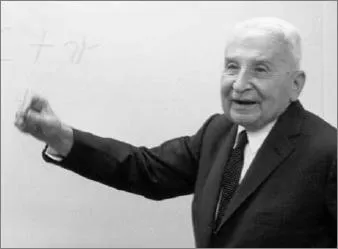
Mises lecturing at the NYU seminar
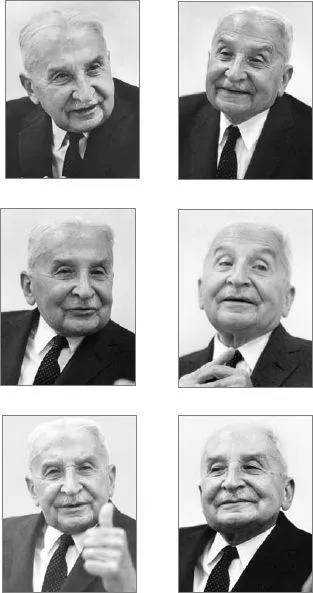
Pictures from the NYU seminar
Mises: The Last Knight of Liberalism
Read the whole book online · Book details
Free to read online and to download from this archive.