
Chapter 86 of 178 · Mises: The Last Knight of Liberalism by Jörg Guido Hülsmann
Silver Linings on the Horizon
The successful second edition of the Theorie des Geldes and the reorientation of the Verein für Sozialpolitik were symptoms of a changed intellectual and political climate that came into full swing after 1923, the year of the “crisis of social policy” and of the stabilization of the mark. Central to both events were Mises's writings. This fact did not reach the attention of the larger public, but was obvious to all leading circles in academia and in monetary policy.
His impact in those years was limited primarily by his deficiencies as a communicator. He was not an orator and lacked the charismatic personality to win over an audience. He had a fine and dry wit, but was often too subtle for those outside Europe's higher society. And when he gave talks in foreign languages, his wit abandoned him. He certainly was not at ease in French or English. His accent was strong when speaking English, and his French, although significantly better, was far from perfect. Who knows what turn the history of the 1920s might have taken had Mises enjoyed the communicative gifts of a Maynard Keynes, an Irving Fisher, a Werner Sombart, or an Othmar Spann?
Still Mises did have a significant impact. After 1924, he became a sought-after speaker, and also, after 1925, the official representative of the Austrian chambers of commerce at the International Chamber of Commerce. These meetings and the connections he was building at the London School of Economics provided Mises with the opportunity to disseminate his views throughout Europe.123 He was a vocal champion of a return to a gold standard. His efforts were crowned with the introduction of a gold-exchange standard in Austria.
It was only a gold-exchange standard—a fractional-reserve system with a lower reserve ratio than its predecessor, the classical gold standard—but at least notionally, gold was once again the money of the country. The new gold-based currency, the schilling, replaced the krone on January 1, 1925.124 Little Austria thus spearheaded a movement that came into full swing when Great Britain returned to gold a few months later, on April 25. In many ways this reform paralleled the 1892 reform that had first introduced the krone, itself a gold-based currency. Both reforms enjoyed the decisive support of Austrian economists. Just as the original krone could be called the brainchild of Carl Menger, so the original schilling was the fruit of Mises's labor.125
In the preceding year, Mises had been given a prominent forum to explain and justify the necessity of the reform. He did so in a widely publicized lecture that he delivered to the annual plenary meeting of an association of German industrialists in the new Czechoslovakian Republic. Mises made the case that the return to the gold standard was the most pressing problem of present-day monetary policy.126 A local newspaper had been given a long abstract of his manuscript based on which it presented, on the same evening, a detailed report on the meeting and Mises's speech. The story was picked up by all major papers of the former empire and widely publicized.127 Eventually the full speech was published as “Present-day Questions of Financial and Monetary Policy.”128
The circumstances of this appearance are interesting in that they give a taste of the conditions under which Mises had to operate in those days. The secretary of the association, a certain Dr. Janovsky, had approached Mises to give a talk on present-day problems of public finance and monetary policy. When Mises chose the title “Return to the Gold Standard, the Main Problem of Present-Day Monetary Policy,” Janovsky feared the speech would seem irrelevant to people interested in practical affairs. He also feared that Mises's remarks would be too controversial. The meetings of the association did attract considerable attention among political circles in Czechoslovakia and neighboring countries, and statements from the keynote speakers were commonly interpreted as reflecting the official position of the association. According to Janovsky, the association had not yet come to a firm opinion on the question of Czechoslovakian monetary policy. Janovsky mentioned however that the last resolution the association passed on monetary questions had endorsed the policies advocated by John Maynard Keynes, who opposed the return to prewar parities for all strongly depreciated currencies.129 He did not mention that he himself was an advocate of banking-theory style economic policies and had engaged in infights with local admirers of Mises such as Fritz Wolfrum.130
Mises criticized the reform proposals of Keynes, Josiah Stamp, and Fisher as overrating the usefulness of price indices to measure the value of money. He stressed that the great advantage of the gold standard was not any sort of value stability, but rather its independence from the political process. The prewar decline in the purchasing power of gold had not resulted from the production of this metal, but from the production of fiduciary media. Whatever its deficiencies, the gold standard was superior to government-managed money.131
For Mises, 1925 also brought a significant breakthrough on an entirely different level. He finally met the woman who would become his wife.
Margit Serény had been one of six guests at a dinner party held by Fritz Kaufmann, a young lawyer and member of Mises's private seminar. It is almost a miracle that Mises won the heart of the lady sitting next to him, for he spent most of the meal discussing economics. On the other hand, his preoccupation gave her the opportunity to observe him. This is how she perceived him:
What impressed me were his beautiful, clear blue eyes, always concentrated on the person to whom he talked, never shifting away. His dark hair, already a little grayish at the sides, was parted, not one hair out of place. I liked his hands, his long slim fingers, which clearly showed that he did not use them for manual work. He was dressed with quiet elegance. A dark custom-made suit, a fitting silk necktie. His posture indicated that he must have been a former army officer.132
He talked to her after dinner, and they went to a dance club. Apparently Mises was a poor dancer—at least by Margit's standards—and so they spent most of the night talking. Actually she did most of the talking and he listened attentively. Margit was an attractive woman of five-foot-four, with brown hair and grey-blue eyes. Now, as they talked, he discovered she was also a witty and warm person. He must have fallen in love with her that evening. The next day, he sent her red roses and asked her out for dinner. It was the first of many such dinners over the next two years.
Margit Serény was an actress from a bourgeois background in Hamburg. During the war, she had performed on one of the leading stages in Vienna, the Deutsches Volkstheater. When Mises met her, she was thirty-five years old and a very attractive widow with two children, Guido and Gitta. Shortly after her arrival in Vienna in early 1917, she had married Ferdinand Serény, a Hungarian aristocrat who died in 1923, bequeathing to her assets that had lost most of their value during the inflation.
Characteristically, Mises was cautious even when his feelings might have threatened to overwhelm him. Could he trust an actress? As Margit later pointed out, most people in polite society considered actresses to be high-class call girls. Ludwig seems to have shared this prejudice. At any rate he took precautions. As he later confessed to his wife, he had checked some of her statements about her professional development by consulting the records in the archives of the Neue Freie Presse.133 He probably also talked to his cousin, Rudolf Strisower, who had been Ferdinand Serény's physician. These investigations confirmed Margit's version of things.
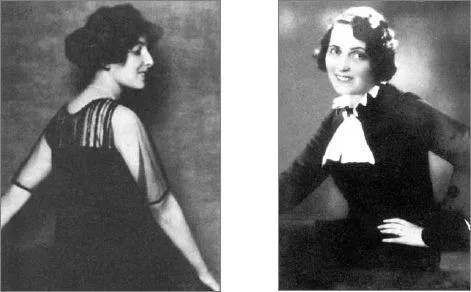
Margit Serény in 1919. She was a member of the Deutsche Volkstheater and the left-hand picture was on a postcard sold in Vienna at the time.
But there were more fundamental obstacles that hampered the development of their romance. On the one hand, Ludwig's mother Adele had great reservations about Margit. Actually none of his girlfriends had ever met with her approval. She must have imagined a different sort of wife for her beloved son, and her opinion had a great weight for Ludwig, especially since he held certain philosophical views that would have deterred him from marriage anyway. These concerned the nature of marriage and the possibility of being both a husband and a scholar. A thoroughly unromantic passage from Socialism says it all:
As a social institution marriage is an adjustment of the individual to the social order by which a certain field of activity, with all its tasks and requirements, is assigned to him. Exceptional natures, whose abilities lift them far above the average, cannot support the coercion which such an adjustment to the way of life of the masses must involve. The man who feels within himself the urge to devise and achieve great things, who is prepared to sacrifice his life rather than be false to his mission, will not stifle his urge for the sake of a wife and children. In the life of a genius, however loving, the woman and whatever goes with her occupy a small place. We do not speak here of those great men in whom sex was completely sublimated and turned into other channels—Kant, for example—or of those whose fiery spirit, insatiable in the pursuit of love, could not acquiesce in the inevitable disappointments of married life and hurried with restless urge from one passion to another. Even the man of genius whose married life seems to take a normal course, whose attitude to sex does not differ from that of other people, cannot in the long run feel himself bound by marriage without violating his own self. Genius does not allow itself to be hindered by any consideration for the comfort of its fellows even of those closest to it. The ties of marriage become intolerable bonds which the genius tries to cast off or at least to loosen so as to be able to move freely. The married couple must walk side by side amid the rank and file of humanity Whoever wishes to go his own way must break away from it. Rarely indeed is he granted the happiness of finding a woman willing and able to go with him on his solitary path.134
This passage survived all editions of the book. Ludwig was slow to allow Margit onto his hitherto solitary path. But on the other hand he was longing for the love of a true companion. Margit later surmised that a deep-seated dissatisfaction with his (entirely public) life was the true cause of his infamous temper. The most terrible outbursts he reserved for the woman he loved:
His temper was as astonishing as it was frightening. Occasionally he showed terrible outbursts of tantrums. I do not really know what else to call them.... Suddenly his temper would flare up, mostly about a small, unimportant happening. He would lose control of himself, start to shout and say things, which coming from him were so unexpected, so unbelievable, that when it happened the first few times I was frightened to death. Whatever I said would enrage him even more. It was impossible to reason with him.135
After a few years of married life, however, he became much more reasonable and less easy to anger.
Margit during the 1930s
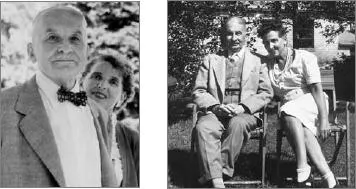
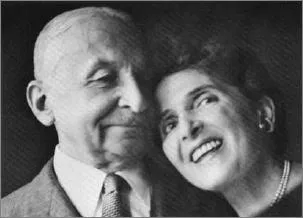
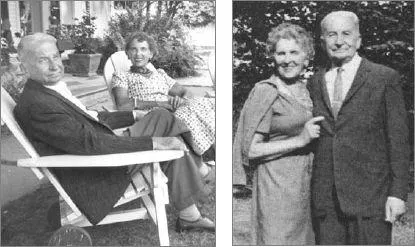
Ludwig and Margit von Mises
Mises: The Last Knight of Liberalism
Read the whole book online · Book details
Free to read online and to download from this archive.