
Chapter 8 of 13 · Defending the Undefendable by Walter Block
IV. OUTLAW 11 THE GYPSY CAB DRIVER
The taxi business in the United States usually works to the detriment of the poor and minority groups in two ways—as consumers and as producers. As consumers, their plight is well demonstrated by ethnic “taxicab jokes,” and by the subterfuge and embarrassment blacks undergo in order to get a cab, which they are frequently unable to do. The reasons are not difficult to fathom. Taxi rates are set by law and are invariant, regardless of the destination of the trip. However, some destinations are more dangerous than others, and drivers are reluctant to service these areas which are usually the home neighborhoods of the poor and the minorities. So when given a choice, cab drivers are likely to select customers on the basis of their economic status or skin color.
It is important to realize that given the differential crime rates, it is solely government control of taxi rates that engenders this situation. In the absence of such controls, rates to unsafe areas could be set so as to compensate cab drivers for the greater risks involved. If this were done, blacks would have to pay more than whites for a cab, if not in the form of higher payments on the meter, perhaps in the form of older or lower quality cabs. But at least they would be able to secure the services of a taxi if they so desired. Under the present system, they do not even have the choice.
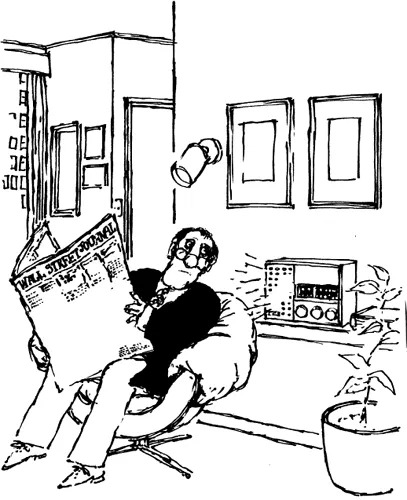
“Xerox 57 3/8—up 1/8, Texas Instrument 92—up 2, Sun Oil preferred 31—down a quarter, New York City Taxi Medallions $96,090—up $245.00.”
The inability to obtain a cab is not a small inconvenience to the poor black consumer, although many of the white middle class might think otherwise. Public transportation (bus, trolley, and train) plans and routes were designed and constructed 50 to 75 years ago. In those years transportation lines were usually owned by private concerns who were dependent on their customers for their profits and success. They were designed specifically to meet customer needs. In many cases, these transport lines are unsuitable for the needs of the present-day community. (Transit lines today are publicly owned and, therefore, lack the incentive to tailor them to the needs of the customer. If customers refuse to patronize a transit corridor, and that corridor becomes unprofitable, the public authority simply makes up the difference out of general tax revenues.) Consequently, city dwellers must choose between a fast ride home by taxi, and a long, indirect, and halting ride via public transit. This is especially true for the poor and minority groups who lack the political power to influence public transit authorities or decisions concerning the construction of new lines.
Restricted access to cabs in areas where public transportation is inadequate is often more than inconvenient. When health is involved, for example, the cab is an excellent and cheap substitute for an ambulance. But in poor neighborhoods which are inadequately served by public transportation, and whose residents cannot afford private cars, it is usually difficult to find a taxi.
Under the present system, the poor also suffer as producers. In New York City, for example, the government requires all cabs to be licensed. The licenses—medallions—are strictly limited in number—so much so, that they have been sold for as much as $30,000. The price varies, depending on whether the medallion is for an individual cab or part of a fleet. This effectively bars the poor from entering the field as owners. What would have happened to the Horatio Alger hero if he had needed $30,000 before he could enter the shoe-shine or newspaper delivery business?
Some years ago, in response to the limitations placed upon them both as consumers and as producers, the poor and minority group members began to enter the taxi industry in a time honored American tradition dating back to the Revolutionary War of 1776—disobedience of the law. They simply had their used cars outfitted with meters, special lights and signs, and declared them to be cabs. In these “gypsy” cabs, they cruised the streets of the ghetto areas which were shunned by medallioned taxi drivers, and began to earn an honest, albeit illegal living. Their initial success in avoiding punishment under the existing laws was probably due to two factors: police fear of “unrest” in the ghetto if these cabs were harassed, and the fact that the gypsies worked only within the ghetto, and, therefore, did not take business from the medallioned cabs.
These idyllic times, however, were not to last. Gypsy cab drivers, perhaps emboldened by their success in the ghetto, began to venture outside. If the medallioned taxi drivers had looked upon the gypsies with suspicion before, they now exhibited outright hostility toward them. And with good reason. At this time, the taxi lobby in New York succeeded in pressuring the City Council to enact a bill allowing an increase in taxi fares. Patronage dropped precipitously and the immediate effect was a sharp decrease in the income of medallioned taxi drivers. It became obvious that many of their former riders were using gypsy cabs. At this juncture irate medallioned taxi drivers began to attack and burn gypsy cabs, and they retaliated in kind. After a few violent weeks, a compromise was reached. Yellow, the traditional color of taxicabs, was to be reserved for medallioned cabs. The gypsies would have to use another color. A tentative plan for licensing gypsy cabs was also discussed.
What of the future of the taxi industry in New York City? If the dominant “liberal consensus” politics holds sway, as it usually does in questions of this kind, some compromise with the gypsies will be reached and they will be brought under the rule of the taxi commission. Perhaps they will be granted a restricted license, out of deference to the yellow cabs. If so, the system will remain the same as it is at present—a situation which resembles a gang of robbers allowing a few new members to join. But the robbery will not be halted, nor the victims substantially helped. Suppose, according to one plan, 5,000 new licenses are created. This may help in a minor way in that there will be extra cabs potentially available for blacks. Thus, although blacks will still be second-class citizens, they may have a slightly easier time finding a cab. But, paradoxically, this concession to the greater need for cabs will stifle future demands for improvements. It will enable the taxi commission to pose as the liberal and bountiful grantor of taxi medallions based on its act of “generosity” in licensing gypsy cabs (even though it has not granted a single extra medallion since 1939).
As producers and entrepreneurs, the position of the poor may improve somewhat, for an additional 5,000 licenses may result in a decreased purchase price of a medallion. However, there is a possibility that the purchase price will rise after the extra 5,000 licenses are granted. For the great uncertainty presently keeping down the value of a medallion may well end. If it does, the value of medallions will remain high, and the position of the poor will not have improved at all.
No! A proper solution to the taxicab crisis is not to co-opt the movement of gypsy cab drivers by the offer to take them into the system, but rather to destroy the system of restrictive cab licenses.
In terms of the everyday workings of the market, it would mean that any qualified driver with a valid chauffeur’s license could use any vehicle which has passed the certification examination to pick up and deliver fares to any street of their mutual choosing, for any mutually agreeable price. The market for taxicabs in New York City would thus work in much the same way that rickshaws work in Hong Kong. Or, to take a less exotic example, the taxicab market would work in much the way that the babysitter market operates—completely dependent upon mutual agreement and consent between the contracting parties.
The taxi problems encountered by the poor and minority group members would be quickly resolved. Residents in high crime areas could then offer the cab drivers a premium. Though it is deplorable that they will be forced to pay this premium, they would no longer be second-class citizens insofar as obtaining a cab was concerned. The only real and lasting solution to this problem, however, is a reduction in the high crime rate in ghetto areas, which would be responsible for the extra charges. For the present, however, the people living in these areas must not be prohibited from taking the necessary steps to obtain adequate cab service.
Poor people would benefit as producers, as they set up their own businesses. They would, of course, have to assume ownership of a car, but the artificial and insurmountable $30,000 barrier would be removed.
There are, however, objections that will be raised to a free market in taxicabs:
(1) “A free market would lead to chaos and anarchy if medallions were eliminated. Taxis would flood the city and weaken the capacity of any cab driver to earn a living. So drivers would leave the industry in droves, and there would be far fewer taxis available than needed. Without medallions to regulate the number of taxis, the public would be caught between two unsatisfactory alternatives."
The answer is that even if there were an initial rush into the industry, and the market was glutted, only some drivers would leave the field. The number of cabs, therefore, would not swing erratically from an horrendous oversupply, to none at all, and back again. Moreover, the drivers who would tend to leave the industry would be the inefficient ones whose earnings were low or those with better alternatives in other industries. By leaving they would allow the earnings of those who remained to rise, and thus stabilize the field. One does not, after all, gain any insurance against the possibility of too many or too few lawyers, doctors, or shoe-shine boys by fixing an arbitrary upper limit to the number of people who can enter these occupations. We depend upon the forces of supply and demand. When there are too many workers in a field, the relative salaries decrease, and some will be encouraged to enter other occupations; if too few, wages and new occupants increase.
(2) The argument that licensing protects the riding public is one of the most disingenuous arguments for taxi medallions. It is the same one used by psychiatrists, who strive to “protect” us from encounter groups and others who make inroads in their incomes, by lily white unionists who “protect” the public by keeping qualified blacks out, and by doctors who “protect” us by refusing to grant medical licenses to qualified foreign doctors. Few people are fooled by these arguments today. Surely the special chauffeur’s license test and car inspections can insure the quality of drivers and cars.
(3) “The medallion would have no value if there were an unlimited amount of taxis. This would be unfair to all those who have invested thousands of dollars in the purchase of their medallions."
Some light can be shed on this argument by considering a short fable:
A warlord granted permission to a group of highwaymen to rob all passersby. For this right, the warlord charged the highwaymen a fee of $2,500. And then the people overthrew the system.
Who should bear the cost of what turned out to be an unprofitable investment on the part of the highwaymen? If the choice was limited to the warlord and the robbers, we might say, “A plague on both your houses.” If we had to choose between them, we might root for the highwaymen, on the grounds that they were less of a threat than the warlord, and perhaps had made the original payment out of monies honestly earned. But in no case would we countenance a plan whereby the long suffering highway travelers were forced to pay off the highwaymen for having lost the privilege of robbing them!
In the same way, the argument should not be accepted that the long suffering taxi riding public should compensate owners for valueless medallions already purchased. If it ever came to a showdown between medallion owners and medallion grantors (politicians), the public should perhaps favor the owners, on the grounds that they pose less of a danger to them and perhaps had originally paid for their medallions with money honestly earned. It is the politicians’ personal funds, or the funds of their estates which should be used to pay off the medallion owners. A warlord is a warlord. Payment out of public funds would only amount to further penalizing the public. If the money is not forthcoming from the politicians’ personal funds, the medallion owners must suffer the loss. When a permit which permits the robbery of the public is purchased, the purchaser must accept the risks attendant to his investment.
12
THE TICKET SCALPER
Webster’s dictionary defines “scalper” as one who “buys and sells in order to make quick profits,” and “scalping” as “cheating, defeating, and robbing.” The latter definition is the one used by the public in its hostility toward “ticket scalpers.”
The reason for this condemnation is easy to discern. Imagine a theatergoer or sports fan on the eve of the big event, arriving and finding, much to his consternation, that he must pay $50 for a $10 seat. He thinks that these outrageous prices are charged by “scalpers,” who purchase tickets at normal prices and then deliberately withhold them until people are so desperate that they were willing to pay any asking price. An economic analysis, however, will show that the condemnation of the ticket scalper is unjust.
Why does scalping exist? A sine qua non of scalping, a necessary condition for its existence, is a fixed, invariable supply of tickets. If the supply could increase with increased demand, the scalper would be totally displaced. Why would anyone patronize a scalper when he could purchase additional tickets from the theater at the printed list price?
A second necessary condition is the appearance on the ticket of a list price. If a stipulated price did not appear on the ticket, scalping, by definition, could not occur. Consider shares of stock bought and sold on the New York Stock Exchange on which there is no printed price. No matter how many are bought, how long they are held, or how high the price at which they are resold—they cannot be “scalped.”
Why do theaters and ballparks print ticket prices? Why not allow them to be sold at whatever price the market will bring, the way wheat is sold in the Chicago futures market or shares of stock in the stock market? If they were, scalping would be eliminated. Perhaps the public looks upon printed prices on tickets as a great convenience; perhaps it helps people to budget, plan vacations, etc. Whatever the reason, the public must prefer prices to be stipulated. If it did not, managers and producers would find it in their interest not to do so. Thus the second necessary condition for scalping exists by popular demand.
The third condition which must be present is that the ticket price chosen by management be lower than the “market clearing price” (the price at which the number of tickets people are willing to buy is just equal to the number of seats available).
Stipulated prices lower than the market clearing price are open invitations to ticket scalping. For at the lower price there are more customers willing to buy tickets than there are tickets available. This imbalance sets in motion forces which tend to correct it. Would-be purchasers begin to try harder to obtain tickets. Some of them become willing to pay more than the price printed on the ticket. Prices rise, and the original imbalance is corrected as these higher prices cause a drop in demand.
Why do theater or ballpark managers set their ticket prices below the market clearing price? For one thing, lower prices invite a large audience. Long lines of people waiting to enter a theater or ballpark constitutes free publicity. In other words, management forgoes higher prices in order to save money it might have had to spend on advertising. In addition, managers are loath to raise ticket prices—even though they would have little difficulty selling them for a big event or special movie—for fear of a backlash. Many people feel that there is a “fair” price for a movie ticket, and managers are responsive to this feeling. Thus, even though they might be able to charge higher than usual prices for a movie like “The Godfather,” they choose not to. They know many people will refuse to patronize the theater at a later time, feeling that the management “took advantage” of the public during the showing of this very popular movie. There are several other motivations, less compelling, for keeping prices fixed at below equilibrium levels. Taken together they ensure that this pricing policy—the third condition necessary for scalping—will continue.
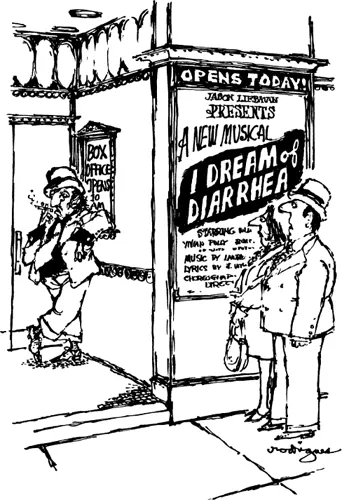
“Well, even if he is a scalper I admire his spunk.”
In taking a closer look at the positive function fulfilled by the ticket scalper, it has been shown that when tickets are priced below the equilibrium level, there are more customers than tickets. The problem becomes one of rationing the few tickets among the many claimants. It is in the solution to this problem that the ticket scalper plays his role.
Suppose that during the baseball season the price of an average ticket is $5.00 and the ballpark is filled to its capacity of 20,000 for every game. However, for the “big game” at the end of the season, 30,000 people want tickets. How will the 20,000 tickets be distributed or rationed among the 30,000 people willing to buy them? Which 10,000 of the 30,000 hopefuls will have to forgo the game?
The two basic ways of rationing goods that are in short supply have been defined by economists as “price rationing” and “nonprice rationing.” In price rationing, prices are allowed to rise. This, in our opinion is the only fair way to ration a commodity when demand exceeds supply. In the example above, the average price of a ticket may rise to $9.00 if that is the price at which there will be only 20,000 people ready and willing to buy the 20,000 tickets. The specific procedure through which this increase of $4.00 in the average price of a ticket takes place varies. Ticket speculators or “scalpers” might be permitted to buy all the tickets and resell them at $9.00 per ticket. Or, they might be permitted to buy 2,000 tickets, the other 18,000 being sold for the printed ticket price of $5.00. They might sell the 2,000 tickets for $45.00 each, and this would also result in an average price of $9.00 per ticket. Though the ticket scalpers would be blamed for the “outrageously high” prices, the price would really be the result of simple arithmetic. For if an average price of $9.00 is necessary to reduce the demand for tickets to the available 20,000, and if 18,000 of them are sold at $5.00 each, then the remaining 2,000 must be sold at $45.00.
In nonprice rationing, prices are not allowed to rise in order to decrease the demand to the level of the available supply. Instead, other techniques are employed to attain the same end. The management may distribute the tickets on a first-come, first-served basis. It may employ other types of favoritism in order to narrow down the market—nepotism (selling the tickets only to relatives or friends), racism (selling them to only certain racial groups), sexism (selling them only to males). Certain age groups may be singled out and all others barred, or perhaps war veterans or members of certain political parties may be given special privileges. All these nonprice rationing techniques are discriminatory and arbitrarily favor some groups over others.
Consider a typical first-come, first-served (FCFS) method, since this is the type of system most widely used and the one usually thought to be “fair.” Though tickets are not scheduled to be sold until 10:00 a.m. of the day of the event, hopeful customers line up outside the box office long before. Some join the line at the crack of dawn; some even begin the night before. FCFS is thus discriminatory against those who find waiting in line particularly onerous, those who cannot take a day off from work to wait in line, or those who cannot afford to hire servants or chauffeurs to wait in line for them.
Does price rationing, and therefore, ticket scalping, favor the rich? An equivocal answer must be given. From one perspective, ticket scalping helps the lower and middle class, and hurts the rich. Assuming that the lowest income class includes more people who are unemployed or marginally employed, they have time and opportunity to wait in line. Even if employed, they do not lose as much as others when they take time off from work. For these people who have few options, ticket scalping provides employment and business opportunities. There is no other pursuit in which a poor person can begin his own business with so little capital. In the case stated above, all that is needed is $50.00 to buy ten $5.00 tickets. When and if these are resold at $45.00 each, a profit of $400.00 is gained.
Members of the middle class are helped as well, for these people are less likely to have time available for waiting in ticket lines. It is more costly for them (in terms of income lost) to take time off from work than for a member of the lower class. It is prudent for the member of the middle class to buy his ticket from the scalper for $45.00 rather than wait in line and lose far more, which he might have earned had he gone to work. In short, ticket scalping allows people in the lowest income brackets to serve as the paid agents of people in the middle class, who are too busy to wait in line for cheap tickets.
Rich people have servants who can wait in long lines for them and, therefore, do not need scalpers. In one case, however, the ticket scalper can help even the rich—when the scalper, who is a specialist, can do the job for less than it would cost the rich man to use a servant for the task. (It should occasion no surprise that ticket speculation can benefit all people. The market is not a jungle where people can only benefit at the expense of others. Voluntary trade is the paradigm case of mutually beneficial action.) If the scalper’s profit margin is less than what it would cost the rich man to use a servant, he can buy the ticket directly from the scalper, cut out the middleman servant, and save the extra money.
From another perspective, however, price rationing and ticket scalping favor the rich, by ensuring that they will find it easier to purchase tickets at the high market price, while the rest of the public may find it difficult or impossible. However, this is the essence of a monetary economy and must be accepted as long as we wish to reap the benefits only such a system can provide.
In the chapter on the importer, a defense will be made of a monetary economy because it enables us to specialize and to benefit from the division of labor. Imagine the quality of life and the chances for survival if each of us was limited to what we could produce ourselves. The spectre is frightening. Our lives depend on trade with our fellows, and most if not all of the people presently living would perish if the monetary system fell.
The degree to which we do not permit money to ration goods, the degree to which we do not allow the rich to obtain a greater share of the goods of society in proportion to their monetary spending, is the degree to which we allow the monetary system to deteriorate. It is, of course, unfair to allow the rich to obtain a greater share of goods and services, to the degree that many of them amassed their fortunes not through the market but because of government aid. However, eliminating the monetary system in order to rid it of illicitly gathered fortunes would be like throwing out the baby with the bath water. The answer lies in directly confiscating the ill-gotten wealth.
When wealth is earned honestly, there is nothing inappropriate about being able to receive a greater share of goods and services, and it is essential to the preservation of the monetary system. The scalper, by facilitating the price rationing of tickets, is instrumental in assisting the rich in obtaining the rewards of their efforts.
13
THE DISHONEST COP
The hero of Serpico, a best selling book and movie, is a renegade, bearded, hippie cop who refuses to obey the unspoken code of policemen, “Don’t turn against your fellow officers.” As Serpico states, “The only oath I ever took was to enforce the law—and it didn’t say against everybody except other cops.”
The story traces Serpico’s development, beginning with his boyhood ambition to be a good police officer. It reveals his initial naïveté about the corruption on the force, his solitary and unsuccessful attempts to interest the police brass in the situation, the contempt and hatred he experienced at the hands of his fellow officers, and his final disillusionment. Throughout, the assumption made about the “good guys” and the “bad guys” is evident. The good guys are Frank Serpico and one or two policemen who gave him limited aid in his quest for “justice” and punishment of the grafters. The bad guys were those cops on the take, and those who protect them from prosecution. It is precisely this view which should be questioned.
SERPICO AND GAMBLING
An envelope containing $300 plays an important part in the story of Serpico. It was delivered to him by a messenger from someone known only as “Jewish Max,” a powerful gambler. After many attempts, Serpico was unable to interest any of his superior officers in the attempted bribe.
Why was “Jewish Max” attempting to bestow money and gifts on an unwilling Serpico? “Jewish Max,” the purveyor of voluntary (gambling) services to consenting adults, was one of the intended victims of Serpico and other “honest” cops on the gambling squad! Their intention was to harass, chase, capture, and kidnap (jail) all those involved. The public is told that aggressive violent behavior on the part of the officers is necessary because gambling is against the law and it is their duty to uphold the law. But the most vicious Nazi thug in a concentration camp could claim this argument as a defense.
In another incident, a ghetto mother complained to Serpico that her son was being inducted into an illegal gambling operation. Serpico is asked to smash the operation. Now there can be little opposition to the attempt to protect a child from an activity that could be harmful to him. However, the disruption of an activity which is legitimate for adults, on the grounds that a child has become involved, is clearly objectionable. The solution in a case such as this lies in preventing the child from participation, not in the elimination of the activity. Sex, drinking, or driving should hardly be prohibited on the grounds that these activities are harmful or dangerous for children.
SERPICO THE NARC
Serpico is finally wounded while attempting to break into an apartment of a dope dealer, although his sworn duty is to protect the rights of citizens. The explanation, of course, is that selling narcotics is prohibited by law, and although he has sworn to protect the rights of individuals, Serpico has also sworn to uphold the law. In this instance, as elsewhere, when the two are contradictory, he chooses the latter. His participation on the narcotics squad itself demonstrates Serpico’s overriding loyalty to the law.
But prohibiting the sale of narcotics invariably increases the purchase price, thereby making it difficult for addicts to obtain the drugs. Consequently, they must commit greater and greater crimes in order to obtain the necessary money. By prohibiting the sale of narcotics, the citizenry thus becomes endangered. To enforce that prohibition, as Serpico does, is to regard the protection of the law over that of the citizens.
SERPICO AND COOPING
Given that much of what the policeman is required to do is injurious to the general public, it follows that the less active the policeman is, the less injurious he will be to the public at large. The majority of policemen, perhaps sensing this, act so as to save the public from harm, i.e., they shun their duties.
Instead of being up and about, interfering with the rights of the people, many policemen choose the honorable way out—they coop. Cooping (sleeping in some out-of-the-way place while on duty) was a situation which enraged Serpico. In the finest tradition of the busybody who insists upon running other people’s lives, Serpico insisted upon being out on the streets at all hours, stopping a prostitute here, ambushing a gambler there, harassing drug merchants everywhere.
It is, of course, impossible to deny that Serpico was also a force for good. He did, after all, hunt down rapists, muggers, robbers, thieves, murderers, and destroyers of the peace. Moreover, he carried out his duties in an enormously imaginative way. Disguised as a Hasidic Jew, a hippie, a slaughterhouse worker, a businessman, a drug addict, he prowled the city streets and unearthed its secrets as none of his fellow police officers—dressed in suits, ties, trenchcoats, black shoes, and white socks—could. But, the extent to which Serpico was able to achieve these accomplishments was the extent to which he was willing to step outside the realm of law and order.
Take the case of a young rapist. Serpico stopped a rape in progress, in spite of the opposition of his police partner, who objected to investigating the suspicious noises—on the grounds that they were taking place out of the area which he and Serpico were assigned to patrol. Oblivious to such specious reasoning, Serpico insisted upon an investigation. He was able to capture only one of the three rapists. When he brought him to the station house, Serpico was dismayed at the brutal (and ineffective) treatment to which the rapist was subjected. When the prisoner was about to be transferred to another location, Serpico brought him a cup of coffee, and talked kindly to him for several minutes. By using gentle persuasion he was able to unearth the names of the rapist’s two accomplices.
Serpico then encountered the full pattern of bureaucratic red tape of the police department. He located the accomplices but, upon phoning his precinct commander to report on their whereabouts, was told that the detective assigned to the case was on vacation. The commanding officer insisted that Serpico not arrest the accomplices, even though he had them under surveillance from the phone booth. Serpico again disobeyed the lawful order from his commanding officer, and arrested the two men. (When he brought them to the station house he was told, by the angry commander, that he would not be given credit for the arrests—an appropriate ending to the story.)
It is instances such as this one which have made Serpico an all-time hero, and which account for the massive popularity of the book and movie. But this illustration also exposes the basic contradiction in Serpico’s character. His attacks on prostitutes, gamblers, and drug sellers, all of whom were engaged in voluntary acts between mutually consenting adults, reveal his absolute devotion to the law. His boyhood dream of being a policeman, it will be remembered, was in terms of upholding the law. However, in the case of the rapist, Serpico does the good deed only because he is willing to violate the law. And in every case where his behavior can be considered heroic, the same principle of action is present.
In considering Serpico’s battle against the other, “normal” policemen (the ones he considers corrupt), there are two types of cops. There are those who refuse to harass consenting adults engaging in voluntary though illegal activities, and who accept money from the individuals engaged in such activities; and there are those who demand money from these individuals for allowing them to engage in these activities.
In the first example, assuming the activities in question are legitimate, even though prohibited by law, it would seem perfectly proper to accept money for allowing them. The acceptance of money cannot be logically distinguished from the acceptance of a gift, and the mere acceptance of a gift is not illegitimate.
There are, however, some who take a contrary position by stating that exceptions cannot be made even in the case of illconceived laws; that “mere” individuals should not be free to pick and choose, but must simply obey the law. Allowing the law to be broken is necessarily evil, both in itself and because if taken as a precedent, it leads to chaos.
But it is difficult to countenance the notion that breaking the law is necessarily evil. Indeed, if the Nuremberg Trials have taught us anything, it is the diametric opposite of this view. The lesson of the Trials is that some laws are in and of themselves evil, and to obey them is wrong. It is equally difficult to understand the notion that selective law breaking establishes a precedent which ultimately leads to chaos. The only precedent such an action establishes is that illegitimate laws may be disobeyed. This does not imply chaos and arbitrary murder. It implies morality. Had such a precedent been firmly established at the time the Nazis came to power, concentration camp guards might have refused to obey lawful orders to murder hapless victims.
Finally, the notion that no “mere” individual should be free to pick and choose which law he will obey is nonsense. “Mere” individuals are all we have.
In conclusion, since lawbreaking can, on occasion, be legitimate, policemen who allow it are on occasion acting quite properly. Serpico’s attacks upon such officers were, therefore, quite unwarranted.
Now consider the second kind of police officer condemned by Serpico—those who did not simply allow illegal activities, or accept money when offered, but demanded payment from citizens. The dictionary calls this extortion, “to draw from by force or compulsion; to wrest or wring from by physical force, violence, threats, misuse of authority, or by any illegal means; to exact money from, as conquerers extort contributions from the vanquished.” Extortion is usually considered contemptible, and this evaluation is acceptable. However, does this imply approval of Serpico’s attacks on the policemen involved in extortion? No, for Serpico’s role was even worse than extortion! Consider four different ways a policeman may react to behavior which is illegal but perfectly moral. He may (1) ignore it, (2) accept money for ignoring it, (3) demand money for ignoring it (extortion), or (4) stop it.
Of the four possible reactions, the fourth is the least desirable, for it alone absolutely prohibits a moral activity—just because it happens to be illegal.
Had Serpico been a guard in a Nazi concentration camp, he would have felt it his duty to follow his orders to torture prisoners—as would all others who consider “law and order” the primary value. If he had consistently maintained his position, he would also have felt constrained to root out “corruption” in the camp by turning in those among his fellow officers who (1) refused to follow orders, (2) refused to follow orders and accepted payment from the prisoners, or (3) refused to follow orders and demanded payment (extortion). True, it is immoral to extort money from prisoners for not torturing them; but surely it is worse to not take their money—and instead, to obey orders and torture them.
Defending the Undefendable
Read the whole book online · Book details
This work is published under a Creative Commons licence. You may copy, share, and re-host it with attribution.