
Chapter 7 of 9 · Right-Wing Collectivism: The Other Threat to Liberty by Jeffrey A. Tucker
IV. The Philosophy Five Differences Between the Alt-Right and Libertarianism
Well, Hillary Clinton has gone and done it.
To the cheers of alt-righters everywhere, those angry lords of the green frog meme who hurl edgy un-PC insults at everyone to their left, the Democratic nominee has put them on the map at long last. Specifically, she accused Donald Trump of encouraging and giving voice to their dark and dangerous worldview.
Let’s leave aside the question of whether we are talking about an emergent brown-shirted takeover of American political culture, or perhaps merely a few thousand sock-puppet social media accounts adept at mischievous trolling on Twitter. The key issue is that more than a few alt-rightists claim some relationship to libertarianism, at least at their intellectual dawning until they begin to shed their libertarianism later on.
What are the differences in outlook between alt-right ideology and libertarianism?
1. The Driving Force of History
Every ideology has a theory of history, some sense of a driving theme that causes episodic movements from one stage to another. Such a theory helps us make sense of the past, present, and future. The libertarian theme of history is beautifully articulated by Murray Rothbard:
My own basic perspective on the history of man…is to place central importance on the great conflict which is eternally waged between Liberty and Power… I see the liberty of the individual not only as a great moral good in itself (or, with Lord Acton, as the highest political good), but also as the necessary condition for the flowering of all the other goods that mankind cherishes: moral virtue, civilization, the arts and sciences, economic prosperity. Out of liberty, then, stem the glories of civilized life.
There it is: liberty vs. power. Liberty unleashes human energy and builds civilization. Anything that interferes with the progress of liberty impedes the progress of humanity. One crowds out the other. The political (or anti-political) goal is clear: diminish power (which means reducing unjust violence) and enhance liberty.
What is the alt-right theory of history? The movement inherits a long and dreary tradition of thought from Friedrich Hegel to Thomas Carlyle to Oswald Spengler to Madison Grant to Othmar Spann to Giovanni Gentile to Carl Schmitt to Trump’s speeches. This tradition sees something else going on in history: not liberty vs. power, but something like a more meta struggle that concerns impersonal collectives of tribe, race, community, great men, and so on.
Whereas libertarianism speaks of individual choice, alt-right theory draws attention to collectives on the move. It imagines that despite appearances, we all default in our thinking back to some more fundamental instinct about our identity as a people, which is either being shored up by a more intense consciousness or eroded by a deracination and dispossession from what defines us. To criticize this as racist is often true but superficial. What’s really going on here is the depersonalization of history itself: the principle that we are all being buffeted about by Olympian historical forces beyond our control as mere individuals. Each of us only matters when our uniqueness is submerged to a group. This group in turn calls forth a leader. It takes something mighty and ominous like a great leader, an embodiment of one of these great forces, to make a dent in history’s narrative.
2. Harmony vs. Conflict
A related issue concerns our capacity to get along with each other. Frédéric Bastiat described the free society as characterized by a “harmony of interests.” In order to overcome the state of nature, we gradually discover the capacity to find value in each other. The division of labor is the great fact of human community: the labor of each of us becomes more productive in cooperation with others, and this is even, or rather especially, true given the unequal distribution of talents, intelligence, and skills, and differences over religion, belief systems, race, language, and so on.
And truly, this is a beautiful thing to discover. The libertarian marvels at the cooperation we see in a construction project, an office building, a restaurant, a factory, a shopping mall, to say nothing of a city, a country, or a planet. The harmony of interests doesn’t mean that everyone gets along perfectly, but rather that we inhabit institutions that incentivize progress through ever more cooperative behavior. As the liberals of old say, we believe that the “brotherhood of man” is possible.
To the alt-right mind, this all seems ridiculous. Sure, shopping is fine. But what actually characterizes human association is deep-rooted conflict. The races are secretly at war, intellectually and genetically. There is an ongoing and perpetual conflict between the sexes. People of different religions must fight and always will, until one wins. Nations fight for a reason: the struggle is real.
Some argue that war is what defines us and even gives life meaning, and, in that sense, is glorious and celebratory. For this reason, all nations must aspire toward homogeneity in stock, religion, and so on, and, as for the sexes, there must be dominance, because cooperation is an illusion.
Maybe you notice a certain commonality with the left here. In the 19th century, the Marxists whipped themselves up in a frenzy about the allegedly inherent conflict between labor and capital. Their successors fret incessantly about race, ethnicity, ability, gender, and so on, pushing Marxian conflict theory into ever more exotic realms. Ludwig von Mises captured this parallel brilliantly when he wrote, “Nationalist ideology divides society vertically; the socialist ideology divides society horizontally.” Here, as with many other areas, the far right and far left are strangely aligned.
3. Designed vs. Spontaneous Order
The libertarian believes that the best and most wonderful social outcomes are not those planned, structured, and anticipated, but rather the opposite. Society is the result of millions and billions of small acts of rational self interest that are channeled into an undesigned, unplanned, and unanticipated order that cannot be conceived by a single mind. The knowledge that is required to put together a functioning social order is conveyed through institutions: prices, manners, mores, habits, and traditions that no one can consciously will into existence. There must be a process in place, and stable rules governing that process, that permit such institutions to evolve, always in deference to the immutable laws of economics.
Again, the alt-right mind finds all of this uninspired and uninspiring. Society in their conception is built by the will of great thinkers and great leaders with unconstrained visions of what can be. What we see out there operating in society is a result of someone’s intentional and conscious planning from the top down.
If we cannot find the source, or if the source is somehow hiding, we imagine that it must be some shadowy group out there that is manipulating outcomes—and hence the alt-right’s obsession with conspiracy theory. The course of history is designed by someone, so “we” might as well engage in the great struggle to seize the controls—and hence the alt-right obsession with politics as a contact sport.
Oh, and, by the way, economics is a dismal science because, according to Thomas Carlyle, it opposes slavery.
4. Trade and Migration
Of course the classical liberals fought for free trade and free migration of peoples, seeing national borders as arbitrary lines on a map that mercifully restrain the power of the state but otherwise inhibit the progress of prosperity and civilization. To think globally is not a bad thing, but a sign of enlightenment. Protectionism is nothing but a tax on consumers that inhibits industrial productivity and sets nations at odds with each other. The market process is a worldwide phenomenon that indicates an expansion of the division of labor, which means a progressive capacity of people to enhance their standard of living and ennoble their lives.
The alt-right is universally opposed to free trade and free migration. You can always tell a writer is dabbling in alt-right thought (or neoreactionary or Dark Enlightenment or outright fascism) if he or she has an intense focus on international trade as inherently bad or fraudulent or regrettable in some sense. To them, a nation must be strong enough to thrive as an independent unit, an economic sovereignty unto itself.
Today, the alt-right has a particular beef with trade deals, not because they are unnecessarily complex or bureaucratic (which are good reasons to doubt their merit) but because of their meritorious capacity to facilitate international cooperation. And it is the same with immigration. Beginning at some point in the late 19th century, migration came to be seen as a profound threat to national identity, which invariably means racial identity.
5. Emancipation and Progress
The libertarian celebrates the profound changes in the world from the late Middle Ages to the age of laissez faire, because we observed how commercial society broke down the barriers of class, race, and social isolation, bringing rights and dignity to ever more people. Slavery was ended. Women were emancipated, as marriage evolved from conquest and dominance into a free relationship of partnership and consent. This is all a wonderful thing, because rights are universal, which is to say, they rightly belong to everyone equally. Anything that interferes with people’s choices holds them back and hobbles the progress of prosperity, peace, and human flourishing. This perspective necessarily makes the libertarian optimistic about humanity’s potential.
The alt-right mind can’t bear this point of view, and regards it all as naive. What appears to be progress is actually loss: loss of culture, identity, and mission. They look back to what they imagine to be a golden age when elites ruled and peons obeyed. And thus we see the source of their romantic attachment to authority as the source of order, and the longing for authoritarian political rule. As for universal rights, forget it. Rights are granted by political communities and are completely contingent on culture. The ancients universally believed that some were born to serve and some to rule, and the alt-right embraces this perspective. Here again, identity is everything and the loss of identity is the greatest crime against self anyone can imagine.
Conclusion
To be sure, as many commentators have pointed out, both libertarians and alt-rightist are deeply suspicious of democracy. This was not always the case. In the 19th century, the classical liberals generally had a favorable view of democracy, believing it to be the political analogy to choice in the marketplace. But here they imagined states that were local, rules that were fixed and clear, and democracy as a check on power. As states became huge, as power became total, and as rules became subject to pressure-group politics, the libertarian attitude toward democracy shifted.
In contrast, the alt-right’s opposition to democracy traces to its loathing of the masses generally and its overarching suspicion of anything that smacks of equality. In other words, they tend to hate democracy for all the wrong reasons. This similarity is historically contingent and largely superficial given the vast differences that separate the two worldviews. Does society contain within itself the capacity for self management or not? That is the question.
None of this will stop the mainstream media from lumping us all together, given that we share a dread of what has become of the left in politics today.
But make no mistake: the alt-right knows exactly who its enemies are, and the libertarians are among them.
The Prehistory of the Alt-right
Reading “Why I Left the Left” is a solid reminder that there’s not much intellectual heft remaining on that side of the fence. If an ideology sets out to isolate the locus of evil in people’s very identity, it is pretty well spent. This, in addition to the failure of the socialist model everywhere it has tried, explains why the Left has suffered so much at the polls and now faces a serious backlash in campus and public life.
With the failure of action comes reaction, and now the Western world is dealing with something far less familiar to most people: the rise of the alt-right as the alternative. It is attractive to some young people due to its taboo-breaking, rebel ethos that so easily inflames teachers and protectors of civic conventions.
The movement is more than that, however. It has a real philosophical and political history, one that stands in violent opposition to the idea of individual liberty. It has been largely suppressed since World War II and, because of that, most people assumed fascism (and its offshoots) was gone from the earth.
As a result, this generation has not been philosophically prepared to recognize the tradition, the signs, the implications, and the political application of the ideology so many are stumbling to embrace.
Here is a prehistory of what we call the alt-right today, which is probably better described as a 21st-century incarnation of what in the 19th century would have been called right-Hegelianism. I’m skipping over many political movements (in Spain, France, and Italy), and clownish leaders like George Lincoln Rockwell, Oswald Mosley, and Fr. Coughlin, to get right to the core ideas that form something like a school of thought which developed over a century.
Here we have a lineage of non-Marxist, non-leftist brand of rightist but still totalitarian thinking, developed in fanatical opposition to bourgeois freedom.
1820: Georg Friedrich Hegel published Elements of the Philosophy of Right, which spelled out the political implications of his “dialectical idealism,” an outlook that departed dramatically from the liberal tradition by completely abstracting from human experience to posit warring life forces operating beyond anyone’s control to shape history. It turns out that the politics of this view amounted to “the state is the march of God through the world.” He looked forward to some age in the future that would realize the apotheosis of State control. The Hegelian view, according to a 1952 lecture by Ludwig von Mises, broke into Left and Right branches, depending on the attitude toward nationalism and religion (the right supported the Prussian state and church, whereas the left did not), and thereby “destroyed German thinking and German philosophy for more than a century, at least.”
1841: Thomas Carlyle published On Heroes, Hero-Worship, and The Heroic in History, which popularized the “great man” theory of history. History is not about marginal improvements in living standards by using better tools, but rather about huge episodic shifts brought about through power. A champion of slavery and opponent of liberalism, Carlyle took aim at the rise of commercial society, praising Cromwell, Napoleon, and Rousseau, and rhapsodizing about the glories of power. “The Commander over Men; he to whose will our wills are to be subordinated, and loyally surrender themselves, and find their welfare in doing so, may be reckoned the most important of Great Men.” Carlyle’s target was Adam Smith and the Scottish Enlightenment generally. Hitler’s biographers agree that the words of Carlyle were the last he requested to be read to him before he died.
1841: On the continent, meanwhile, Friedrich List published The National System of Political Economy, celebrating protectionism, infrastructure spending, and government control and support of industry. Again, it was a direct attack on laissez faire and a celebration of the national unit as the only truly productive force in economic life. Steven Davies comments: “The most serious result of List’s ideas was a change in people’s thinking and perception. Instead of seeing trade as a cooperative process of mutual benefit, politicians and businessmen came to regard it as a struggle with winners and losers.” Today’s economic nationalists have nothing new to add to the edifice already constructive by List.
1871: Charles Darwin left the realm of science briefly to enter sociological analysis with his book The Descent of Man. It is a fascinating work but tended to treat human society as a zoological rather than sociological and economic enterprise. It included an explosive paragraph (qualified and widely misread) that regretted how “we institute poor-laws; and our medical men exert their utmost skill to save the life of every one to the last moment… Thus the weak members of civilized societies propagate their kind. No one who has attended to the breeding of domestic animals will doubt that this must be highly injurious to the race of man.” At the very least, he suggested, we should stop the weak from marrying. This is the “one check” we have to keep society from being taken over by inferiors. Tragically, this passing comment fired up the eugenicists who immediately began to plot demographic planning schemes to avoid a terrifying biological slide to universal human degeneracy.
1896: The American Economic Association published Race Traits and Tendencies of the American Negro by Frederick Hoffman. This monograph, one of many of the type, described blacks as intractable criminals who are both lazy and promiscuous, the influence of whom in national biology can only lead to a decline of the race. Their mere presence was considered an existential threat to “uncompromising virtues of the Aryan race.” Such views were embraced by Richard T. Ely, the founder of the American Economic Association, and came to dominate the academic journals of this period, providing academic cover for Jim Crow laws, state segregation, business regulation, and far worse.
1904: The founder of the American eugenics society, Charles Davenport, established the Station for Experimental Evolution and worked to propagate eugenics from his perch as Professor of Zoology at Harvard University. He was hugely influential on an entire generation of scientists, political figures, economists, and public bureaucrats, and it was due largely to this influence that eugenics became such a central concern of American policies from this period until World War II, influencing the passage of wage legislation, immigration, marriage licenses, working hours legislation, and, of course, mandatory sterilizations
At this point in history, all five pillars of fascist theory (historicist, nationalist, racist, protectionist, statist) were in place. It had a theory of history. It had a picture of hell, which is liberalism and uncontrolled commercial society. It had a picture of heaven, which was national societies run by great men inhabiting all-powerful States focused on heavy industry. It had a scientific rationale.
Above all, it had an agenda: to control society from the top down with the aim of managing every aspect of the demographic path of human society, which meant controlling human beings from cradle to grave to produce the most superior product, as well as industrial planning to replace the wiles of the market process. The idea of freedom itself, to this emergent school of thought, was a disaster for everyone everywhere.
All that was really necessary was popularization of its most incendiary ideas.
1916: Madison Grant, scholar of enormous prestige and elite connections, publishedThe Passing of the Great Race. It was never a bestseller but it exercised enormous influence among the ruling elites, and made a famous appearance in F. Scott Fitzgerald’s The Great Gatsby. Grant, an early environmentalist, recommended mass sterilization of people as a “practical, merciful, and inevitable solution of the whole problem” that should be “applied to an ever-widening circle of social discards, beginning always with the criminal, the diseased, and the insane, and extending gradually to types which may be called weaklings rather than defectives, and perhaps ultimately to worthless race types.” Hitler loved the book and sent Grant a note praising the book as his personal bible.
1919: Following World War I, German historian Oswald Spengler published The Decline of the West, which met with huge popular acclaim for capturing the sense of the moment: the cash economy and liberalism were dead and could only be replaced by the rise of monolithic cultural forms that rally around blood and race as the source of meaning. Blood beats money all over the world, he argued. The interminable and foggy text broods with right-Hegelian speculations about the status of man and predicts the complete downfall of all lovely things unless the civilization of the West dispenses with its attachment to commercial norms and individualism and instead rallies to the cause of group identity. The book kicked off a decade of similar works and movements that declared freedom and democracy to be dead ideas: the only relevant battle was between the communist and fascist forms of state planning.
1932: Carl Schmitt publishedThe Concept of the Political, a brutal attack on liberalism as the negation of the political. For Schmitt, the political was the essence of life, and the friend/enemy distinction is its most salient feature. Friends and enemies were to be defined by the State, and enemy-ness can only be fully instantiated in bloodshed, which should be real and present. Mises called him “the Nazi Jurist” for a reason: he was a party member and his ideas contributed mightily to the perception that mass death was not only moral, but essential to the preservation of the meaning of life itself.
1944: Allied troops discovered thousands of death camps strewn throughout Nazi-captured territories in Europe, created beginning in 1933 and continuing through the duration of the war, responsible for the imprisonment and death of upwards of 15 million people. The discovery shocked an entire generation at the most fundamental level, and the scramble was on to discover all sources of evil—political and ideological—that had led to such a gruesome reality. With the Nazi forces defeated and the Nuremberg trials underscoring the point, the advance of fascist dogma in all of its brooding, racist, statist, and historicist timbres, came to a screeching halt. Suppression of the ideas therein began in Europe, the United Kingdom, and the United States, creating the impression that right-Hegelianism was a mere flash in the pan that had been permanently doused by state power.
The same year as the death-camp discovery began, F.A. Hayek published The Road to Serfdom, which emphasized that it was not enough to reject the labels, songs, slogans, and regimes of Nazism and fascism. Also necessary, said Hayek, was the rejection of the ideas of planning themselves, which even in a democracy necessarily led to the end of freedom and the rise of dictatorship. His book was met with critical acclaim among a small group of remaining classical liberals (many of whom were involved in the founding of FEE two years later) but was otherwise denounced and derided as paranoid and reactionary by many others.
For the duration of the ensuing Cold War, it was the fear of communism and not fascism/Nazism that would captivate the public mind. After all, the latter had been defeated on the battlefield, right? The genesis and development of rightest totalitarianism, despite the earnest pleadings of Hannah Arendt, fell away from public consciousness.
Liberalism Not Yet
The Cold War ended 25 years ago and the rise of digital technology has given liberal forms of political economy a gigantic presence in the world. Trade has never been more integrated. Human rights are on the march. Commercial life, and its underlying ideology of harmony and peace, is the prevailing aspiration of billions of people around the world. The failures of government planning are ever more obvious. And yet these trends alone do not seal the deal for the cause of liberty.
With left-Hegelianism now in disgrace, political movements around the world are rooting around in the pre-war history of totalitarian ideas to find alternatives. The suppression of these ideas did not work; in fact, they had the opposite effect of making them more popular to the point where they boiled up from below. The result is what we call the Alt-right in the US and goes by many other names in Europe and the UK. (The transition from the 1990s to the present will be the subject of another essay.)
Let us not be deceived. Whatever the flavor—whichever branch of Hegel we choose to follow—the cost of government control is human liberty, prosperity, and dignity. We choose mega-states, strongmen, national planning, or religious and racial homogeneity at our deep peril.
For the most part, the meme-posting trolls who favor stormfront-style profile pics on their social accounts, and the mass movements calling for strongmen to take control and cast the other from their midst, are clueless about the history and path they are following.
If you are feeling tempted toward the Alt-right, look at your progenitors: do you like what you see?
What is the alternative to right and left Hegelianism? It is found in the liberal tradition, summed up by Frederic Bastiat’s phrase “the harmony of interests.” Peace, prosperity, liberty, and community are possible. It is this tradition, and not one that posits intractable war between groups, that protects and expands human rights and human dignity, and creates the conditions that allow for the universal ennoblement of the human person.
The last word on the correct (freedom-loving) path forward was framed by the great English historian Thomas Babington Macaulay in 1830, a statement that would be loathed by every fascist in history:
It is not by the intermeddling of an omniscient and omnipotent State, but by the prudence and energy of the people, that England has hitherto been carried forward in civilization; and it is to the same prudence and the same energy that we now look with comfort and good hope. Our rulers will best promote the improvement of the nation by strictly confining themselves to their own legitimate duties, by leaving capital to find its most lucrative course, commodities their fair price, industry and intelligence their natural reward, idleness and folly their natural punishment, by maintaining peace, by defending property, by diminishing the price of law, and by observing strict economy in every department of the state. Let the Government do this: the People will assuredly do the rest.
Fichte, Ruskin, Chamberlain, Gentile, and Eliot: Champions of Fascist Control
Most people are aware of the influence of Karl Marx and his ideological compatriots in building 20th-century totalitarianism. But there is another tradition of thought, dating from the early 19th century and continuing through the interwar period, that took a different route in coming to roughly the same conclusions regarding the place of the state in our lives.
As opposed to Marx’s “left-Hegelians,” these thinkers are part of the “right-Hegelian” movement who dispensed with the universalism of Marx to applaud nation, race, and war as the essence of life.
These thinkers also loathed commercial society and capitalism in particular. They saw enterprise as soulless and culturally destructive, lacking in the higher meaning that only centralization and planning could provide.
Instead of trying to create some mythical future based in some fantasy of a new socialist man, they sought to beat back capitalism by clinging to the old order of government power, privilege, hierarchy, nationalism, and racist control. Their imagined future looked like the pre-capitalist past they idealized.
These five thinkers appear in chronological order. In the prehistory of the alt-right, I mapped the big thinkers. Here we have some more minor and eccentric players in the evolution of an anti-capitalist right.
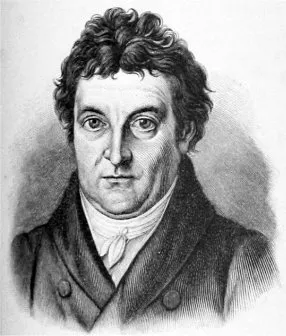
Johann Fichte (1762–1814) was the philosophical founder of German idealism, writing and teaching a generation before George Friedrich Hegel, and the first of a long line of obscurantist philosophers whose ideas somehow land with one solid political application: build a huge state led by one heroic dictator. It was he, and not Hegel, who first posited a meta-narrative of historical waves that could be characterized as thesis, antithesis, and synthesis.
In politics, he was a huge fan of Napoleon, but found himself devastated by the crushing victory of France over German territories, which motivated his “Addresses to the German Nation” (1808), the most influential lecture series on education to appear in the modern world. Here was the first complete outline of what German nationalism should look like.
The new education system should have “an absolutely new system of German national education, such as has never existed in any other nation.” The purpose is to educate a “new race of men” with a system that “must first be applied by Germans to Germans.” Its goal is to inculcate “the true and all-powerful love of fatherland, the conception of our people as an eternal people and as the security for our own eternity.”
Part of the point is to train for work so that “no article of food, clothing, etc., and, so far as this is possible, no tool is to be used, which is not produced and made” inside Germany. In other words: autarky. Germany should aspire to be “a closed commercial State” that rejects “our idolatrous veneration of coined metals.”
His template for what became fascist (right-Hegelian) thought is entirely predictable: statism, nationalism, loathing of the merchant class, and protectionism, spiced up with the inevitable doses of misogyny (“active citizenship, civic freedom and even property rights should be withheld from women, whose calling was to subject themselves utterly to the authority of their fathers and husbands”) and anti-Semitism (granting rights to Jews requires we “cut off all their heads in one night, and to set new ones on their shoulders, which should contain not a single Jewish idea”).
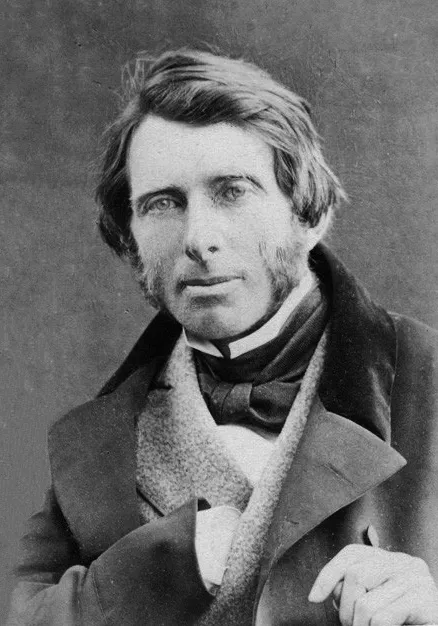
John Ruskin (1819–1900) is inexplicably revered to this day as an aesthete, artist, and champion of small crafts, whereas in truth he was an absolute hater of commercial capitalism, laissez faire liberalism, and the modern world. A hugely influential thinker of the Victorian period, he romanticized a mythic England from the past, in which art and good taste prevailed over commercial frenzy and wealth-making. “I was, and my father was before me, a violent Tory of the old school,” he said. In his view, he completely agreed with his friend Thomas Carlyle that the forces unleashed by Adam Smith and the Scottish Enlightenment generally had destroyed the artistic sensibilities of generations, and they needed to be recaptured through a strong planning state.
His most political book is Unto This Last (1862) which took aim at the division of labor itself. Riffing off the Parable of the Vineyards, he finds it outrageous that the vineyard owner himself was in a position to decide pay at all. The entire book is a long and tedious screed against merchants for their lack of loyalty, their obedience to impersonal market forces, and absence of a moral reason for existence. The merchant, he said, is “the man who does not know when to die, does not know how to live.”
Like other critics of classical political economy (he compared it to “alchemy, astrology, witchcraft”), he denied that exchange alone could produce any value or profit. “It is only in labor there can be profit,” he declared. He had a particular beef with John Stuart Mill, and critiqued his price and wage theory, showing near-zero competence in economic theory at all. For Ruskin, economics was not a science but an aesthetic. He summed up his outlook on political economy as follows: “Government and cooperation are in all things the laws of life; anarchy and competition the laws of death.” It’s no wonder that Ludwig von Mises said that Ruskin was “one of the gravediggers of British freedom, civilization and prosperity.”
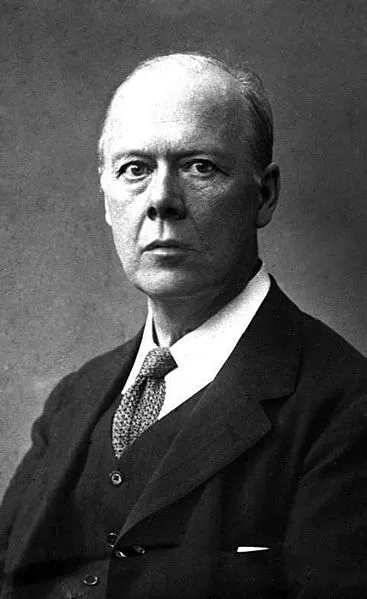
Houston Stewart Chamberlain (1855–1927) is an exceedingly strange figure in the history of politics and ideas: a British-born German whose influence bled into Germany and back again to his home. As son-in-law to the famed composer Richard Wagner, he became a dear friend and fanatical admirer of Adolph Hitler and the most aggressive proponent of virulent anti-Semitism ever to come out of England.
He had decided early in life to locate the source of all political and economic evil in the Industrial Revolution, preferring his own made-up vision of what he called “Merry Old England” consisting of a beautiful aristocracy, hard-toiling and thrifty peasants, and patriotic citizens dedicated to preserving the language and race against the commercial forces of modernity. Under these conditions, unlike the demographic mess unleashed by capitalism, women were submissive to the wills of their fathers and husbands, devoted only to furthering the superior race.
His weird 1899 book The Foundations of the Nineteenth Century became a bestseller, many times over, throughout the Continent. Heavily influenced by the racial typologies that were increasingly popular, he described the Jews as mindlessly materialistic and the source of most evil in the modern world.
The Jews, he said, caused the downfall of Rome, for example. He argued that Jesus cannot possibly have been a Jew since all good in the world emanates from the pure Aryan race. Instead, he was “of exceptional beauty, tall and slim with a noble face inspiring respect and love; his hair blond shading into chestnut brown, his arms and hands noble and exquisitely formed.” It was in this book that he laid out his theory that a Jewish plot was afoot to wipe out the Aryan race and turn all Europe into a race of “pseudo-Hebraic mestizos.”
His book, which was printed in eight editions in the first ten years of its publication, and eventually sold as many as 250,000 copies by 1938, catapulted him into the status of a celebrity intellectual. And so his every utterance became gospel for his followers, even his proclamation that the Great War, which he believed the Jews had started, had led England “totally into the hands of the Jews and the Americans” and capitalist machinery.
It was in the midst of his fame that he reached out to an emergently powerful Hitler. Hearing that both Hitler and Joseph Goebbels could be counted among his fan base, he wrote Hitler in 1923:
Most respected and dear Hitler … It is hardly surprising that a man like that can give peace to a poor suffering spirit! Especially when he is dedicated to the service of the fatherland. My faith in Germandom has not wavered for a moment, though my hopes were—I confess—at a low ebb. With one stroke you have transformed the state of my soul. That Germany, in the hour of her greatest need, brings forth a Hitler—that is proof of her vitality … I can now go untroubled to sleep … May God protect you!
After Hitler’s conviction of high treason following the Beer-hall putsch, Chamberlain stuck by him and kept hope alive. Hitler was touched, and, following Hitler’s release from prison, Hitler paid a visit to Chamberlain in Bayreuth in 1927, accompanied by Goebbels. Chamberlain assured Hitler that he was certainly “the chosen one,” thereupon lifting Hitler’s spirits. The leading Nazi in-house philosopher, Alfred Rosenberg, was perhaps an even greater fan of Chamberlain. An ailing Chamberlain died in 1927, never knowing of the Nazi attempt to deal with the “Jewish problem” he had dedicated his life to exposing.
Giovanni Gentile (1874–1944) might be the most clownish and ridiculous of all the figures mentioned here, but he was a big shot in his time. He aspired to be the Marx of fascism, a leading theorist of the idealist tradition who finally put together the essential pieces of a thorough-going non-Marxist statism. His writings enjoyed some degree of fame in America in the interwar period, working on his own writings and ghost-writing for Benito Mussolini who was frequently solicited for American-published academic writings in the 1920s.
Most familiar to American readers was Gentile’s 1922 book The Reform of Education published by Harcourt, Brace, and Company. The book contains the usual call for education to be compulsory, militarized, and nationalistic, rooted in a view of the heroic enterprise of nation building. For the most part, the book consists of pseudo-scholarly blather of the insufferably ponderous sort, but it does contain his theory of the state, as a kind of warm up to the educational material:
A nation can under no circumstances exist prior to the form of its State … a State is always a future. It is that state which this very day we must set up, or rather at this very instant, and with all our future effort bent to that political ideal which beams before us, not only in the light of a beautiful thought, but as the irresistible need of our own personality. The nation therefore is as intimately pertinent and native to our own being as the State, considered as Universal Will, is one with our concrete and actual ethical personality.
And so on for 250 pages. Despite the relentless statism of his vision, and his love of centralized power and planning, Gentile’s writings lacked some features that characterized other works in this genre. It is mercifully free of racism, perhaps because of his region of origin. He was Sicilian, and thereby belonged to a people who had been demonized by American thinkers as dysgenic since the 1880s. Indeed, if it is possible to talk this way, Gentile was a relative liberal among the fascists of the period, having criticized German anti-Semitism and having met his death at the hands of an anti-fascist mob having returned from arguing for the release of anti-fascists from prison.
Nonetheless, his signature contribution, signed by many Italian intellectuals, was the “Manifesto of the Fascist Intellectuals.”
The opposition of individual and State is the typical political expression of a corruption so deep that it cannot accept any higher life principle, because doing so would vigorously inform and contain the individual’s feelings and thoughts. Fascism was, therefore, a political and moral movement at its origins. It understood and championed politics as a training ground for self-denial and self-sacrifice in the name of an idea, one which would provide the individuals with his reason for being, his freedom, and all his rights. The idea in question is that of the fatherland. It is an ideal that is a continuous and inexhaustible process of historical actualization. It represents a distinct and singular embodiment of a civilization’s traditions which, far from withering as a dead memory of the past, assumes the form of a personality focused on the end towards which it strives. The fatherland is, thus, a mission.
Reading his brand of fascism, you can see why it went down easier with the American public than the English or German models. It was no more or less than the celebration of the state as the center of life, and a proclamation of the death of old-world freedom and democracy. In short, Gentile struck a chord in US political life for his description of the prevailing ethos of the New Deal itself.
T.S. Eliot (1888–1965) seems like an implausible candidate for inclusion in this gallery of rogues, simply because this paragon of civility and erudition is so widely championed in the annals of anti-liberalism. The American-born Anglophile is the author, after all, of the most famous and revered poem of the 20th century, “The Waste Land” (1922). Its impenetrable narrative captures the post-WWI despair of the English-speaking world, giving the impression that it was not only the war that civilization should regret but the whole of what life had become in the age of mass commerce. Nothing is salvageable, and everything is corrupt.
C.S. Lewis, who regarded Eliot’s work as nothing short of “evil,” said of this poem: “no man is fortified against chaos by reading the Wasteland, but that most men are by it infected with chaos.” What is that chaos? It is the dark longing for some long-dead past and a conviction of the irredeemability of the present, an attitude which is anathema to the classical liberal tradition that sees hope and wonder in what freedom can achieve. It is not a stretch to see Eliot’s literary contribution as part of the entire Modernist literary project in England to put down and condemn everything that capitalism had done for the world. For Eliot in particular, the cost was the integrity of culture itself.
In “Notes Toward a Definition of Culture,” Eliot takes hard aim at the entire liberal/Hayekian view of culture as a spontaneous evolution extending from the gradual emergence of norms, tastes, and manner of a free people. For Eliot, the right kind of culture must emanate from an elite, chosen from excellent educational institutions. Everything about industrialization wars against culture, even the advances in publishing. “In our time,” he declared, “we read too many new books… We are encumbered not only with too many new books: we are further embarrassed by too many periodicals, reports and privately circulated memoranda.”
A growing amount of scholarship has taken Eliot to task for his sympathies for the Eugenics movement and his consistent worry about the rising birth rates among the lower classes in English culture. But this should not be surprising at all. It is but a small step from regretting the advance of mass consumerism to decrying the rise of mass population expansion made possible by prosperity.
In the end, the problem with Eliot is not nearly on the scale you find in the other writers in this tradition. He nowhere defends totalitarianism or anything like it, though you do pick up a hint of authoritarianism. But what he represents is an underlying problem that is universal among this strain of anti-capitalist writers.
The problem comes down to an intractably aristocratic snobbery that feeds a deep suspicion against freedom and tempts intellectuals to imagine that if we only constrained that freedom and replaced it with wise controls over our social, cultural, and demographic destiny, we might be saved from the decay and corruption into which the liberalism of the 18th century plunged us. Despots thrive off just such convictions.
The Fork in the Road
What you find in this tradition is a very different template from Marx and his school for criticizing the freely evolving society celebrated by the liberal tradition of Adam Smith and Frederic Bastiat. The non-Marxist version has no fundamental objection to religion, nation, family, and even property, provided everything is directed toward the single goal of fortifying the collective.
What they share in common is a conviction that the freely evolving commercial society is unsustainably corrupt; society does not contain within itself the capacity for its own self-ordering; and human relationships are not capable of achieving universal harmony absent conscious design by states, powerful leaders, and intellectuals.
Their vast influence over the bloody politics of the 20th century is strangely forgotten, and the tradition of thought they represent papered over during the Cold War, which rerendered the only political conflict as the West vs. Communism. The ideas of a rightist form of totalism was lying in wait for the moment to re-rear its ugly head.
Knowing this helps us understand the new politics of our time. Freedom is threatened from two ends, the right and left. The idea of liberty really does represent a third way, a path lit by the hope in the kind of civilization that can be built not from the top down but from the bottom up, not through the force of power but by voluntary associations of regular people who aspire to live better lives.
Thomas Carlyle, the Founding Father of Fascism
Have you heard of the “great man” theory of history?
The meaning is obvious from the words. The idea is that history moves in epochal shifts under the leadership of visionary, bold, often ruthless men who marshall the energy of masses of people to push events in radical new directions. Nothing is the same after them.
In their absence, nothing happens that is notable enough to qualify as history: no heroes, no god-like figures who qualify as “great.” In this view, we need such men. If they do not exist, we create them. They give us purpose. They define the meaning of life. They drive history forward.
Great men, in this view, do not actually have to be fabulous people in their private lives. They need not exercise personal virtue. They need not even be moral. They only need to be perceived as such by the masses, and play this role in the trajectory of history.
Such a view of history shaped much of historiography as it was penned in the late 19th century and early 20th century, until the revisionists of the last several decades saw the error and turned instead to celebrate private life and the achievements of common folk instead. Today the “great man” theory history is dead as regards academic history, and rightly so.
Carlyle the Proto-Fascist
The originator of the great man theory of history is British philosopher Thomas Carlyle (1795–1881), one of the most revered thinkers of his day. He also coined the expression “dismal science” to describe the economics of his time. The economists of the day, against whom he constantly inveighed, were almost universally champions of the free market, free trade, and human rights.
His seminal work on “great men” is On Heroes, Hero-Worship, and the Heroic in History (1840). This book was written to distill his entire worldview.
Considering Carlyle’s immense place in the history of 19th century intellectual life, this is a surprisingly nutty book. It can clearly be seen as paving the way for the monster dictators of the 20th century. Reading his description of “great men” literally, there is no sense in which Mao, Stalin, and Hitler—or any savage dictator from any country you can name—would not qualify.
Indeed, a good case can be made that Carlyle was the forefather of fascism. He made his appearance in the midst of the age of laissez faire, a time when the UK and the US had already demonstrated the merit of allowing society to take its own course, undirected from the top down. In these times, kings and despots were exercising ever less control and markets ever more. Slavery was on its way out. Women obtained rights equal to men. Class mobility was becoming the norm, as were long lives, universal opportunity, and material progress.
Carlyle would have none of it. He longed for a different age. His literary output was devoted to decrying the rise of equality as a norm and calling for the restoration of a ruling class that would exercise firm and uncontested power for its own sake. In his view, some were meant to rule and others to follow. Society must be organized hierarchically lest his ideal of greatness would never again be realized. He set himself up as the prophet of despotism and the opponent of everything that was then called liberal.
Right Authoritarianism of the 19th Century
Carlyle was not a socialist in an ideological sense. He cared nothing for the common ownership of the means of production. Creating an ideologically driven social ideal did not interest him at all. His writings appeared and circulated alongside those of Karl Marx and his contemporaries, but he was not drawn to them.
Rather than an early “leftist,” he was a consistent proponent of power and a raving opponent of classical liberalism, particularly of the legacies of Adam Smith and John Stuart Mill. If you have the slightest leanings toward liberty, or affections for the impersonal forces of markets, his writings come across as ludicrous. His interest was in power as the central organizing principle of society.
Here is his description of the “great men” of the past:
They were the leaders of men, these great ones; the modellers, patterns, and in a wide sense creators, of whatsoever the general mass of men contrived to do or to attain; all things that we see standing accomplished in the world are properly the outer material result, the practical realization and embodiment, of Thoughts that dwelt in the Great Men sent into the world: the soul of the whole world’s history….
One comfort is, that Great Men, taken up in any way, are profitable company. We cannot look, however imperfectly, upon a great man, without gaining something by him. He is the living light-fountain, which it is good and pleasant to be near. The light which enlightens, which has enlightened the darkness of the world; and this not as a kindled lamp only, but rather as a natural luminary shining by the gift of Heaven; a flowing light-fountain, as I say, of native original insight, of manhood and heroic nobleness;—in whose radiance all souls feel that it is well with them. … Could we see them well, we should get some glimpses into the very marrow of the world’s history. How happy, could I but, in any measure, in such times as these, make manifest to you the meanings of Heroism; the divine relation (for I may well call it such) which in all times unites a Great Man to other men…
And so on it goes for hundreds of pages that celebrate “great” events such as the Reign of Terror in the aftermath of the French Revolution (one of the worst holocausts then experienced). Wars, revolutions, upheavals, invasions, and mass collective action, in his view, were the essence of life itself. The merchantcraft of the industrial revolution, the devolution of power, the small lives of the bourgeoisie all struck him as noneventful and essentially irrelevant. These marginal improvements in the social sphere were made by the “silent people” who don’t make headlines and therefore don’t matter much; they are essential at some level but inconsequential in the sweep of things.
To Carlyle, nothing was sillier than Adam Smith’s pin factory: all those regular people intricately organized by impersonal forces to make something practical to improve people’s lives. Why should society’s productive capacity be devoted to making pins instead of making war? Where is the romance in that?
Carlyle established himself as the arch-opponent of liberalism—heaping an unrelenting and seething disdain on Smith and his disciples. And what should replace liberalism? What ideology? It didn’t matter, so long as it embodied Carlyle’s definition of “greatness.”
No Greatness Like the State
Of course there is no greatness to compare with that of the head of state.
The Commander over Men; he to whose will our wills are to be subordinated, and loyally surrender themselves, and find their welfare in doing so, may be reckoned the most important of Great Men. He is practically the summary for us of all the various figures of Heroism; Priest, Teacher, whatsoever of earthly or of spiritual dignity we can fancy to reside in a man, embodies itself here, to command over us, to furnish us with constant practical teaching, to tell us for the day and hour what we are to do.
Why the state? Because within the state, all that is otherwise considered immoral, illegal, unseemly, and ghastly, can become, as blessed by the law, part of policy, civic virtue, and the forward motion of history. The state baptizes rampant immorality with the holy water of consensus. And thus does Napoleon come in for high praise from Carlyle, in addition to the tribal chieftains of Nordic mythology. The point is not what the “great man” does with his power so much as that he exercises it decisively, authoritatively, ruthlessly.
The exercise of such power necessarily requires the primacy of the nation state, and hence the protectionist and nativist impulses of the fascist mindset.
Consider the times in which Carlyle wrote. Power was on the wane, and humankind was in the process of discovering something absolutely remarkable: namely, the less society is controlled from the top, the more the people thrive in their private endeavors. Society needs no management but rather contains within itself the capacity for self organization, not through the exercise of the human will as such, but by having the right institutions in place. Such was the idea of liberalism.
Liberalism was always counterintuitive. The less society is ordered, the more order emerges from the ground up. The freer people are permitted to be, the happier the people become and the more meaning they find in the course of life itself. The less power that is given to the ruling class, the more wealth is created and dispersed among everyone. The less a nation is directed by conscious design, the more it can provide a model of genuine greatness.
Such teachings emerged from the liberal revolution of the previous two centuries. But some people (mostly academics and would-be rulers) weren’t having it. On the one hand, the socialists would not tolerate what they perceived to be the seeming inequality of the emergent commercial society. On the other hand, the advocates of old-fashioned ruling-class control, such as Carlyle and his proto-fascist contemporaries, longed for a restoration of pre-modern despotism, and devoted their writings to extolling a time before the ideal of universal freedom appeared in the world.
The Dismal Science
One of the noblest achievements of the liberal revolution of the late 18th and 19th centuries—in addition to the idea of free trade—was the movement against slavery and its eventual abolition. It should not surprise anyone that Carlyle was a leading opponent of the abolitionist movement and a thoroughgoing racist. He extolled the rule of one race over another, and resented especially the economists for being champions of universal rights and therefore opponents of slavery.
As David Levy has demonstrated, the claim that economics was a “dismal science” was first stated in an essay by Carlyle in 1848, an essay in which non-whites were claimed to be non-human and worthy of killing. Blacks were, to his mind, “two-legged cattle,” worthy of servitude for all times.
Carlyle’s objection to economics as a science was very simple: it opposed slavery. Economics imagined that society could consist of people of equal freedoms, a society without masters and slaves. Supply and demand, not dictators, would rule. To him, this was a dismal prospect, a world without “greatness.”
The economists were the leading champions of human liberation from such “greatness.” They understood, through the study of market forces and the close examination of the on-the-ground reality of factories and production structures, that wealth was made by the small actions of men and women acting in their own self interest. Therefore, concluded the economists, people should be free of despotism. They should be free to accumulate wealth. They should pursue their own interests in their own way. They should be let alone.
Carlyle found the whole capitalist worldview disgusting. His loathing foreshadowed the fascism of the 20th century: particularly its opposition to liberal capitalism, universal rights, and progress.
Fascism’s Prophet
Once you get a sense of what capitalism meant to humanity—universal liberation and the turning of social resources toward the service of the common person—it is not at all surprising to find reactionary intellectuals opposing it tooth and nail. There were generally two schools of thought that stood in opposition to what it meant to the world: the socialists and the champions of raw power that later came to be known as fascists. In today’s parlance, here is the left and the right, both standing in opposition to simple freedom.
Carlyle came along at just the right time to represent that reactionary brand of power for its own sake. His opposition to emancipation and writings on race would emerge only a few decades later into a complete ideology of eugenics that would later come to heavily inform 20th century fascist experiments. There is a direct line, traversing only a few decades, between Carlyle’s vehement anti-capitalism and the ghettos and gas chambers of the German total state.
Do today’s neo-fascists understand and appreciate their 19th century progenitor? Not likely. The continuum from Carlyle to Mussolini to Franco to Donald Trump is lost on people who do not see beyond the latest political crisis. Not one in ten thousand activists among the European and American “alt-right” who are rallying around would-be strong men who seek power today have a clue about their intellectual heritage.
And it should not be necessary that they do. After all, we have a more recent history of the rise of fascism in the 20th century from which to learn (and it is to their everlasting disgrace that they have refused to learn).
But no one should underestimate the persistence of an idea and its capacity to travel time, leading to results that no one intended directly but are still baked into the fabric of the ideological structure. If you celebrate power for its own sake, herald immorality as a civic ideal, and believe that history rightly consists of nothing more than the brutality of great men with power, you end up with unconscionable results that may not have been overtly intended but which were nonetheless given license by the absence of conscious opposition.
As time went on, left and right mutated, merged, diverged, and established a revolving door between the camps, disagreeing on the ends they sought but agreeing on the essentials. They would have opposed 19th-century liberalism and its conviction that society should be left alone. Whether they were called socialist or fascists, the theme was the same. Society must be planned from the top down. A great man—brilliant, powerful, with massive resources at his disposal—must lead. At some point in the middle of the 20th century, it became difficult to tell the difference but for their cultural style and owned constituencies. Even so, left and right maintained distinctive forms. If Marx was the founding father of the socialist left, Carlyle was his foil on the fascist right.
Hitler and Carlyle
In his waning days, defeated and surrounded only by loyalists in his bunker, Hitler sought consolation from the literature he admired the most. According to many biographers, the following scene took place. Hitler turned to Goebbels, his trusted assistant, and asked for a final reading. The words he chose to hear before his death were from Thomas Carlyle’s biography of Frederick the Great. Thus did Carlyle himself provide a fitting epitaph to one of the “great” men he so celebrated during his life: alone, disgraced, and dead.
The Brooding Baron of 20th-Century Fascism
The history of fascist ideology extends from the early 19th century through our own times: from Fichte to Hegel to Carlyle to List to Ruskin to Spengler to Grant to Spann to Gentile to Schmitt and (skipping a half century) finally to thousands of meme-posting sock puppets on Twitter. These thinkers are united in their loathing of capitalism but also opposition to communism, which is the feature of their identity that is considered right-wing.
Things were never as weird with this camp as during the interwar period, particularly among the intellectuals (or pseudo-intellectuals) that rallied political movements toward violence and state centralization. The main thinkers in this tradition had been largely forgotten until their relatively recent revival in European and American politics. They had unmistakable and consistent ideological traits. They were socialists (and nationalists) who decried capitalism as decadent anomy, but railed against communism too, on grounds that it was too universalist and deracinating of the people’s identity.
The far left and far right have long shared in common the view that social harmony is an illusory ideal concocted by the liberal tradition. Whereas the Marxists divide society by class, the fascists divided society by religion, race, language, geography, and lineage. They favored strong-man politics, dabbled in pseudo-science and occultism, and never tired of predicting doom for civilization. Above all else, they despised bourgeois liberalism, probably even more then they hated communism.
Who was the strangest among them? There is tough competition for that title. Could it be Francis Parker Yockey, the one-time American leftist who became a frenzied champion of Hitler: whose delirious “masterwork” Imperium has inspired several generations of hardcore anti-Semites? Or perhaps it is George Lincoln Rockwell, the founder of the American Nazi Party who believed that one-man dictatorship was the only hope to rescue America from the Jews and non-whites who inhabited the same nation as the master race?
The Baron
My vote is for the oddest bird among them (and that’s saying something), and perhaps the most interesting: the monocle-wearing Baron Giulio Cesare Andrea Evola (1898–1974), better known as Julius Evola. Always cagey about his background and education, his followers believed him to be of Sicilian aristocratic lineage, a real-life noble in their midst who was an inexhaustible font of wisdom. Benito Mussolini as well as many Nazi party officials—even the Fuhrer himself—were taken in by his strange brew of dialectical apocalypticism, violent misogyny, Jew hating, and longing for global war to restore the golden age of the warrior class.
Truly, reading his works—I do not recommend it for the faint-of-heart—is a tour of a mind put several times through a blender of malicious nonsense from the first to the last. His thought contains all the usual fascist tropes, but takes them to a new level of faux-erudition and philosophical frenzy.
Who Was Evola?
Julius Evola was born in Rome in 1898 and studied engineering briefly in college before deciding that the discipline was too bourgeois for him; he didn’t want conventional credentials in any case. Like so many others of his generation, his life was interrupted by the Great War, which unleashed a bloody nihilism in Europe, particularly among the artistically inclined.
Following the war, he threw himself into art and philosophy, driving himself toward radical antiliberalism and anti-Catholicism. In this, he was not unlike so many displaced minor nobles of his time. Alienated by democracy and robbed of social position by the pace of modern life, but absolutely unwilling to hold a regular job, he turned to hard-core reactionary politics in a longing to wipe out the modern world and turn it back to some imagined ancient manly despotism.
The Devil
He came to public attention with his first major work, Pagan Imperialism (1928), a massive attack on the Catholic Church, on grounds that the Pope and the Bishops as power had displaced the more legitimate source of moral and legal authority of the imperial state, which he, like everyone else in this right-Hegelian tradition, believed was the central authority of history’s trajectory. To him (again predictably), Christianity was feminized, egalitarian, humanitarian, weak, and excessively pro-peace, and so the Church had to be smashed if civilization were to be saved.
The Catholic Church was mortified by the attack (the Vatican called him the “Italian Satan”) and his book became a huge subject of debate in intellectual circles where fascists and communists battled it out all over Europe. Among the participants was the man who would later become Pope Paul VI (who presided over the Second Vatican Council in the early 1960s), who might have believed that the only way to protect Europe against violent fascism was through a turn to the left.
Heart of Darkness
Like all fascist intellectuals of the interwar period, Evola wrote extensively on the race issue, and, given the context of the time, his views were slightly more liberal than, for example, the doctrinaire Nazis. He believed that the human person was made of biology, mind, and spirit, so that a person could be a Jew biologically but an Aryan in mind and therefore not entirely intolerable. That Evola was considered a heretic by the hard-core Nazis tells you all you need to know about these times and the strange ideas extant in European intellectual circles.
During Mussolini’s consolidation of power in Italy, Evola became his biggest champion and admirer and came to cheer the most reactionary/totalitarian elements in European politics at the time. This culminated in his “magnum opus” called Revolt Against the Modern World. This book became an important rallying treatise of the reactionary movements in Italy, Spain, and Germany, standing alongside even Mein Kampf as an ideological justification for war and slaughter.
What does this book say? No surprise, he goes full Hegelian, positing a Golden Age of racial purity and perfect political organization that was disrupted by the advent of liberalism, but predicting that the decline will be ended by a full revolt in favor of a strongman-led state that will take us to a new era of perfect order. Of course, the book is thoroughly statist, thoroughly racist, massively opposed to every single improvement in living standards since the Age of the Enlightenment. It is a full-bore attack on human liberty itself.
I would quote it but most of it makes no sense, but you are welcome to a sample or to read the whole book. His central political conclusion is to favor the “establishment of order from above.”
The very notion of “natural rights” is a mere fiction, and the antitraditional and subversive use of that is well documented. There is no such thing as a nature that is “good” in itself and in which the inalienable rights of an individual, which are to be equally enjoyed by every human being, are preformed and rooted. Even when the ethnic substance appears to be somewhat ‘well defined,’…. These forms…do not have a spiritual value in and of themselves unless participating in a higher order, such as when they are assumed in the state or an analogous traditional organization, they are first consecrated as being from above.
(Quoting Evola is always difficult because of his studied obscurantism, but I hope the reader gets the main drift.)
The Girl Problem
In this treatise, Evola presents his position on women, which he would revisit throughout a long literary writing career. Evola not only rejected any human rights for the half of the human race identified as women; he believed that the biological capacity to bear children mandates a situation of permanent slavery for women. His vision of the proper place of woman is represented by the captive harem during life and on the funeral pyre after the death of her master.
It is not possible, he wrote, for a society that grants “every human being” things such as “dignity” and “rights” to “preserve some sense of the correct relationship between the two sexes.” He explains in an oddly clear passage:
In a society that no longer understands the figure of the ascetic and of the warrior; in which the hands of the latest aristocrats seem better fit to hold tennis rackets or shakers for cocktail mixes than swords or scepters; in which the archetype of the virile man is represented by the boxer or by a movie star if not by the dull wimp represented by the intellectual, the college professor, the narcissistic puppet of the artist, or the busy and dirty money-making banker and the politician—in such a society it was only a matter of time before women rose up and claimed for themselves a “personality” and a “freedom” according to the anarchist and individualist meaning usually associated with those words.
In Evola’s view, the emancipation of women in the 19th century (the age of liberalism), combined with rising prosperity for everyone, led to an intolerable demographic chaos. In his view, birth ought to be regulated, mandated among the superior races (and that includes rape as a moral imperative) but forbidden among the inferior races. If the state doesn’t get involved, humanity is absolutely doomed (a conventional claim of every eugenicist of his generation), so long as we continue to tolerate things like freedom and human rights.
It is no wonder the superior races are dying out before the ineluctable logic of individualism, which especially in the so-called contemporary “higher classes,” has caused people to lose all desire to procreate. Not to mention all the other degenerative factors connected to a mechanized and urbanized social life and especially to a civilization that no longer respects the health and creative limitations constituted by the castes and by the traditions of blood lineage. Thus proliferation is concentrated in the lower social classes and in the inferior races where the animal-like impulse is stronger than any rational calculation and consideration. The unavoidable effects are a reversed selection and the ascent and the onslaught of inferior elements against which the “race” of superior castes and people, now exhausted and defeated, can do very little as a spiritually dominating element.
He ends this 1934 treatise with a blood-thirsty template for holocaust and the creation of a new man:
This is all we can say about a certain category of men in view of the fulfillment of the times, a category that by virtue of its own nature must be that of a minority. This dangerous path may be trodden. It is a real test. In order for it to be complete in its resolve it is necessary to meet the following conditions: all the bridges are to be cut, no support found, and no returns possible; also, the only way out must be forward. It is typical of a heroic vocation to face the greatest wave knowing that two destinies lie ahead: that of those who will die with the dissolution of the modern world, and that of those who will find themselves in the main and regal stream of the new current.
His subsequent flurry of literature, through the rest of the 1930s leading to the Second World War, included reconstructions of early pre-modern history in which every time the merchant prevailed over the warlords, commerce and harmony replaced rape and pillage, Evola cries foul. Humanity lost its love of bloodshed and horror and therefore the essence of life itself!
You read enough of this stuff and it all becomes absurdly predictable. Liberty in all its forms is the enemy; hatred, tribal violence, dictatorship, mythological love of the lie, is the philosophical aspiration of superior people. Though Evola’s books poured out in the years before the war, each was a variation on the same theme.
Dalliance with the Nazis
As the Nazi party made advances in German politics, Evola was enraptured, placing all his hopes and dreams into the great cause, and became a full-time propagandist working in Germany. He spoke on behalf of the Third Reich, and became good friends with Nazi official and extermination-camp builder Heinrich Himmler. His services were so appreciated that Evola eventually became a top intellectual in Nazi circles, a genuine intellectual insider of a cause who provided ideological cover for its crimes, while cheering every aspect of Hitler’s war and regime as the best possible hope for humanity. He even ended up escorting Mussolini to Hitler’s hideout during the war. Evidently, the slaughter of innocents was not only just fine by him but embodied some realization of what he believed must happen.
So worshipful did Evola become of violence and death that he made it a habit to walk around Mussolini’s short-lived Social Republic, contemplating the spiritual meaning of bombs, during which time he was hit by a shell that left him paralyzed. His disability only added to his mystique after the war during which time he cheered the violent juntas that held out for a fascist utopia even following Allied victories. Evola ended up escaping prosecution after the war, most likely by cleverly boring the jury with abstruse philosophical ramblings.
The writings from his last years demonstrate that he never gave up his faith in fascist revolution. His 1974 book Fascism as Viewed from the Right downplayed some of his weird views on sex and race but reiterated the main theme: statism as a replacement for classical liberalism.
The true state will be oriented against both capitalism and communism. At its center will stand a principle of authority and a transcendent symbol of sovereignty…. The state is the primary element that precedes nation, people, and society. The state—and with the state everything that is properly constituted as political order and political reality—is defined essentially on the basis of an idea, not by naturalistic and contractual factors.
Paradise Lost
Baron Evola was hardly singular in his outlook among his class. At the end of the 19th century, there were many such minor nobles who felt stranded in the age of democracy, loose in the world, brilliant and privileged but unwilling to get a conventional education much less take a regular job. World War I shattered their moral lineage, so many turned to outright nihilism out of anger at their personal plight. They also happened to be the smartest person in the room and they knew it.
What to do? Where to go? Basically, many of these people became The Joker, people who wanted to see the modern world burn. The world they knew they despised. But Mussolini was hope. Hitler was hope. The determined strongman, the use of massive force to turn back history, the extermination camp, and the eventual gas chamber: these were hope. These displaced minds couldn’t fight but they could think, lecture, and write. They wrote treatises on why mass death was the source of life. They went from one-time angels of old Europe to Satans in the new, as the Vatican said of Evola. And today? Their legacy lives on, tragically and horribly.
So that I’m clear: I’m not unsympathetic with their personal plight. Everyone has a reason for how he or she is. But the fact is that they used their gifts for evil, and are full accomplices in bringing it about.
The Lure of Gnosticism
Why are people drawn to the views of such thinkers? Why are Evola’s works newly translated and selling again? Why is there Juliusevola.com?
You could theorize that this is what you get when the left goes too far; it creates a radical right as a mirror image. That might be a factor. More fundamentally, however, Eric Voegelin is right: it has to do with the attraction of a secret teaching, the great Gnostic appeal, stemming from an initial distrust of conventional learning and wisdom and leading to a search for some lost and suppressed worldview.
People like Baron Evola have a special attraction for such people because of their supposed aristocratic lineage; this hints of the master’s alienation from prevailing corruption and signals the possibility of truthful revelation, some hidden truth buried in the great mind. It’s all the better when people like this write treatises of a thousand pages that reconstruct the story of humankind in super un-PC terms, placing blame for the loss of greatness on invaders, deviants, feminization, almost always the Jews, or some other supposed artificial turn that leads humankind away from its organic destiny to be led by mighty men (and the readers of such books always imagine themselves to be among them).
There seems to be some sneaky pleasure in pouring over such dark works, like a sin against a corrupt and expendable society. For followers of such thinkers, that the books don’t make much sense is hardly the point. What matters most is that the author himself represents isolation, exclusion, condemnation, and his works are suppressed by prevailing elites. It is the very rejection of their thought by the establishment that is the source of their power among people afflicted with such Gnostic longings.
Evola Lives
Every reactionary ideology—every outlook on life that harbors deep resentment against the liberation of humanity from deprivation and barbarism—has a vision of an idealized past, a theory of its decline and fall, and a plan for restoration which is necessarily violent. The fascist movements of the interwar period became the flypaper for all these activists in Europe.
The pompous and ridiculous Baron Giulio Cesare Andrea Evola, whose works, to this very day, entice alienated and authoritarian pseudo-intellectuals around the world, lives on through his works translated in at least five languages. His thought—like the writings of medieval occultists—will most likely attract brooding and bitter autodidacts around the world for decades to come. Both Steve Bannon and Milo Yiannopoulos have cited Evola as inspiration.
And the biggest irony of all: Evola’s ideas are only accessible today due to the very technology—and ideals behind that technology—that he dedicated his life to opposing. Ludwig von Mises has the last word: “fascism is not as the Fascists trumpeted a ‘new way to life’; it is a rather old way towards destruction and death.”
We Fight to Feel Alive
“I’m just here for violence.”
So read a sign by a man in New Orleans protesting the city’s decision to remove some marbled tributes to the Confederacy.
This seems to be a growing tendency around the country. Is there a controversial speaker coming to campus? Let’s go and be disruptive or disrupt the disrupters. Is there a pro-Trump or anti-Trump rally happening? Let go and see if we can partake in some fisticuffs. Which side should we choose? That matters, but not as much as the appeal of the clash itself. Conflict, even violence, makes us feel alive.
On the digital level, we’ve all been dragged into wicked flame wars on every platform, where small differences of opinion devolve quickly to insult to viciousness to blocking. Twitter has become the haven for provocateurs to demonize, threaten, and swear retribution upon others. Every public intellectual today faces some degree of harassment on this level.
The longing for a fight isn’t just an American problem. It affects every European country, where political groups are going to their corners and coming out swinging.
The Fight Club
Sometimes a movie can be so far ahead of its time that we forget how much it foreshadowed. So I’m not entirely sad that I waited until 2017 to see the 1999 classic movie Fight Club. I didn’t know the story and had no expectations, much less any notion of the plot twist. This is the best way to experience the film. It did to me exactly what it was meant to do: take me on a long journey from the mundane to beyond-belief absurdism.
The film is a creation of the legendary David Fincher, based on the book by the same name by Chuck Palahniuk. It stars Edward Norton as the mild-mannered narrator, Brad Pitt as the tough-talking guru of the club Tyler Durden, and Helena Bonham Carter as the disheveled but beautiful Marla Singer. There are three distinct stages to the plot’s development, but the main one involves the creation of a club for boys to beat each other senseless, just because it makes them feel good.
They gather in an appointed spot at an appointed time and start throwing punches until one person says enough. It’s not about anger. It’s not even about winning. It’s about discovering something about yourself: the pain you can feel and the pain you can inflict, which is somehow more real than anything else in your life. It connects to a primal side of us that we’ve lost in the course of betting and prettifying our lives while actually draining away our core bio-evolutionary drive to struggle.
As a viewer, you are aghast, but the case for the practice is also strangely compelling. One of the main criticisms of the movie when it came out was that the whole notion was actually too compelling. Reviewers didn’t doubt the quality of the movie, but they were very worried about whether the narrative would create copycat clubs and behavior around the world.
Remember, this was 1999. We had no notion then of the Alt-right or the Antifa. ISIS, Trump, Sanders, and the rise of mega-toxic online culture was nowhere in sight. The income stagnation of young white men didn’t become entrenched until after 2008. The cultural trope of middle-class people looking for meaning and growing tired of merely consuming is more of our time than the last century. And the general sense of a slow-growth economic environment festering and leading to longing for violence had not emerged. The final scene with collapsing buildings eerily foreshadows 9/11.
The connection to our times is obvious, with the growing street battles between left and right, the winning of which decides nothing but makes the participants feel as if they matter. Indeed, the movie was truly before its time.
Seeing the Future
This movie is nearly spooky with regard to how much of the future it managed to anticipate. Made at the end of the second millennium it seems to anticipate a return of brutalism in the third millennium. Though it tells the story of a just a few people, gradually morphing into a tale of gang organization and violence, it serves as a prescient allegory for the rise of a new form of politics in the 21st century.
The movie begins with the feel of a light comedy. A young man with a white collar job busies himself filling up his apartment with Ikea furniture and defining his lifestyle with careful choices over glassware. He has to travel often for his business, and it has become routine to him. Nothing particularly meaningful or interesting ever happens. He has developed insomnia and seeks out some cure for it, but nothing seems to work.
One day, on an airline flight, our narrator meets Tyler Durden, who seems to be the most interesting person he has encountered in years. They meet up again later and the narrator stays at Tyler’s house, which turns out to be a dilapidated mansion of sorts. Clowning around one day, Tyler insists that his new friend punch him. He does and Tyler punches back. A brawl ensues but instead of becoming enemies, they discover a source of friendship. It makes them feel like they are living large. “Quit your job. Start a fight. Prove you’re alive,” says Tyler. “If you don’t claim your humanity, you will become a statistic.”
The Rationale
The Fight Club grows and grows, and at some point, Tyler explains the underlying theory.
Man, I see in fight club the strongest and smartest men who’ve ever lived. I see all this potential, and I see squandering. Damn it, an entire generation pumping gas, waiting tables; slaves with white collars. Advertising has us chasing cars and clothes, working jobs we hate so we can buy [stuff] we don’t need. We’re the middle children of history, man. No purpose or place. We have no Great War. No Great Depression. Our Great War’s a spiritual war… our Great Depression is our lives. We’ve all been raised on television to believe that one day we’d all be millionaires, and movie gods, and rock stars. But we won’t. And we’re slowly learning that fact. And we’re very, very pissed off.
We fight because we have no purpose, no place. To find them, the Fight Club shoves aside all things people associate with civilized behavior and reveals our inner manhood, our ability to feel and inflict pain. We need to see the blood to really believe in life.
The movie features over-the-top displays of masculine derring-do. The gendered element of the underlying philosophy is unmissable: contrasting civilization with manhood, as if peacefully cooperating with others for mutual gain in productive pursuits is a feminized undertaking, activities that are morally and physically emasculating. Men are born to fight and rule, not trade and cooperate, or so the theory goes.
There is a grain of truth here. The struggle, the fight, the kill, is the dominant story of humankind’s existence, during which time male dominance and female subjugation were unquestioned. Women as a sex only gained the fullest possibility to exercise their human rights in the age of laissez-faire, the 19th-century belle epoch of peace, new technology, and commercial achievement, a time when the blood feud, the ethnic conflict, the race and religious war were at a low ebb, while manners, etiquette, and civilized deference to the well-being of others was on the rise.
Drama Lost and Regained
The idea of the Fight Club is to recapture the lost drama, drive, and sense of purpose that we can only experience through violence, according to countless champions of war from Carlyle to Schmitt. Following the onset of the Great Depression, the rise of fascist ideology in America and Europe had the same idea: effeminate ideas like peace and freedom didn’t work, so let’s try something masculine like power and war. Through them, we can recapture honor, discover what heroism looks like, strengthen our spirits, find out the meaning of greatness.
Is this really what war does? It can be associated with heroism in individual cases, but the main result is to unleash unthinkable horror. Indeed, as Christopher Hedges says in his classic 2002 work War Is the Force that Gives Us Meaning: war actually “exposes the capacity for evil that lurks not far below the surface within all of us.” It is not manly but animalistic, not civilized but barbaric, not true but riven with lies.
In some sense, the Fight Club puts on display the most powerful critique of liberalism ever penned, the notion that peace, trade, and mutual cooperation, and the resulting social order of commercial production and consumption, robs our lives of drama and meaning. This can only be recaptured through the reassertion of the friends/enemies paradigm, and this, in turn, can only be made present in our lives through the fight. The film sets up this critique and then knocks it down beautifully by revealing it as a dangerous pathology that threatens us all.
It makes perfect sense, then, that the contemporary political Fight Club, though defined as right and left, and seemingly warring from opposite sides of the political spectrum, are absolutely united in one central point: opposition to the idea of peace and trade as pillars of the social order. The more you look, the more you realize that socialism and fascism, Alt-right and Antifa, far right and far left, have more in common than they like to admit.
As with the Fight Club itself, the purpose of the opposing sides in the modern political struggle is to find meaning through the fight itself. But a closer look reveals something remarkable: the opposites sides in the fight are really on the same team, and might even be the same person. How much difference, really, is there between the Hegelian of the right and the Hegelian of the left?
The foreign policy analogy has the US supporting both sides in Syria, bombing US-built tunnels in Afghanistan, and providing arms to both sides in civil wars around the world. What seems to be two sides, on closer inspection, turn out to be one side united in the love of struggle for its own sake. How else to explain the desire of the Trump administration to once again ramp up the fight in Afghanistan, a fight with no end in sight, and, to that extent, the model war for any cause that has given up belief in civilization itself?
But What about Drama?
What about this critique itself? Is the free society really devoid of drama? A contrasting view of this question comes from Ayn Rand’s Atlas Shrugged, a book that departs from Scottish Enlightenment aesthetics to embrace a more Nietzschean spirit regarding enterprise. It is about discovery, competition, achievement, the tragedy of loss and the elation of triumph, all in the context of market exchange.
To my mind, this is the book’s singular and epic achievement. It demonstrated that all the supposed honors and glories of war are actually better realized through commerce. Enterprise, in Rand’s view, is the Fight Club without violence and blood but with all the excitement, daring, and drama. The book is not to everyone’s taste, but it does do an effective job in countering the critique of markets that they are stultifying and emasculating of the human spirit.
It is especially notable that Rand’s heroes maintain their motivation and morality even in the face of tremendous adversity. They reject the means of violence on principle and fight for their freedom and rights by use of their minds and their capacity for heroic production, not destruction. They don’t go to the alleyways and beat each other up to find the meaning of existence. Instead, they stand up for human rights and personal achievement, even in the midst of an economy in decline, with property rights under fire, with bureaucrats ruling the day.
No one can say that this story lacks drama. On the contrary, Rand finds the ultimate drama in the fight for freedom, peace, property, and capitalism. As for the choice of violence, it is the path of losers, people who have lost confidence in their own ability to compete, create, and add value to great project of life. Tellingly, Rand’s real hero in the book in a woman, a fact which flips the narrative of commercial life as emasculated. Violence is, in fact, an act of despair in one’s own capacity to achieve as a human being.
How can believers in these liberal ideals today resist the Fight Club mentality? As with Rand’s heroic characters, we should be conscientious objectors in the wars of our time, whether hot or cold, in politics or the streets, large or small. We have no dog in this fight. As they beat each other to a bloody pulp, let us go forth boldly to build a civilized, inclusive, peaceful, and free world. That is a truly heroic struggle, and a thoroughly sound and sane way fully to feel alive.
Right-Wing Collectivism: The Other Threat to Liberty
Read the whole book online · Book details
This work is published under a Creative Commons licence. You may copy, share, and re-host it with attribution.