
Chapter 21 of 44 · The Case for Legalizing Capitalism by Kel Kelly
Chapter 9: Environmentalism -- at Any Cost
Environmentalism — At Any Cost
Going green... it’s all the rage these days. If you’re not into it, you’re out of it. If you’re against it, you’re evil. But have all the masses who uncritically buy into environmentalism hook, line, and sinker done all their homework? Have they spent hours upon hours reading not only the research from environmentalists and other left-wingers, but from all sides? The so-called greens, by both request and by government dictate, are asking us to make drastic changes in the way we live our lives and to reduce the amount of goods and services available to us. We should therefore be very sure we know what damage is being done to the environment, what the effects are, and how it could both help or hurt us to alter our preferred ways of living in order to supposedly “save the planet.”326
This chapter will present views which are contrary to popular understandings of environmentalism. It will show that the state of the environment is not as bad as it’s made out to be, and is in fact improving in most areas, not declining. Further, it will be shown that nothing should be done to prevent emissions of carbon dioxide in the name of stopping global warming. Not only would restricting emissions reduce our current standard of living at the least, and cause economic retrogression and even death at the most, but by continuing to grow our economy with current “dirty” methods, we can advance to a state where we develop cleaner methods of production which are as cost effective as our current means of production. It will also be shown that contrary to popular opinion, “greedy” profit seeking companies will in fact switch to cleaner and greener ways to operate without government regulation.
I do not pretend to be an environmental expert or even someone even remotely interested in environmental science. This chapter simply compiles the various anti-environmental arguments that others have developed so as to present an alternative case to the reader.
The Problem of Disinformation
Many of the environmentalist’s claims are legitimate and important to address. But many others are illogical and misleading, if not outright deceptive. Much of their information is completely detached from reality and tantamount to propaganda. Being aware of this bias is important — not in order necessarily to refute any possible environmentalist claim that comes along, but to be skeptical about declarations until they are proven true. The environmentalist movement sweeping the world today is led by a small group of people who believe that nature has more value than do human beings or human well-being. These people, who favor socialism and the attendant lack of freedom it entails for humans, by contrast, want complete freedom for animals, even at the expense of human lives (and they do not remind us that 99 percent of all species that have existed on this earth became extinct on their own, due to conditions and events such as global cooling, astronomical episodes, volcanoes, genetic evolution, and food scarcity327). They even want to eradicate “footprints” of human existence, and perhaps the human species all together.
Sound extreme? Perhaps, but this notion is explicitly stated by many environmentalists, and implicitly endorsed in their demands for government force to be employed so that their goals will be achieved. For example, one Australian medical expert has called for a $5,000 tax on all children born, and an annual carbon tax of up to $800 per child, due to the supposed negative effect on the environment each person produces.328 The environmental group The Voluntary Human Extinction Program, which has the slogan, “May we live long and die out,” consists of volunteers who have made decisions to remain childless, so that other species can live instead.329 The group’s founder states, “As long as there’s one breeding pair of homosapiens on the planet, there’s too great a threat to the biosphere.” Do you doubt that this group would support government action (government force) to advance their cause?330 A University of Texas biology professor claims that humans must die for earth to live, and states that disease “will control the scourge of humanity. We’re looking forward to a huge collapse.”331 These people certainly must be the life of the party at summer cookouts.
Most of the rest of society, unaware of the environmentalists’ real goals and propaganda, and unaware of how their own lives would be affected should the environmentalists get their way, hear the general message about being good to the planet, not consuming all our natural resources, and keeping the earth in good shape for our children, and agree that this seems like the right and practical thing to do. They then effectively become environmentalists and, unknowingly, support actions and government laws which would degrade and diminish their own lives and those of their children.
Alarmism, and thus misinformation, has existed for many years — indeed, centuries — in the environmental debate. Environmentalist and economist Bjorn Lomborg points out in his book, Cool It,332 that as Europe descended into the little Ice Age in the 1400s, the bad weather and resulting bad crops were blamed on witches. There was a high correlation between weather and witchcraft trials across Europe. As many as 12,000 “witches” were executed between 1500 and 1700, and are still being executed in Africa today. Also in Europe, in 1816, a very rainy summer which, in reality, was brought about by a volcanic eruption, was blamed at the time on the use of lightning conductors (which had, ironically, previously been blamed for droughts). Wet summers in the 1910s and 1920s were blamed on gunfire from WWI and on the initiation of transatlantic shortwave radio.
In a further irony, for most of the last 100 years, it was global cooling, not global warming, that was the climate problem, and credible publications were involved in relaying this tenuous information. In 1912 an article in the Los Angeles Times claimed that a fifth ice age was on the way. In 1923 a Chicago Times article declared that “A Scientist Says Arctic Ice Will Wipe Out Canada” along with large parts of Asia and Europe. Later, in the 1930s the concern became global warming, and the question arose as to whether CO2 emissions could be the cause. A New York Times article stated in 1952 that “the world has been getting warmer in the last half century,” and in 1959 another article proclaimed that the glaciers were melting and that the ice in the Arctic Ocean was about half as thick as it was the previous century.333
But by the 1940s, global mean temperatures were already falling again, which led to claims in the 1970s that the earth was in danger once again of an ice age. Some books explained that the exciting days of global warming were over and that advancing glaciers were endangering multiple countries, and that the cold weather could cause mass starvation by the year 2000. It was also said that global cooling had killed hundreds of thousands in the developing world, and that if action was not taken, world famine, world chaos, and world war would all come by the year 2000. Well-known newspapers and magazines claimed that pollution was causing global cooling and that droughts would be the result.
Another example of alarmism and misinformation was the scare of acid rain destroying lakes in the 1980s. While acid rain does exist (largely as a result of governmental requirements that smoke stacks be built at least two hundred feet tall), it was not responsible for the previously-claimed acidification of the lakes in question. The acidification was instead the result of the ending of logging operations near these lakes.334 The alkaline runoff, a natural result of these types of operations, had made these naturally acidic lakes non-acidic for several generations. More importantly, according to the final report of the U.S. government’s National Acid Precipitation Assessment Program, the primary reason for the acidity to begin with was one hundred and fifty million tons a year of bird droppings.
Similarly, in the 1980s, there was an asbestos scare in the U.S. It turns out that asbestos was a danger, virtually exclusively, only to those who worked directly with friable (easily crushed with hand pressure) asbestos in places like mines and shipbuilding facilities. When people are not directly exposed to friable asbestos, as when they are simply located in a building that contains Asbestos Containing Material (ACM), their odds of being affected by it are zero to nil. In fact, according to the January 8, 1990 issue of Forbes magazine, in the forms in which it was commonly used in the U.S., asbestos is one-third as likely to be the cause of death as being struck by lightning.335
Environmentalists lead us to believe that most man-made chemicals are bad for us. But they don’t regularly reveal such facts as that carcinogens, poisons, and radiation all exist in nature. At least half of the chemicals in nature are carcinogenic when fed to animals in massive quantities, which is the same proportion that applies to man-made chemicals when fed in massive quantities.336 In the same vein, these groups, who always propose socialism, don’t reveal to us the massive and dramatic environmental degradation which takes place in communist countries where no one owns the land and thus no one has incentives to take care of it.
The Politics of the Environmental Movement
These environmentalists’ claims are legitimized by government response. Politicians welcome any opportunity which creates a state of affairs wherein citizens will allow the government to impose itself more into their lives and take away more of their freedoms. Just as we learned in Chapter 8 that times of war are the most opportune for this power grab to take place, environmentalist movements are not far behind. Citizens believe that if they don’t allow the government to set rules and regulations and intervene more in the economy, businesses will ruin the earth. Individuals don’t even consider the possibility that these interventions could cost them dearly. But the government’s actions do affect its citizens. I’ve shown throughout this book how the chain of events resulting from government actions does not reveal to individuals that it is government intervention which imposed burdens on them, since they are not able to visually observe the real relationships of cause and effect occurring before them. When their standards of living decline, it is then businesses that are blamed. Thus, governments get a green light, so to speak, from everyone.
Just as they do with wars or threats of war, governments do their best to convince people they are in danger from environmental damage unless the government takes actions. This is reflected in the goings-on of the apparent leading world authority on climate change, the United Nation’s Intergovernmental Panel on Climate Change (IPCC). The IPCC is a commission set up by the World Meteorological Organization and the United Nations Environment Programme (UNPE) “to assess the scientific, technical, and socio-economic information relevant for the understanding of the risk of human-induced climate change.”337 It is a government organization assembled by various nations. Their natural incentive would be to find evidence supporting global warming, and to dismiss others’ hypotheses as uncertain. Yet the IPCC is not without its critics. Individuals such as Lord Nigel Lawson, the former chancellor of the exchequer of the United Kingdom, Vaclav Klaus, president of the Czech Republic, famous scientists such as Freeman Dyson, and members of the IPCC itself, among many other respected scientists and economists have criticized the IPCC as producing biased and flawed results, and of being ignorant of economics.338 The IPCC has also been accused by others of consisting of people driven by political agendas rather than by impartial scientists. As but one small example, Der Spiegel Magazine, among other sources, reported on the tedious debates that occurred behind the scenes regarding the 2007 IPCC Climate Report, where Americans absolutely insisted that the text “will likely happen” be changed to “will happen,” leaving European delegates “outraged” (as usual, the Americans won out).
The Heartland Institute held a conference consisting of world renowned scientists and physicists in the spring of 2009 to publicly make its complete scientific case that global warming “facts” are not in any way proven.339
A little time spent on Google will reveal to anyone that there is far from a consensus on the issue of global warming, contrary to what the IPCC continues to claim. Many surveys can be found showing far less than a consensus. And one can easily review the blog comments associated with global warming articles appearing on mainstream news websites and see that individual Americans are far from being in agreement on global warming, contrary to what environmentalists tell us. There are also several petitions where scientists refute many tenets of the global warming premise. Perhaps the most well known is the Oregon Petition, where more than 19,000 scientists and other qualified individuals stated that 1) limiting greenhouse gases would “harm the environment, hinder the advance of science and technology, and damage the health and welfare of mankind,” 2) there is no convincing evidence that human-produced greenhouse gases are or will “cause catastrophic heating of the Earth’s atmosphere and disruption of the Earth’s climate,” and 3) that increases in atmospheric carbon dioxide could produce many beneficial effects for plants and animals on Earth.
Neither political hacks nor environmentalists will hear opposing views or seriously consider other research besides that which supports their case. And since government ultimately funds most of the research being done on the environment, the incentives are there to produce compelling research outcomes that would benefit the government in its desire to have citizens think there are scientific reasons for why it should have more power. Richard Lindzen, a respected but skeptical climate scientist from MIT points out that
Scientists who dissent from the alarmism have seen their grant funds disappear, their work derided, and themselves labeled as industry stooges, scientific hacks or worse. Consequently, lies about climate change gain credence even when they fly in the face of the science that supposedly is their basis.340
Even scientists and others who propose scientific solutions to global warming, as opposed to solutions which clamp down on our industrial output and quality of life, are ignored by the environmentalists. For example, atmospheric physicist John Latham suggested in 2006 that we could increase the reflectivity of low-flying clouds by creating more salt droplets from the ocean, which might, among other things, stabilize temperatures.341 But the environmental groups were strangely dismissive and stated that they didn’t know if it would be worth the time and energy to look into it. But shouldn’t they be interested in at least partially assessing a new proposal if it could possibly offer a solution to a major world problem at a very low cost? The likely true answer was revealed when Greenpeace stated that they wouldn’t be interested because they were looking for reductions in fossil fuels instead. They are far from the first to reveal that they are ultimately after the single goal of stopping human progress. Many environmentalists have stated that regardless of whether we have proof of man being a major factor in producing a climate problem, they want to reduce CO2 production NOW!
At the same time that environmentalists don’t want to hear opposing views, they are downright adamant about the world accepting theirs. Mark Lynas, author of a book revealing “the truth about our climate crisis,” says that climate denial is equal to Holocaust denial and he would like to see similar trials where those who denied global warming would be put on trial for murder.342 Similarly, David Roberts of the environmental magazine Grist talks about having “war crimes trials for these bastards — some sort of climate Nuremberg.”343 Even former French President Jacques Chirac wants to use force against the nonbelievers: he has led efforts to make non-compliance with emissions caps an international crime.
Environmental Issues and What to Do About Them
Environmentalists have a point in that there are some issues that should be addressed (which we’ll discuss below). But they generally see environmentalism as a way to beat up on all those willingly producing and exchanging in the marketplace. They see the market and free enterprise as the cause of the problem and the government as the solution. For them, the supposed damage to nature caused by man will end when the market is eradicated. Given the gravity of the issue, it would behoove us to take a look at what the state of the environment is, what the problems are and are not, and what should or should not be done to address them. Let’s take a brief look at some of the more popular issues.
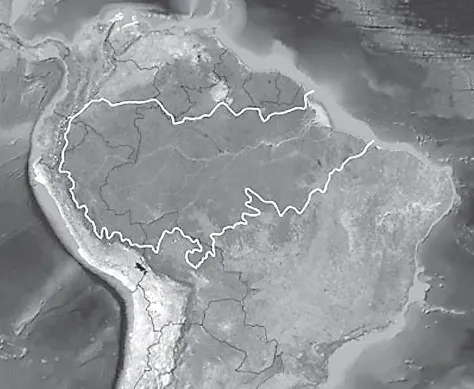
It has been claimed that we are continuing to destroy our forests at an alarming rate, and that if we don’t act now, we will lose them. This argument is unfounded. Lomborg points out that as of 2001, we have destroyed about 20 percent of all the forests that ever existed on earth. However, the developed world has destroyed about 50 percent of its forests. The poster child of deforestation, the Amazon forest, has seen a net deforestation of about 17 percent, meaning that about 83 percent of that jungle still exists as of 2006 (and for various reasons, it is estimated that it will not see a reduction in the future that takes it past the mark where 70 percent of it is still remaining)344 (Figure 9.1).
Since World War II, depending on which studies are cited, we have experienced world net deforestation of somewhere between 0.85 percent (a net increase) and –0.44 percent (a net decrease). In other words the balance of forests is virtually unchanged. We have not had continued decreases in our forests because we plant new forests at about the same rate as we destroy them.
It could still be argued that we should not keep cutting trees at all. But it’s important to remember that we use trees to support our quality of life — they help provide us with homes, furniture, paper, and commercial products. Could we use other materials instead? Yes, but depending on the relative price of trees versus other materials, it’s cheaper and more efficient (i.e., it costs your family less, so that you can obtain other goods you need) to use wood.
Regardless, we still cut more down more trees in the world than needs to be the case. The primary reason for this excess cutting is that a majority of forest lands are not owned privately. If they were, the owners would have had incentives to take care of them. In places where property rights to forests are protected, forests are either stable or growing. The buffalo almost became extinct in the western United States because people freely hunted them on public land. But cows, which have been mostly privately owned, never faced extinction (except for cattle such as the Auroch, of Europe, which were hunted to death by noblemen hunting for sport, and who had no profit motive incentive to preserve them).345
Source: NASA, via Wikipedia
Figure 9.1: A satellite view of the Amazon forest, which shows most of it still intact.
Private ownership ensures that plants, animals, and other valued wildlife will thrive because owners can make more money by taking good care of their property rather than allowing it to disappear or deteriorate. In preserving these valuable assets, they can physically reproduce them for the purpose of repeat sales. For example, breeding and selling the cattle perpetually is more profitable than killing them all for a one-time sale. In the case of trees, landowners have an incentive to re-grow trees after they’ve cut them down.346 One might ask: how do we know that tree owners would not sell all their property to developers who might build a parking lot on the land? They would not, because if too many trees were cut down, the price of lumber would become very high, thereby making tree growing more profitable than parking lots or other alternative uses. Many trees are actually grown for the purposes of being made into paper. The amount of new forest growth exceeds by more than 20 times the amount of wood and paper that is consumed in the world every year.347
The re-growing of trees is in fact happening to a large degree in developed countries where the land is privately owned. For example, anyone who has driven down Interstate 75 through north and mid-Florida in the last 20 years will have noticed large numbers of tree farms which are growing taller and thicker by the year — even while lumber prices, until the last several years, have declined in real terms. The New York Times reported in April, 2008, that a new study by the National Academy of Sciences “confirms that reforestation has become a widespread pattern in well-off countries and also in a few that are not so well off.” They note also that reforestation is linked to prosperity (and prosperity is linked to economic freedom).
Air Pollution
Air pollution is largely considered the most important environmental problem related to human health. What most people are not aware of is that air quality has improved dramatically through time in developed countries. That’s right, improved. Think about what you know about the life in the past, from Hollywood movies if nothing else: the cities of early industrial Europe had no sewage or sanitation systems; their energy use consisted primarily of burning wood and coal; they did not have good waste disposal methods or services, etc. As a result, the air and the city streets were filthy and they stank. Lawrence Stone describes early modern London:348
the city ditches, now often filled with stagnant water, were commonly used as latrines; butchers killed animals in their shops and threw the offal of the carcasses into the streets; dead animals were left to decay and fester where theylay; latrine pits were dug close to wells, thus contaminating the water supply. Decomposing bodies of the rich in burial vaults beneath the church often stank out parson and congregation.349
Additionally, there were large amounts of both animal and human excrement left on the streets. Since households burned wood and then coal, the air was cloudy with dark smoke and ashes, and soot fell on houses, streets, and people.
Lomborg reveals that the city of London, which may serve as a proxy for developed nations’ pollution levels, has seen a decrease in the two most dangerous forms of air pollution — particles (smoke and soot) and sulfur dioxide — of more than 90 percent each from their prior heights in the 1800s. And virtually all of this improvement came about before the existence of world government environmental protection agencies (the EPA, for example, began in the 1970s), as can be seen in Figure 9.2. Similarly, other important forms of more modern air pollution such as ozone, lead, nitrogen oxides, and carbon monoxide are now on the decline.
The EPA and other world government agencies smother the production of energy by imposing additional costs on consumers and businesses. The improvements mandated by government would naturally be achieved in time (due to competition between firms), and with lower costs, once technological progression made the changes cost effective. We all want a cleaner and safer environment, and the London pollution example shows that businesses will naturally find ways to produce in a cleaner fashion so as to please their customers, the consumers. Examples such as the creation of anti-lock brakes and airbags on cars show that companies will voluntarily make products safer in order to be more competitive. But if technology is not yet at the required state needed to solve current pollution, we may have to wait for its development before we can change our means of production (naturally, the lower the taxes, and thus the more capital available, the sooner technologies will advance). To use another car example to prove this point, consider that Ford first offered non-shatter glass in the 1930s, but then discontinued it until many years later because consumers were not willing to pay the extra price for the product. When the cost of producing non-shatter glass became a fraction of what it had previously been, it was widely accepted.
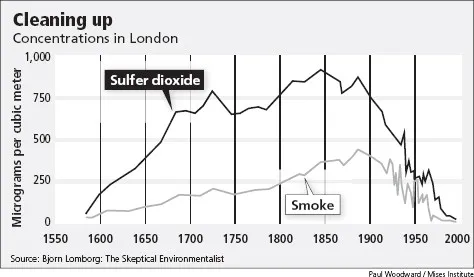
Figure 9.2: Historical Levels of the Two Most Damaging Forms of Air Pollution in the City of London.
Natural Resources and Sustainability
Sustainability is a common phrase which is now attached to virtually everything that takes place in the world. It is apparently imperative that we make sure that everything be sustainable. The current obsession with sustainability is not new; millennia ago people feared that the world was going to run out of natural resources. Thousands of years later, nothing has changed. Still, we are constantly reminded that we must conserve our natural resources or else we’ll deplete them.
Nothing could be further from the truth. Consider that the entire earth is made of natural resources — from the upper reaches of the atmosphere to the core of the earth four thousand miles down.350 The entire mass of the earth is comprised of chemical elements — oxygen, hydrogen, nitrogen, carbon, iron, nickel, etc. Man has literally only scraped the surface of the earth’s resources, and has not even begun to obtain resources which lie two miles deep in the ocean, under its floor. As Reisman points out, even the sands of the Sahara Desert (which used to be moist and green and populated with people) are chemical elements that might one day be used for productive purposes. He also astutely notes that what is limited is natural resources in usable form. Virtually all natural resources we employ have to be altered by us, usually by being combined with other natural resources, to be in a state which serves a purpose for mankind (e.g., iron ore must be extracted from the ground and alloyed with various other metals and non-metals, mainly carbon and silicone, to form steel). Thus, what humans do in the passage of time is expand the supply of natural resources available. They do not destroy the environment but improve it. This will be obvious if you take a look out of your window right now and compare what you see to what was likely there in 1776 or 1200.
It could be asked, “but what about oil, since its supply is known to be limited?” We’re not sure that’s true, but even if it is, and if we run out, we’ll move on to the next least expensive energy source. We have many of them, but most are not as economical as oil.
Energy itself is in extreme abundance in the world.351 For example, a single thunderstorm produces more energy than the whole world currently produces in a year. The sun provides a constant supply of energy that is virtually never-ending. The Rocky Mountain states and Canada contain more liquid petroleum masses than do the liquid petroleum deposits in the Arab countries. Oil shale, which can be converted to oil, is in abundance in many countries, and is currently being extracted and used in Estonia, Brazil and China. Other countries such as Australia, the U.S., Canada, and Jordan had planned to start or restore shale oil production before oil prices fell.352 Tar sands, which can also be converted to oil, are located in many countries, including the U.S., and two of them, Canada and Venezuela, have tar sands reserves approximately equal to the world’s total reserves of conventional crude oil.353 We can also harness energy from such uses as solar and wind power.
So why don’t we use all of these supposedly great sources, and particularly the clean ones? Because in most cases they’re too expensive! Though resources are not limited, money is. Many will argue that costs do not matter; we need to save the earth now. But, in reality, we have to prioritize, as we have limited amounts of money (limited amounts of capital goods, consumer goods, and physical assets). If alternative energy sources that start up a car or heat a home are possible at a 50 percent increase in cost from what we currently pay, which fuel source do you think most people will choose? While hard core environmentalists might pay more, they would then necessarily have to reduce their expenditures on other things such as groceries, computers, travel, and houses (not to mention that the price of all these other goods will rise if wholesale adoption of more expensive energy production is employed).
Many people may think that we can use alternate energy sources with no additional costs. It’s just not true. It will affect each and every one of us. But, if we will agree to keep burning cheaper fossil fuel for now, it will sustain us while our companies, in seeking profits, develop new technologies that will enable these alternative energy sources to become cost effective. At that point, we will be able to quit using fossil fuels.
Not only that, but the needed ability to dig ever further into the earth to locate new supplies of resources we currently use can only continue by creating newer and better capital goods and technologies which permit this obligatory advanced state of production. If our technological state came to a standstill, the human race would eventually die out because of a lack of means to produce more food for the growing population; we would certainly run out of usable resources. In the most benign case, we would revert to living off the land and trying to produce clothes and utensils for ourselves from nature; but without the needed capital goods and technologies, there would not be enough nature to go around, and starvation and fighting for limited resources would be widespread. This is why it’s imperative to keep using fossil fuels to develop the tools needed, not only to survive now, but also to reach a state in which we don’t have to rely on fossil fuels. Converting natural resources from the state in which we find them to the state in which we can use them takes time, resources, technology, and... fossil fuels, for now.
In the meantime, as oil continues to become more expensive relative to alternative energy sources, more and more investment and research — without government coercion — is going into developing these energy alternatives. Still, much of the ability to make these alternative sources available depends on our general level of economic development. As we progress technologically, we will be able to have cleaner and cleaner energy at lower prices.
Indeed, we would already have much lower current energy prices were it not for the fact that most world-wide ownership of oil and natural gas deposits, along with their refining and transformation into usable forms, has been in the hands of inefficient and wasteful government monopolies. Likewise, as we saw in Chapter 4, the environmental movement has prevented us from extracting and producing vast amounts of energy in this country. In supporting environmental causes for political reasons, the U.S. government has, in many ways, made it illegal to produce energy. Were it not for this, we might already be using clean energy.
There is, however, already a very cheap and clean source of energy available: nuclear power. There are two primary unjustified concerns which limit its use. The first is safety. Yet modern atomic facilities not only have multiple safeguards built in, but can withstand a direct hit by an airliner. The famous Three Mile Island accident in 1979 was proof of its safety, not of its dangers: no one died and no one who lived near the site has been found to have higher radiation levels than elsewhere. Similarly, the Chernobyl disaster is proof not so much of the inherent danger of nuclear power plants as of the incompetence in designing and managing them and the lack of regard for human life that exists under communism. The second concern is the dumping of nuclear waste. But there is plenty of land available for safe waste sites and there has yet to be proof of any overwhelming dangers of storing waste. Besides, we are already surrounded by these waste dumps. For example, as Figure 9.3 displays, it has been estimated that over eight million tons of radioactive waste has been accumulated from nuclear fuel and weapons processing, and to a lesser degree from medical and industrial waste, and from the processing of oil, gas, coal, and some minerals.354 Additionally, there are already 104 nuclear plants operating in the U.S., and almost 200 in Europe!
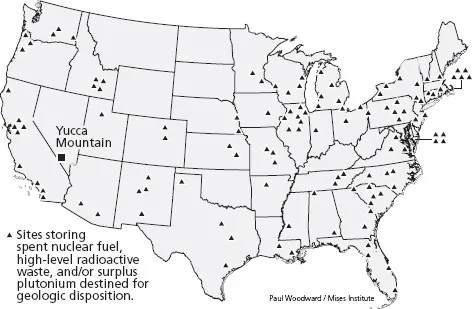
Figure 9.3: Various nuclear waste dumps in the United States. Source: http://ocrwm.doe.gov/info_library/newsroom/photos/photos_graphics.shtml.
Water
It is absolutely absurd that there should be any water shortage and a need to conserve water. Three fourths of the earth’s surface is covered with water, and we should allow the free market to find efficient ways to convert it to potable water. Such conversions are already done on cruise ships, submarines, and for some entire towns. If the government would allow water services to be privately owned, competitive, and free of burdening regulation, we could have an abundance of water. By letting profit-seeking companies own water resources and produce water for us, in their quest to get rich, they will find ways to pump out plenty of fresh water for us all. Had water management been privatized all along, it is almost certain that the creation and use of desalination equipment would be widespread. Its costs, like any other technology, would be a fraction of what it is today. We would therefore be siphoning water from world oceans at incredible rates (thus lowering world water levels). The United Nations World Water Council concluded in 2006 that the water crisis today is about how water is managed, not about having too little of it.355 As for the quality of water in the developed countries, it is constantly improving — even the water in New York Harbor.356
It is worth noting here the response I received after stating these points about the water industry to a local government official I was speaking with. The politician first proclaimed that water was a limited resource (and we live in an area where there are water shortages), even though there is more of it on earth than we will probably ever need to use. After stating that she didn’t believe my assertions about a free water industry and desalinization, the politician said that there would need to be a consensus before private companies were allowed to operate in the water industry.
It is this kind of government bureaucrat logic that prevents a smoothly functioning, progressing economy. The technology already exists for extracting water from the sea. It only needs to become cost effective. Though the politician knows from everyday life that televisions, computers, calculators, and all other technologies became cheaper and cost effective with widespread production, investment and use, she does not apply that logic and knowledge to the desalinization industry.
The politician, an environmentalist who was “tolerant” of my plea for freedom, was saying that companies should not be allowed to freely produce and compete in an industry unless they can prove ahead of time that they will be successful, and that until that time, a government monopoly must manage the industry — shortages, outages and all. Had the computer, refrigerator, automobile, airline, cell phone, steam engine, cruise ship and other industries had to prove their effectiveness ahead of time, we would likely not have many of those products. Had the telephone industry remained government run (and cellular services prohibited) like the water industry, we would still have prohibitively expensive, low-quality service.
It is the fact that this mentality was largely shed in the sixteenth and seventeenth centuries that modern capitalism began and the world developed. It was when rulers let their subjects become free to live their own lives without being prohibited by government that man developed inventions, technologies, and tools that began providing needed supplies that improve our lives.357 Oppressive governments have always existed, but economic prosperity did not occur until people were allowed to own and keep their own property, and to freely exchange it with others. This politician’s mindset — that people should be prevented from acting in a way they choose until it is proven that they will produce good outcomes, and permitting actions only by a consensus of (usually uninformed) people — is one that will destroy human progress should it become pervasive.
It is also interesting that the politician would state that companies need to prove their effectiveness before being allowed to operate, when it is in fact government that operates without proving its effectiveness. Companies operate with a profit and loss statement. They have a pretty good idea of their success rate ahead of time. If they incur losses, they suffer and go bankrupt. Even if they fail, other companies buy the assets and turn the failures into successes. Government, however, “invests” in unprofitable industries almost 100 percent of the time, is not responsible for being accountable for losses, pours more money into bad projects to attempt to make previous bad investments better, and still fails at almost everything it does.
Population Growth
The 19th century economist Thomas Malthus claimed that the world would suffer from overpopulation because eventually there would not be enough farmland left to grow all the food required for the larger population. What he did not consider was that technology would improve so as to allow more and more food to be grown on the same amount of land. In fact, agriculture as a percentage of GDP has continually declined in most countries; we saw above that it has declined by over 80 percent in the U.S. over the last century. Given increased sophistication in farmland technologies, there is plenty of land in the U.S. and in the world for people, houses, and agriculture. Additionally, the existence of more people means there would be more of us who could contribute to economic production and more people with innovative ideas (seeking profits) to make our world a better place.
Recycling
It costs us more in time, energy, and money to recycle most items than it does to create them from scratch. Why should millions of us take time out of our day to clean, store, group, organize, and transport materials to the recycling dump when large machines operated by a handful of people can dig more of these materials out of the ground at a fraction of the cost? Recycling these materials involves a net consumption of time and capital which could be used to produce other important goods we need — recycling uses three times more resources than does throwing the waste in landfills. Some materials such as gold, silver, and aluminum should be recycled (and we should also be allowed by government to recycle nickels, as a nickel’s contents are now worth more than the face value of the coin, thanks to government inflation). The determining factor should be the market price of the material in question; and the government should leave that decision to us individuals and our individual actions. There is no reason to take time to dig through garbage like paupers when we live in one of the richest countries in the world, in the most advanced era for human beings (San Francisco residents now face $100 fines for not separating food remnants from their paper and plastic). Similarly, our government should not be using taxpayer money to fund recycling programs, or mandating that companies must recycle or buy recycled material. Recycling constitutes a destruction of wealth and entails the reduction of our quality of life: the more money spent to subsidize recycling, the lower are wages and the higher are consumer prices. Forty percent of what we recycle ends up in the landfills anyway!
Many people express concerns over the growing landfills and the space they take up, yet most people have never even encountered a land fill. They take up so little space that they don’t intrude into our daily lives. In fact, it is estimated that the total amount of waste the entire U.S. will produce this century can fit in an area of land 10 miles square.358 With further technological progress, we will likely find ways within the next 100 years to make it so that our waste requires a fraction of that space. We might even find ways to make it virtually disappear.
Additionally, landfills are no longer a threat to the environment or public health.359 All old landfills have been replaced with ones that do not leak hazardous materials. Not only that, landfills are a source of energy, as more and more of them are producing pipeline-quality natural gas.
A Category of its Own: Global Warming
Since global warming is the dominant environmental issue today, and the one which exerts the greatest potential social and political influence over our economic actions, we will look at the subject in detail. As with the other environmental issues, our goal here is to be hesitant to believe whatever emotional statements and manipulated statistics environmentalist throw out, but instead to try and get at the truth, and as part of this, to consider the contrarian and unconventional views of the topic. Also as above, I do not attempt to prove one particular scientific argument over another, but only to present these opposing ideas so as to give the reader a better framework within to make judgments for themselves. (I do, however, attempt to present a robust and compelling economic argument against the government-forced cessation of economic progress in the name of global warming.) The fact is, no one is really sure of anything when it comes to global warming. As David Holland, director of the Center for Atmosphere Ocean Science at New York University said about climate changes in Greenland: “This is like medical science in the 15th century. It’s going to take a while to find out what’s going on with the patient here.”360
I will also not attempt to present a detailed and thorough display of all the myriad facts and figures which argue against the case that there is global warming. Since I personally don’t know whether global warming exists, or whether it’s man-made, I do not attempt to make a strong personal argument. What I seek to do is to offer counter arguments that are made by others, in order to give the “she said” to go along with the “he said” that is commonly presented in the media today.
To begin with, let’s recall that a primary basis on which most arguments in favor of global warming are made relate to whether the earth is warming. In this vein, consider that 1998, not this year or last, was the year with the highest mean world temperature.361 Additionally, the total extent of global warming since 1900 consists of a 1.25 degree Fahrenheit increase — hardly anything to get excited about, and the temperature could possibly sway towards the cooler side by the same amount in the next 100 years. And since the reason we are concerned about global warming is due to the greenhouse effect, it’s important to know that, in general, emissions of greenhouse gases are good, since if these gases did not already exist in the atmosphere, the average temperature on earth would be about 59°F; the world would be too cold for life as we know it to exist.
Approximately every 100,000 years, the earth temporarily warms. The hottest period in human history occurred 4,000 to 7,500 years before humans created the Industrial Revolution. These warming periods, called interglacial periods, last 15,000 to 20,000 years. We are currently in the 18,000th year of our current interglacial period.362 CO2, the greenhouse gas accused of causing global warming, has been rising during these last 18,000 years along with temperatures. Yet global warming activists call recent CO2 increases unnatural. Also, a minority of the green house effect is contributed by humans. Most of it is derived from 1) water vapor and 2) ocean biologic activity, volcanoes, decaying plants, and animal activity.363 Lastly, many scientists argue that CO2 increases do not lead to temperature rises, but lag them, possibly by hundreds of years.
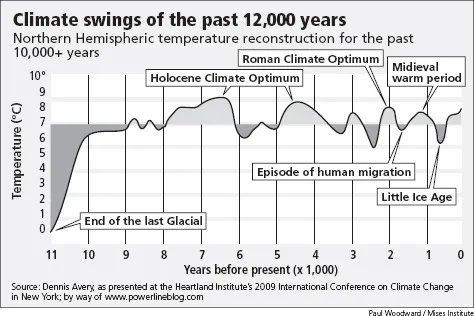
Figure 9.4: Historical swings of warming and cooling of the earth’s temperatures.
It must be kept in mind that global temperatures have gone up and down several times in the last thousand years, as shown in Figure 9.4 (the area on the far right is the most recent warming). Most recently, the earth experienced a warming period called the Medieval Warm Period between 900 and 1200. Warmer temperatures made possible human settlements in places like Greenland and Newfoundland that were previously uninhabitable. After that, global temperatures dropped during the Little Ice Age between the 1400s and 1600s. Millions died from extremely cold weather during this period. Since then, we have been warming again, and many scientists say we’re now finishing the warming period.
The global temperature has been trending upwards at a steady trend of 0.5°C per century since the end of the Little Ice Age in the 1700s (when the Thames River would freeze over most winters).364 The trend does not rise in a straight line however; it oscillates above and beyond the trend in increments lasting about thirty years in each direction:
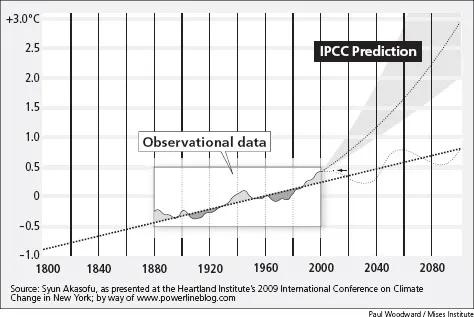
Figure 9.5: Historical swings of warming and cooling of the earth’s temperatures.

Figure 9.5 reveals this trend. Here in 2009, we are at the point of the arrow, with temperature leveling off. The pattern suggests that the world has entered a period of slight cooling until about 2030.
As mentioned above, there was a cooling scare in the early 1970s at the end of the last cooling phase. The current global warming alarm is likely based on the last warming oscillation from 1975 to 2001. The IPCC warming predictions simply extrapolate the trend from the current warming in a way that assumes the current warming phase will continue at its current rate, while it is more likely that the trend will reverse.
Importantly, it must also be considered that data shows variations in sun activity to be proportional to variations in both CO2 and temperature. The argument of many scientists is that the sun is the primary cause of global warming (and other planets are warming as well). After all, 98 percent of the earth’s warmth comes from the sun. British science writer Nigel Calder produced the chart in Figure 9.6 showing the relationship between the sun (by measuring solar wind — the flow of charged particles) and global temperatures.365 Similarly, Willie Soon, an astrophysicist at the Harvard-Smithsonian Center for Astrophysics, published a book called The Maunder Minimum and the Variable Sun-Earth Connection, which explains how solar cause and effect can influence the earth’s climate.366 There is also evidence that changes in the earth’s core temperature cause temperature changes. At least one study shows that variations of core-generated magnetic intensity explain 79 percent of global average temperature changes.
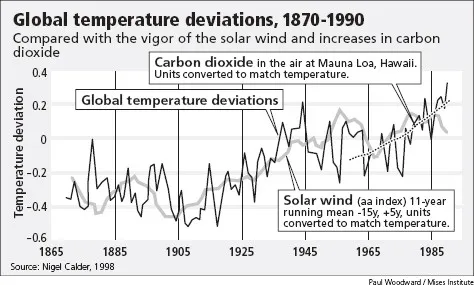
Figure 9.6: The relationship between global temperatures and solar activity.
The current “standard” forecasted scenario from the IPCC is that the temperature in 2100 will be 4.7°F higher than today (had the Kyoto Protocol been adhered to, this 4.7°F increase would have been delayed by a scant five years, at the expense of a severe decrease in standards of living around the world). But that does not mean that every location on earth will be that much warmer. Global warming increases cold temperatures at a greater rate than warm temperatures, which means that night and winter temperatures will increase much more rapidly than will day and summer temperatures.367 Thus, we should not think that just because average temperatures rise that we will have unbearable heat to contend with. Though more deaths from heat will unfortunately occur, deaths from cold will decline (something rarely mentioned by official climate reports).
Lomborg points out that while Al Gore scares people with myriad pictures of glaciers receding, the fact is that they have been advancing and receding regularly over the past ten thousand years, but are continuing to grow larger during each growth spurt than they were during previous growth spurts (additionally, many glaciers in the world are growing, and many locations are experiencing declining sea levels368). Over the last 10,000 years, some glaciers disappeared altogether, only to be reborn many times again later. Lomborg also notes that Mount Kilimanjaro has been losing ice since 1880, due to changing regional weather patterns.369 Still, pictures of its diminishing ice have been used as examples of global warming even though that’s not the cause of its decline. He also points out that the primary concern of local residents is not so much the dwindling ice, but economic conditions needed for prosperity, which are lacking.
An often-voiced effect related to global warming is rising sea levels. This concern is minimal, and is usually exaggerated in the media. The IPCC’s latest report forecasts a mere one-foot increase in water levels over the next century — about the same that we’ve experienced since 1860. The number of feet of ocean level increase forecasted has been consistently reduced from the more than six feet forecasted by the EPA in the 1980s. Yet Al Gore still claims in his An InconvenientTruth that water levels will rise twenty feet. He is using numbers from a very unrealistic hypothetical scenario in which Greenland collapses into the ocean. As a related point, the warmest decades in Greenland were in the 1930s and 1940s.370 Another worst-case scenario sometimes mentioned is that of Antarctica falling into the ocean, resulting in a more than 100 foot increase in sea levels. But while the world media, in support of this notion, has been showing dramatic pictures of ice melting at the top of a thin, northerly peninsula on Antarctica due to warming, the other 96 percent of Antarctica has gotten colder.371 The South Pole has been cooling since temperature measurements began in 1957. Antarctica is experiencing an increase in precipitation by the year, and is expected to gain more ice if global temperatures rise. This is because a warmer atmosphere means more precipitation, and since it will still be too cold for ice to melt in Antarctica, the ice will continue building up, likely lowering sea levels in the process. While it’s uncertain as to whether Antarctica is currently gaining or losing ice, all scientific models project that it will gain ice this century.
Gore also claims that there is a “scientific consensus” that global warming is making hurricanes more powerful and more destructive. This has long been a factually incorrect conclusion. At the time of this writing, this falsehood is now hitting mainstream news headlines, along with the fact that warmer temperatures actually reduce hurricane activity.372
What Should Be Done About Global Warming?
Since it is the minority manmade CO2 greenhouse gas emissions that are seen as the primary cause of global warming, environmentalists are demanding that these emissions be reduced by the use of government force. On the face of it, this seems like a harmless, if not healthy, solution. But the results of restricting the use of such things as solid and liquid fuels, carbon dioxide, methane, nitrous oxide, and CFCs would have a far-reaching, dramatic, and possibly catastrophic effect.
Most people seem to believe that if we reduce or stop using production methods which contain these polluting side effects, there would be little impact on their lives. This is a fatal mistake. Emitting these gases is a byproduct of the act of producing most things that make our lives enjoyable, and that even keep us alive. Food, beds, batteries, automobiles, operating tables, sanitation equipment, computers, backpacks, and medicine all require fossil fuels to be burned in their production, at least in the quality and quantity in which they currently exist. To be forced to emit less means a reduction in the quality and or quantity of virtually everything we use in our lives. Just as having the government regulate healthcare has caused rapidly rising healthcare costs and too few doctors, so will regulation of carbon emissions cause rapidly rising costs of everything we buy, while having too few goods available.
It might then be asked why we can’t replace our methods of production with cleaner and greener methods. We can, but at a steep cost. We have, as consumers as a whole, revealed by the things we decide to purchase or not to purchase, that we are not yet willing to pay much more for these things (because we don’t want to consume less of other things). For example, most people have not paid the considerably higher prices for solar power because they prefer to pay less for conventional sources. To force the production and use of alternative energy sources is to force people — in violation of their true desires and physical freedoms — to do without many of the necessities and luxuries they enjoy now. This is because the scarce materials, tools, and technology constituting the resources which produce these necessities and goods would instead have to be used for more expensive energy (again, because more expensive means that it takes more resources to produce). The same concept applies to businesses, which means companies will be providing fewer products at higher prices, and paying lower wages. In short, our standards of living will decline; and the poor will suffer the most. If people really want to stop companies from generating carbon emissions, they can do so, willingly, by not buying as many of the products that cause carbon to be emitted in their production process; there is no need for government force. Environmentalists argue that people want their proposed changes. If this were true, there would be no need for government force to make us change our ways of living and producing. As we have seen previously, evil corporations will produce exactly what people want with resources they prefer.
But if we are allowed by government and environmentalists to continue producing with our current polluting methods, we will continue to advance technologically and reach a point where we can operate more cleanly at affordable costs. This will naturally occur through time — almost everything, as we have seen, becomes less expensive, in real terms, through time. What if the earth was indeed warming rapidly even without man’s help? What would be more beneficial to us in adapting to and coping with coming changes? A more advanced society with tools and technology as we have today, or one like the Soviet Union or Cuba with their lack of or highly diminished capability to obtain these things? We could adapt to changing climates much better today — with our technologies, tools, refrigerators and air conditioners — than our ancestors could have 100 or 200 years ago. Clearly we need to progress, not retrogress, in order to not only withstand global warming, but to find ways to produce even more and better things than we have now, but with cleaner production methods.
The pollution that we currently create allows us to produce energy that lights, heats, and cools our homes, powers our cars, trucks, airplanes, ships, building cranes, and health facilities, and runs all of our refrigerators, toasters, televisions, and air conditioners, and provides power for our factories and plants that produce all the goods we use daily. Reducing pollution means reducing the availability of all the items we use to enjoy our standard of living.
It should also be understood that so-called “cap and trade,” while held as a free-market process, is not so in the least. With cap and trade, government limits the amount of emissions that can be produced, and companies bid for the rights to the available quantity of emissions. Government-limited emissions trading in a “market” does not constitute free markets.
We must ask ourselves what we value most — cleaner air and cooler temperatures than might otherwise occur, or maintaining and improving our current level of civilization? The more we reduce our industrial base, the further back in time our standard of living will retrogress. We could easily place ourselves back to living life as they did in 1850, 1500, or during the time of ancient Greece. The average person today lives better than the richest rulers of two hundred years ago; for they did not have indoor plumbing, electricity, satellite TV with Tevo, unlimited quantities of food, or air conditioning; they did not travel on airplanes while enjoying movies and red wine; they did not have the ability to watch live video in countries on the other side of the world through the internet, or the ability to painlessly stop a decaying tooth from causing agony.
All of these things we have to aid our lives could cease or be drastically reduced with the implementation of regulation which restricts carbon emissions. Even the best scientific estimates of the “benefits” of the currently-proposed regulation show that we could only cool the earth by less than one-tenth of one degree Fahrenheit by 2050.373
Not only could this comfortable way of life diminish or vanish for us in developing countries because of environmental restrictions imposed before economies can profitably absorb them, but the result in the undeveloped world could be starvation, increased diseases, and the death of tens of millions of people. In fact, it’s already been happening. As one example, consider the malaria-fighting chemical DDT. This pesticide had almost completely extinguished Malaria worldwide when it was outlawed in most countries (including the U.S.) for environmental reasons. Environmentalist Rachel Carson, an employee of the U.S. government’s Fish and Wildlife Agency, wrote a famous and impactful book entitled Silent Spring in 1962, which argued that DDT was harming the environment and insects. After much laboratory testing, however, it was shown that there is no evidence that DDT had harmful effects on animals or humans. The World Health Organization has now re-approved its use decades later in 2006. In the years since it was banned in the early 1970s, over 500 million people have suffered from acute malaria each year, and over 1 million have died annually. Al Gore, who wrote an introduction to a later version of Silent Spring, failed to note the millions of lives DDT had saved or the millions who died because of its being banned.
Most people today would not consider not supporting environmentalism. It seems that all but a few evil, ignorant, illogical and earth-hating individuals are proudly supporting the cause. Virtually every business has green products or supposedly creates products in a way that is earth-friendly. Daily news articles are linked to environmentalism in every way — they either reveal how every news event was caused by global warming or they are consumer pieces instructing us on how we can change our lives to save the planet. This mass hysteria, again, is reminiscent of Nazism, where individuals and businesses rushed to market themselves as National Socialists. The majority of an entire country became supportive of this movement, and supported the isolation, labeling, and expulsion of Jews, minorities, homosexuals, and the like. Likewise, this majority supported the waging of war on the rest of Europe, and that majority is ultimately responsible for the deaths of over 50 million people, of which at least 6 million were brutally starved and tortured. Similarly, as we learned, tens of millions of people around the world blindly support the fallacious Marxist ideology which holds that laborers are somehow exploited by capitalists, leading to the support of socialist states that kill millions of their own citizens, either by force or by starvation. Deaths resulting from emotional ideologies, which ignore logical and factual realities, will occur tomorrow if environmentalists accomplish their goal of preventing economic progression.
There Are Better Ways to Fight Global Warming
Even if global warming is real, and even if it is man-made, instead of reducing our economic strength, we should use it to adjust to a changing climate. We should treat global warming as we do any other natural disaster or event, and adjust to it. As we learned previously, individuals, on the basis of their own profit and loss calculations, decide what actions to take in their lives that will serve them best. As long as we are not prevented by environmentalists and government laws, in the name of saving the planet, from making decisions from which we feel we benefit, each of us will do what’s needed to adjust to changing conditions. We will decide where it is more advantageous, considering the perceived changes in the climate (which occur slowly), to live, work, and locate homes, farms and factories.
For example, if the Florida coast is going to lose some of its current shore lines, over time, houses will be taken down that are currently on the water and new beaches and homes will be built some distance inland. Orange grove owners in Florida might learn that they can make more money by selling their land for higher prices to those needing land for the purposes of relocating their home, and thus move their orange groves to Georgia where it’s now warm enough to grow oranges on lower-cost land than they had in Florida.
Sound like a tremendous amount of trouble and expense? Remember that over time changes like this occur regardless of whether global warming exists. Over time, most of us naturally relocate, change jobs, build new factories in different locations, and develop new regions. And all physical items that we build deteriorate and need replacing or rebuilding. Similar changes occurred during the time we settled the western United States. During any period of economic development — such as when we switched from using horse and buggies to using automobiles — every business and individual in the economy had to calculate and adjust to changing conditions. The result was new roads, gas stations, convenience stores, shopping centers, and suburbs.
If temperatures rise (or fall), they will do so very slowly, leaving mankind many years to calculate, plan, and prepare. But such preparation should not be left to the government: we have learned how government central planning results in economic dis-coordination and a destruction of capital and wealth. Relying on governments to direct these changes would certainly result in starvation and death, as it has under every regime of central planning.
There are probably logical and rational ways to cool our planet by using the energy sources we currently have, as well as the greater and more improved energy sources we’ll create in the future (if we’re not stopped from progressing). Reisman suggests the possibility of setting off hydrogen bombs in uninhabited land north of 70° latitude. The idea is that particles released would float in the air at that latitude and block sunlight from reaching most of the Arctic’s surface, thus maintaining a cold climate. Another idea is to pump water from the rising oceans through desalination plants and into the Sahara Desert and Australian deserts (which span most of that continent). This would help prevent rising waters while simultaneously making over 5 million miles of previously mostly uninhabitable areas livable. But to do this, we would need to keep improving our desalination technology — by producing with our current methods. These particular ideas may not be feasible, but there are likely many others which are. The point is that these are the ways in which we should be thinking, not in terms of stopping our economic progression and lowering our standard of living. We need progressive, not repressive solutions.
Warming climates, whether man-made or not, could in fact bring many benefits. Much of the barren land in northern Canada, northern Russia, and Greenland could become habitable, and warm enough to grow crops on. This could add to the world’s food supplies while creating new and exciting cities. Similarly, more deaths from cold weather could be prevented. Deaths from warm weather can be reduced by increased production of air-conditioned buildings.
Today, even luxury hotels do not wash towels and change sheets daily, unless otherwise requested. Ugly, dim, energy-efficient light bulbs are replacing warmer, more pleasant ones. We are all asked to quit driving, or at least burden ourselves and reduce our hours of work and leisure so that we can take inconvenient (and loss-making) public transportation; we’re asked to quit purchasing food and goods that require transportation from faraway places; we’re asked to reduce our carbon footprint in every way possible. The next step is the forceful actions of government to make us live in a certain way. For example, traditional incandescent light bulbs are now illegal in Europe. People are forced to buy bulbs that are not as aesthetically pleasant, and cost 60 percent more.374 Plus, they can’t just be thrown away, they must be recycled because of the dangerous materials inside of them. Thus, a recycling tax is also added to the purchase price. The same laws are scheduled to start in the U.S. in 2012.
This logic of constantly reducing our use of non-green materials ultimately leads us to do nothing but grow our own food and sew our own clothes, and have entertainment by sitting by the fire (which creates pollution) singing folk songs. In other words, we’re asked to retrogress back to the dark ages. We should say no to this madness! We should enjoy our lives by doing the things that we feel benefit us. We have unlimited potential resources and increasing abilities to deal with whatever side effects come our way. We should move forward in our lives, not backward. We are a wealthy society — in developed countries, at least — and have progressed so that our lives can get better and easier, not more challenging and more difficult. We don’t need to live like Robinson Crusoe. Say no to environmentalism. Say yes to life and to the future!
Most Environmental Problems Can Be Solved With Property Rights375
Though the state of the environment, as we have shown, is not nearly as bad as most believe, and as the environmentalists make it out to be, there are absolutely environmental problems which should be addressed. But the solution to most of these problems can be found in the protection of property rights, which would result in a much better economic outcome.
Air and water are in fact being polluted more than needed; oceans are being over-fished; land is being ravaged unnecessarily. Environmental issues such as these can be looked at as an interpersonal conflict. Two different parties want to use the same space for different purposes. If an oil company wants to drill on a particular piece of land that someone else wants to use as a nature preserve, how do we decide which party should win out? Were the land privately owned there would be no question about it — the parties which owned the land would do with it what they wanted. Naturally, land could then be sold for various purposes, and would go to the highest bidder. Oil drillers would outbid others for some land, and park providers/owners would outbid oil drillers and other parties for other pieces of land. For very large pieces of land individuals wanted to protect, they could form partnerships or corporations and pool their money together to own and therefore preserve the land. In each case, those who owned the land would have the highest incentives to take care of it.
But how should we handle what economists call externalities — damage done to others’ land which is not owned by the party causing the damage? Consider air pollution. In so far as a factory pollutes and causes damage to other property, it is an invasive act (a negative externality). The factory should bear the cost of this pollution. Originally, laws in this country that were brought over from the common law tradition in England formally protected private property rights. These laws were eventually overturned more than a century ago by progressive era courts that believed economic progress in the name of the common good should supersede individual rights. Before this time of diminished property rights protection, a person who had property damaged by air pollution could hold the polluter accountable, and be compensated by them (not by taxpayers).
If property rights included the air over one’s property, one could pollute as long as the pollution did not affect neighboring properties. Since this is impossible, the polluter would be responsible for finding ways to prevent emissions from getting into the air. They might find ways of storing emissions in containers, or ways to convert it into water vapor, thus alleviating the problem.376
We all experience what is called “The Tragedy of the Commons.”377 This means that we tend not to take care of public property, which is available for all to use, as well as we do our own property. Thus we tend to destroy it. For example, people tend to litter on public streets but not on their own front yard.
Instead of protecting private property, environmentalists propose taxing us in different ways to get us to act the way they want, or to have trading of limited emissions rights between companies. These strategies, which all involve government regulation and distort our economic system, still do not compensate those who have been harmed by environmental damage. All kinds of government calculations are done to try to come up with the most effective penalties, with the aim of “maximizing the social value of resource usage.” But values are subjective, and can only be accurately assessed by individuals from their own view of what’s best for them. This means that social costs and social benefits do not exist as either measurable or even theoretical concepts.378
It sounds extreme at first blush, but all air, water, and land should be privately owned, not socialized. And we would still have nature reserves, beautiful mountains, and green fields. This is because owners would be able to make profits by offering these things (at lower costs than we pay in taxes to have them now). It is naturally difficult to initially comprehend how ownership of things like oceans, streams, and air space would be privately owned. But there has been much research and analysis performed to show how this type of ownership could exist.379 In today’s world of GPS technology, it would be easier than ever to have clear property lines in the air and oceans.
Environmental Degradation Worst in Places with Weakest Property Rights
Corporations are often accused of ruining the environment for the sake of profits. Free markets are seen as incompatible with environmental preservation; it is thus assumed that government regulation is required.380 But if it were true that profit-seeking companies are the main cause of pollution, we would expect to find that socialist countries such as the Soviet Union, the former communist countries of Eastern Europe, China, and North Korea have the cleanest environments. This is not the case. In 2006, the most polluted places in the world were in countries that have the weakest property rights:381
- Chernobyl, Ukraine
- Dzerzhinsk, Russia
- Haina, Dominican Republic
- Kabwe, Zambia
- La Oroya, Peru
- Linfen, China
- Maiuu Suu, Kyrgyzstan
- Norilsk, Russia
- Ranipet, India
- Rudnaya Pristan/Dalnegorsk, Russia
The Soviet Union had extensive environmental laws and regulations to protect the public interest. Yet the environment suffered terribly under communism because of the tragedy of the commons. The empire not only poisoned its air and waters, but also its people. Soviet lakes, streams, and seas were a regular dumping ground for chemical waste. Thomas J. DiLorenzo describes one case:382
A typical example of the environmental damage caused by the Soviet economic system is the exploitation of the Black Sea. To comply with five-year plans for housing and building construction, gravel, sand, and trees around the beaches were used for decades as construction materials. Because there is no private property, no value is attached to the gravel along the seashore. Since, in effect, it is free, the contractors haul it away. This practice caused massive beach erosion which reduced the Black Sea coast by 50 percent between 1920 and 1960. Eventually, hotels, hospitals, and of all things, a military sanitarium collapsed into the sea as the shore line gave way. Frequent landslides — as many as 300 per year — have been reported.
Many lakes and seas have almost dried up, with sea creatures dying off left and right. Lake Baikal, twice the size of Lake Superior, could be observed with alkaline sewage clumps as large as 18 miles long and three miles wide.383 Investor and world traveler Jim Rogers remarked after his 1991 motorcycle ride across Russia that all communist cars leak oil; he even experienced a crash due to an oil slick on the road.384
A similar environmental state can be found in China and the former communist countries of Eastern Europe. Years ago, the World-watch Institute stated that more than 90 percent of the trees in the pine forests in China’s Sichuan province had died because of air pollution.385 Similarly, near Chungking, the biggest city in southwest China, a 4,500-acre forest was reduced in half, as of the early 1990s.386 In Poland, after the fall of communism, it was stated by the Polish Academy of Sciences that “a third of the nation’s 38 million people live in areas of ecological disaster.”387
Obviously, government does not do a good job of taking care of “the people’s” property. The same is true of our government in the United States, as government agencies are among the worst polluters. The Department of Defense generates over 750,000 tons of hazardous waste each year — more than the top three chemical companies combined. Yet the agency remains largely free from compliance with federal and state Environmental Protection Agency laws.388 In 2001, the EPA estimated that the total liability for the cleanup of toxic military sites would exceed $350 billion.
The Army’s Rocky Mountain Arsenal, 27 square miles of “toxic horror” six miles north of Denver, as of the mid-1990s and before a taxpayer-funded cleanup began, was known as “the most polluted piece of ground in America.”389 Nerve gas, mustard shells, the anti-crop spray TX, and incendiary devices were dumped into this area for over 40 years.390
Government-owned power plants are a large source of sulfur dioxide emissions. The Tennessee Valley Authority, a government owned entity, operates 11 fossil plants with 59 coal-burning units.391 It fought with state governments for years for the ability not to have to comply with state environmental regulations. Finally, the Supreme Court ruled that it could be exempt from meeting standards within which the private sector and local government power plants have to operate.392
State and local governments across the United States, in badly managing our infrastructure, cause more than 900 billion gallons of waste to flow out of leaking and dilapidated sewer pipes into rivers, lakes, and oceans.
United States agriculture policy has also created large amounts of pollution. Agriculture policies are set by Congress every five years or so in a package of laws and programs called the “farm bill.” These policies not only provide taxpayer funded subsidies, which result in more farmers and farmland than we need, but also encourage over-utilization of land and erosion.393 Additionally, powerful farm lobbies have protected themselves from having to comply with regulation imposed on other industries.
Choose Life, Not Environmentalism
It is probably clear at this point that environmentalists have a very biased agenda, and it’s not in our interest. While the free market is the best means to protect the environment, it is also our only means of producing more, and in a greener way. Any other alternative will result in either lower standards of living or more pollution. Not only is the free market our only source of life and well-being, it is our only means to future prosperity.
By buying into environmental fallacies and scare tactics, the only outcome we can expect is a decline in our well-being and the failure to ever be able to produce without polluting. Until then polluting means progression, and environmentalism means retrogression.
The Case for Legalizing Capitalism
Read the whole book online · Book details
This work is published under a Creative Commons licence. You may copy, share, and re-host it with attribution.